
Swift Observatory to Reenter Atmosphere After Failed Rescue Mission
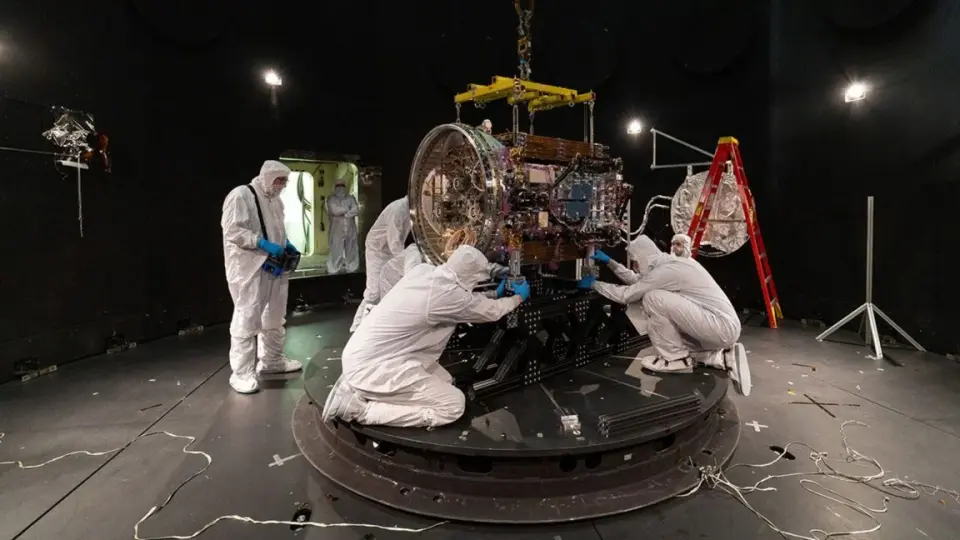
NASA’s Neil Gehrels Swift Observatory is expected to burn up in Earth’s atmosphere later this year after a rapid-response rescue mission failed. Katalyst Space Technologies built and launched the 'Link' satellite in nine months to boost Swift’s orbit, but technical malfunctions prevented the capture. While the rescue failed, the mission demonstrated that commercial satellite servicing can be executed on aggressive timelines and at a fraction of traditional government costs.
Key points
- Swift, launched in 2004, is losing altitude due to increased atmospheric drag from solar activity and lacks its own propulsion system.
- Katalyst Space Technologies was awarded a $30 million contract in September 2025 to build and launch the 'Link' rescue satellite within nine months.
- Link launched on July 3, 2026, but suffered a power system fault and unresponsive thruster valves, causing it to spin out of control.
- The mission was scaled back to a technology demonstration; Link reached within 12 to 15 kilometers of Swift but could not capture it due to fuel depletion.
- Link reentered the atmosphere on September 25, 2026, and Swift is expected to follow suit later this year.
- NASA and Katalyst view the effort as a success for advancing commercial servicing capabilities, noting the project cost significantly less than previous government-led demonstrations.
Background
Swift has been a critical tool for detecting gamma-ray bursts and other cosmic events since 2004. Previous attempts to service aging satellites, such as NASA’s OSAM-1 mission, were canceled in 2024 due to high costs and delays. The Swift rescue was an attempt to leverage commercial agility to avoid similar outcomes. Recent solar activity has accelerated the decay of low-Earth orbit satellites, making rapid response missions increasingly urgent for preserving scientific assets.
How outlets are covering it
Ars Technica emphasizes the unconventional methods used to accelerate the mission, including 'vibe coding' and direct Treasury payments to bypass a government shutdown, highlighting the ingenuity required to meet the deadline. CNN focuses on the imminent reentry of Swift and the technical failure of the Link satellite, noting that while the rescue failed, the technology demonstrations were valuable. NASA’s official statement frames the event as a high-risk, high-reward success for the commercial servicing industry, stressing that the lessons learned will improve future rapid-response capabilities. AP News provides a factual overview of the mission's conclusion and the reentry of the Link spacecraft.
Why it matters
The failure to save Swift marks the end of a unique astrophysics capability, but the success of the rapid development and launch of Link signals a shift in how space agencies approach satellite servicing. It demonstrates that commercial entities can execute complex missions in months rather than years, potentially lowering the cost and increasing the feasibility of future rescue operations for other aging satellites like Hubble and Chandra.
What to watch
Swift is expected to reenter the atmosphere later in 2026. NASA is reviewing the lessons learned from the Link mission to prepare for future rapid-response servicing missions. The agency is also evaluating other aging observatories, such as Hubble and Chandra, for potential commercial servicing contracts, though no immediate action has been taken.
- Here's why NASA is celebrating the failed mission to save the Swift observatory Ars Technica
- NASA space telescope to burn up in Earth’s atmosphere after failed rescue attempt CNN
- NASA Highlights Lessons Learned From Swift Boost Mission NASA Science (.gov)
- Private spacecraft falls back to Earth after failing to rescue aging NASA telescope AP News
- A mission to save a NASA observatory failed. Here’s the silver lining azcentral.com
Want the full story? Read the original reporting
Read on Ars Technica