
Swift Observatory to Reenter Earth After Failed Rescue
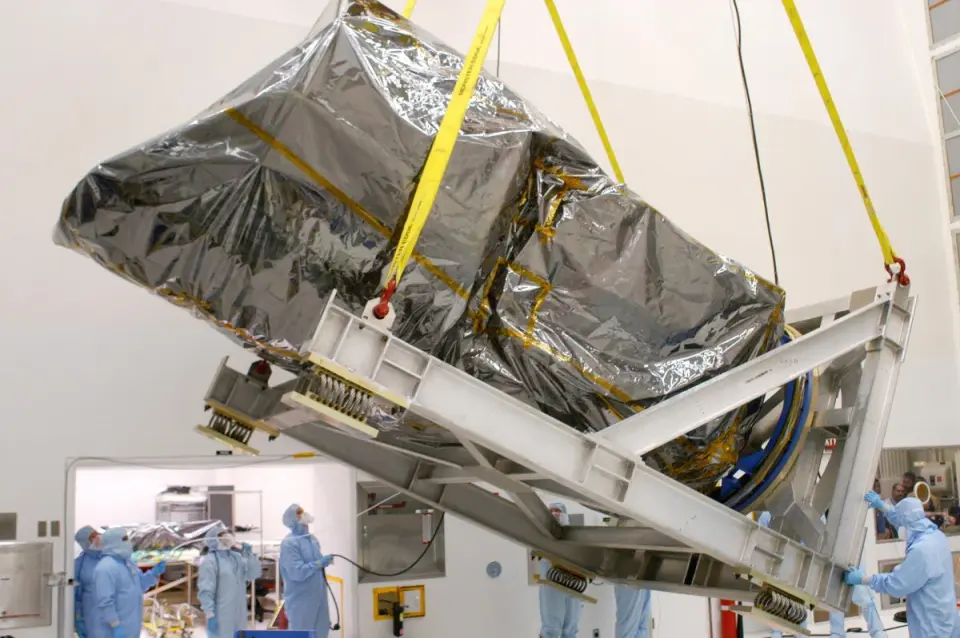
NASA’s Neil Gehrels Swift Observatory is expected to reenter Earth’s atmosphere around October 31, 2026, after a failed commercial rescue mission. The 22-year-old telescope, which observed over 2,000 gamma-ray bursts, will likely burn up, though some dense components may survive. Its final orbit was too low for reliable observations, ending a mission that far exceeded its two-year design life.
Key points
- The U.S. Space Force predicts Swift will reenter on or around Friday, October 31, 2026.
- Most of the 1.5-ton telescope will burn up, but tungsten and mirror parts may survive and fall into the ocean.
- A failed rescue by Katalyst Space’s Link spacecraft in July 2026 left Swift unable to maintain its orbit.
- Swift operated for 22 years, far exceeding its two-year design life, and contributed to 7,000 scientific papers.
- The telescope’s final observations included gamma-ray bursts and supernovae before systems were shut down in late October.
Background
Swift launched in November 2004 to study gamma-ray bursts and supernovae. It was designed for a two-year mission but operated for over two decades. In 2026, increased solar activity accelerated its orbital decay. NASA contracted Katalyst Space Technologies to launch a rescue spacecraft, Link, in July 2026, but technical issues prevented it from boosting Swift’s orbit. Link reentered Earth in September 2026, and Swift resumed observations until late October when its orbit became too low for reliable measurements.
How outlets are covering it
AP News emphasizes the imminent reentry and the mourning of the Swift team, noting the telescope’s 22-year legacy. Live Science highlights the failed rescue and the telescope’s rapid response capabilities, stressing its role in advancing astrophysics. Science News focuses on the unique combination of instruments and the gap Swift will leave in rapid-response observations. Interesting Engineering details the 12-terabyte data archive and the potential for future discoveries from existing data. All sources agree on the failed rescue and the end of the mission, but differ in emphasis: AP and Live Science focus on the emotional and scientific legacy, while Science News and Interesting Engineering highlight the technical and data aspects.
Why it matters
Swift’s end marks the loss of a unique rapid-response telescope, but its data archive will continue to support research. The failed rescue highlights challenges in commercial satellite servicing, while the reentry underscores the risks of orbital decay due to solar activity. The event also raises concerns about space debris and the need for new missions to fill the gap left by Swift.
What to watch
The U.S. Space Force will track Swift’s reentry path, and NASA will continue to analyze its data archive. Scientists will explore ways to replicate Swift’s rapid-response capabilities using existing or new telescopes. The failed rescue mission will inform future commercial satellite servicing efforts, and the reentry will be monitored for any surviving debris.
- NASA telescope is on the verge of plunging back to Earth after failed rescue mission AP News
- NASA's Swift observatory ends 22-year mission to study the most powerful explosions since the Big Bang Live Science
- NASA's trailblazing Swift telescope will go out in a blaze of glory Science News
- NASA’s Swift telescope to fall back to Earth after 21 years in orbit Interesting Engineering
- NASA’s Swift space telescope ends mission SpaceNews
Want the full story? Read the original reporting
Read on AP News