
NASA’s 1980 Titan Flyby Decision Ended Voyager 1’s Planetary Tour
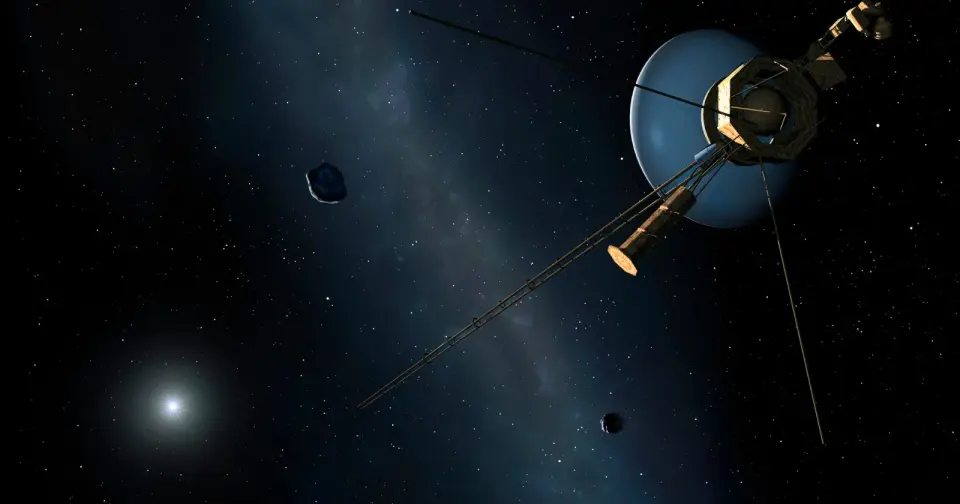
In 1980, NASA chose to fly Voyager 1 past Titan, a decision that permanently ended the probe's ability to visit other planets. This choice prioritized a close look at Saturn's moon over a potential trajectory to Pluto, which would have required skipping Titan. The flyby altered Voyager 1's path, ejecting it from the ecliptic plane and preventing any future planetary encounters. While this meant missing out on Pluto, it allowed Voyager 1 to become the most distant human-made object, while Voyager 2 continued to Uranus and Neptune.
Key points
- NASA prioritized a close flyby of Titan over a potential trajectory to Pluto in 1980.
- The Titan flyby altered Voyager 1's trajectory, ejecting it from the ecliptic plane.
- This change prevented Voyager 1 from making any further planetary encounters.
- Voyager 2 continued on a separate path to visit Uranus and Neptune.
- The decision was made because Titan offered higher scientific priority and lower risk than a long cruise to Pluto.
Background
Voyager 1 was launched in 1977 as part of a rare planetary alignment that allowed spacecraft to visit multiple outer planets. It has since become the most distant human-made object, continuing to transmit data from interstellar space despite declining power from its plutonium RTGs. The 1980 decision was a critical moment in its mission, determining its long-term trajectory and scientific focus.
Why it matters
The 1980 decision highlights the trade-offs inherent in space exploration, where choices about one target can permanently alter a mission's capabilities. It underscores the importance of strategic planning in long-duration missions and the value of prioritizing known scientific objectives over uncertain ones. The decision also demonstrates how a single trajectory change can have lasting consequences, shaping the probe's role as a long-term interstellar explorer.
What to watch
Voyager 1 will continue its journey into interstellar space, with NASA hoping to maintain contact until the 2030s. The probe's declining power will require further instrument shutdowns and system management to preserve critical functions. Meanwhile, Voyager 2 remains the only spacecraft to have visited Uranus and Neptune, continuing to provide data from the outer solar system.
Want the full story? Read the original reporting
Read on Space Daily