
Teghaza 001: 4.1-Billion-Year-Old Martian Meteorite Reveals Ancient Crust and Water History
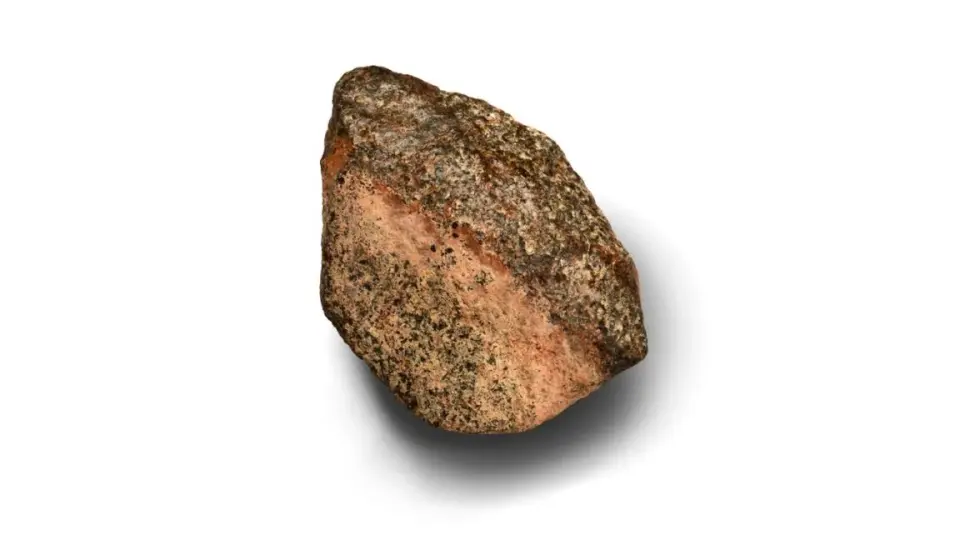
A 4.1-billion-year-old Martian meteorite, Teghaza 001, found in the Sahara, offers the first intact sample of Mars' ancient crust, revealing early water activity and a complex mantle history.
Key points
- Teghaza 001, found in Mali in 2022, is the oldest known Martian meteorite, dated to at least 4.1 billion years ago.
- The rock is a slow-cooled igneous sample from Mars' southern highlands, distinct from younger meteorite classes.
- Analysis shows evidence of early water circulation, with heavy oxygen and deuterium indicating a dynamic hydrosphere.
- The meteorite's chemistry suggests a complex Martian mantle, with magma sourced from depths exceeding 160 kilometers.
- The study, led by Yang Liu at JPL, was published in Science and highlights the need for sample return missions.
Background
Prior to this discovery, only two ancient Martian meteorites were known: Allan Hills 84001 and Black Beauty. Most Martian meteorites on Earth are younger than 2.4 billion years, creating a gap in understanding Mars' early crust. This meteorite fills that gap, providing a physical sample from a region previously only observed via orbital data.
How outlets are covering it
Ars Technica emphasizes the meteorite's role in revealing a 'filtered' collection of Martian rocks, noting that impact events bias which rocks reach Earth. NASA highlights the use of novel rubidium-strontium dating techniques and the meteorite's status as a 'Rosetta Stone' for Mars. Mashable focuses on the implications for early Mars' water loss, suggesting the planet began drying out almost immediately after formation. Scientific American underscores the meteorite's value for understanding planetary habitability and the limitations of impact-delivered samples compared to sample return missions.
Why it matters
Teghaza 001 provides a rare, intact sample of Mars' ancient crust, offering insights into the planet's early water cycle, mantle complexity, and potential habitability. It bridges the gap between orbital observations and physical samples, enhancing our understanding of Mars' geological history and the early solar system.
What to watch
Further studies on Teghaza 001 are underway, with multiple groups analyzing the sample for additional insights. The findings underscore the need for sample return missions, such as those planned for Jezero Crater, to obtain rocks with precise geological context and potentially older samples.
- Rare meteorite from Mars gives us a view into its ancient crust Ars Technica
- A Meteorite Found in the Sahara Is a 4.1-Billion-Year-Old Piece of Mars The New York Times
- NASA-funded Study Details One of Oldest Mars Meteorites Ever Found NASA (.gov)
- Scientists date Martian meteorite to foundational era of solar system Mashable
- The oldest known piece of Mars may help solve mysteries of life on Earth Scientific American
Want the full story? Read the original reporting
Read on Ars Technica