
South Korean Orbiter Captures First Images of SpaceX Rocket’s Lunar Impact
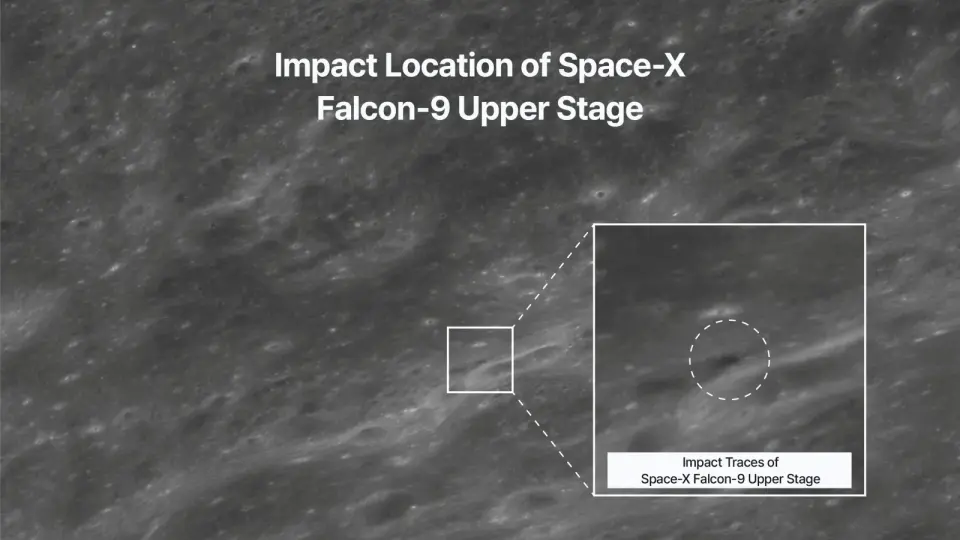
South Korea’s Danuri orbiter has released the first images of a crater formed when a SpaceX Falcon 9 upper stage crashed into the Moon on August 5. The 8,800-pound stage, left in orbit after a 2025 mission, struck the lunar surface near Einstein Crater at approximately 5,400 mph. NASA is also attempting to locate the site using its Lunar Reconnaissance Orbiter to study the impact’s scientific implications.
Key points
- The impact occurred on August 5, 2026, near the Einstein Crater on the Moon.
- South Korea’s Danuri orbiter captured before-and-after images, confirming terrain changes and ejecta traces.
- The crashing object was a 45-foot, 8,800-pound upper stage from a Falcon 9 rocket used in a January 2025 mission.
- NASA’s Lunar Reconnaissance Orbiter is also attempting to image the site, though visibility depends on lighting and orbital timing.
- The impact created an estimated crater 60 feet wide and 12 feet deep, throwing dust and rock into space.
Background
This event follows a year-long drift of the rocket stage after it was left in an uncontrolled orbit following a 2025 launch for Firefly Aerospace’s lunar lander. Prior to the impact, independent astronomers predicted the collision, and NASA confirmed a 100% chance of impact. The event highlights ongoing concerns about space debris and the disposal of rocket stages, as similar impacts have occurred in the past, including a Chinese rocket stage in 2022 and intentional NASA impacts in 2009.
How outlets are covering it
USA TODAY and AP News emphasize the success of South Korea’s Danuri orbiter in capturing the first images of the impact, highlighting the international collaboration in space observation. NASA focuses on the scientific value of the impact, noting that such events help researchers understand ejecta plumes and lunar geology, while also stressing the importance of responsible debris mitigation. SpaceX, as reported by USA TODAY, frames the incident as a rare but possible outcome of complex missions, emphasizing their commitment to space safety and the future use of reusable Starship rockets to reduce debris. All sources agree that the impact poses no danger to Earth and is a significant event for tracking space objects.
Why it matters
The incident underscores the growing challenge of space debris and the need for responsible disposal methods. It also demonstrates the importance of international collaboration in space observation and the scientific value of studying artificial impacts on the Moon. As space activities increase, such events highlight the need for better tracking and mitigation strategies to protect Earth’s orbital environment and other planetary bodies.
What to watch
NASA expects to receive imagery from its Lunar Reconnaissance Orbiter in the coming days, depending on lighting and orbital conditions. The data collected will help scientists refine models for tracking objects in space and understanding the effects of artificial impacts on the Moon. SpaceX and NASA will continue to monitor the situation as part of their debris mitigation efforts.
- A SpaceX rocket crashed into the moon. New images show the aftermath usatoday.com
- South Korean satellite captures before and after views of SpaceX rocket’s moon crash AP News
- NASA Will Attempt to Observe Rocket Part’s Lunar Impact NASA (.gov)
- South Korea’s Danuri Orbiter Caught a SpaceX Rocket Hitting the Moon Yahoo
- A Four-Ton SpaceX Rocket Stage Hit the Moon, but Almost No One Saw It The New York Times
Want the full story? Read the original reporting
Read on usatoday.com