
South Korean Satellite Captures First Images of SpaceX Rocket’s Lunar Impact
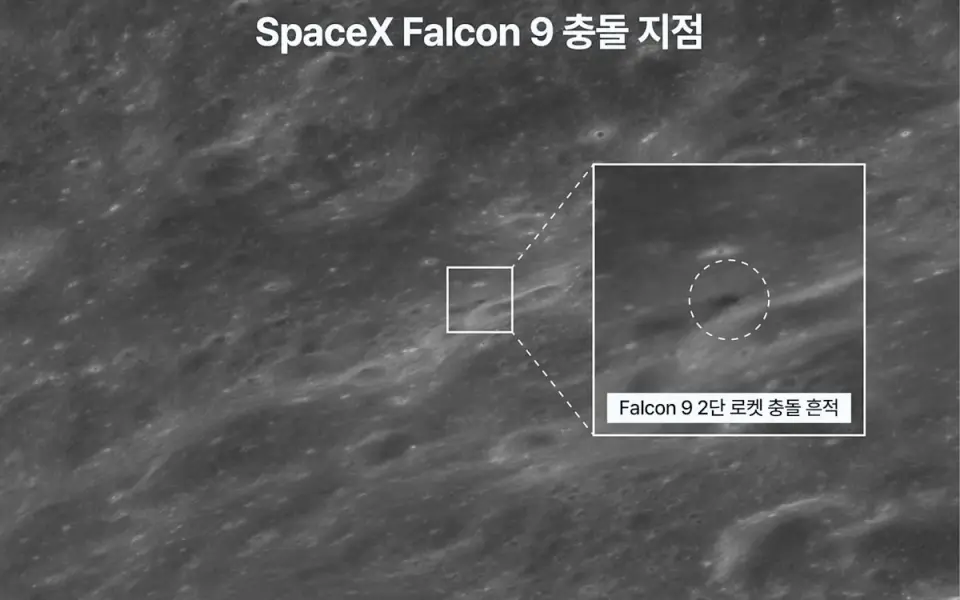
A spent SpaceX Falcon 9 upper stage struck the Moon on August 5, 2026, creating a new crater near Einstein Crater. South Korea’s Danuri satellite provided the first before-and-after images, confirming the impact. NASA and SpaceX are analyzing the event to improve space debris tracking and lunar exploration models.
Key points
- The impact occurred on August 5, 2026, near the Einstein and Bell craters on the Moon’s near side.
- The Falcon 9 upper stage, from a January 2025 launch carrying Firefly Aerospace’s Blue Ghost 1 lander, drifted off course due to solar activity and gravitational forces.
- The collision created a crater approximately 60 feet wide and 12 feet deep, with an energy equivalent to three tons of TNT.
- South Korea’s Korea Aerospace Research Institute released images from the Danuri orbiter showing the site before and after the impact.
- NASA’s Lunar Reconnaissance Orbiter is scheduled to inspect the site in the coming weeks to gather further data.
Background
This incident follows a 2022 Chinese rocket fragment impact, marking the second known instance of a human-made object striking the Moon. Earlier reports highlighted concerns about growing space debris and the need for safer disposal methods for rocket stages in low lunar orbit.
How outlets are covering it
AP News and NASA emphasized the scientific value of the impact, noting it provides data on ejecta plumes and lunar geology. NASA confirmed a 100% chance of impact and highlighted the importance of tracking such objects for future missions. The Daily Beast, however, focused on unrelated celebrity news, indicating a lack of coverage on the space event. Yahoo News reported on the first images but did not provide detailed analysis.
Why it matters
The incident underscores the growing challenge of space debris and the need for responsible disposal practices. It also highlights the importance of international cooperation in tracking and monitoring objects in space to prevent unintended impacts on celestial bodies.
What to watch
NASA’s Lunar Reconnaissance Orbiter will inspect the impact site in the coming weeks. Data from the event will be used to refine models for tracking objects in space and improve future lunar exploration missions.
- New Moon crater revealed in first pictures of Space X crash Yahoo
- South Korean satellite captures before and after views of SpaceX rocket’s moon crash AP News
- NASA Will Attempt to Observe Rocket Part’s Lunar Impact NASA (.gov)
- NFL Great Reveals Why He Got a Vasectomy at 21 The Daily Beast
- Scientists are certain a wayward SpaceX rocket slammed into the moon as predicted NBC News
Want the full story? Read the original reporting
Read on Yahoo