
Europe Rejects US Push to Redraw Security Map, Fears Falling Into Moscow’s Trap
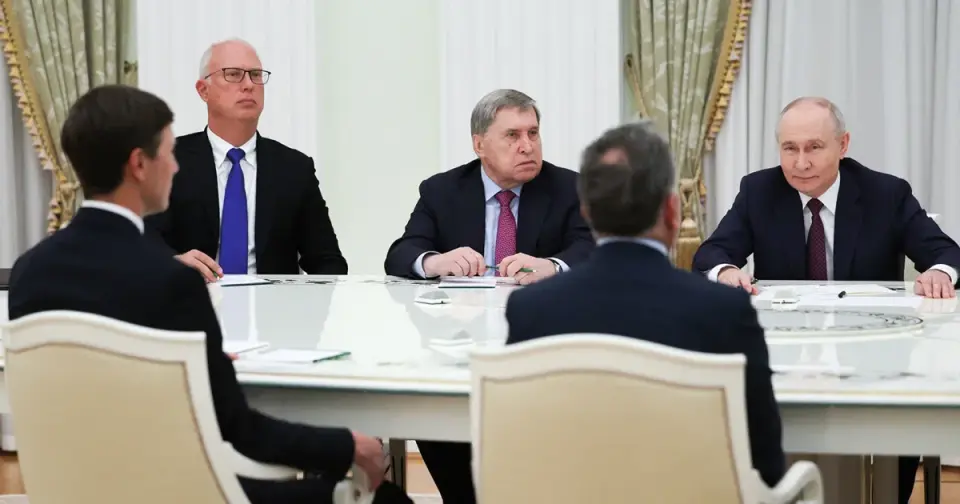
European leaders are alarmed by US proposals to renegotiate Europe’s security architecture, viewing it as a trap that echoes Russian maximalist demands. While Washington seeks a comprehensive deal, Europe insists on a ceasefire first and rejects any role for Russia in defining continental defense. Simultaneously, EU foreign policy chief Kaja Kallas has been excluded from the official negotiating team, highlighting internal divisions over who represents Europe in peace talks.
Key points
- US envoys Jared Kushner and Steve Witkoff have proposed that peace talks include a broader review of European security arrangements, a demand previously rejected by Western governments in 2021.
- European officials, including EU foreign policy chief Kaja Kallas, warn that this approach risks 'walking into Moscow’s trap' by validating Russian claims that NATO’s presence is an injustice.
- The EU has selected a negotiating team comprising national security advisers from France, Germany, Italy, Poland, and the UK, along with Commission and Council representatives, excluding Kallas.
- Ukrainian President Volodymyr Zelenskyy and European leaders argue that a ceasefire must precede any peace negotiations, accusing Russia of stalling to damage civilian infrastructure before winter.
- Recent attacks in Ukraine killed at least three people, while the EU approved a record $8.7 billion payment to Kyiv and imposed new sanctions on Russian banks and energy sectors.
Background
This dispute follows earlier US-Russia talks in Abu Dhabi where envoys agreed to include Europe but maintained maximalist demands. Previous coverage noted that Putin signaled readiness for war with Europe by 2030 and that US envoys conceded to an 'all-or-nothing' negotiation strategy. The current tension reflects a shift where Washington is prioritizing a comprehensive deal, while Europe fears being sidelined in decisions affecting its own security.
How outlets are covering it
NBC News and Al Jazeera emphasize the alarm in Europe over the US proposal to redraw security maps, viewing it as echoing Russian war goals. Euronews and Politico focus on the political fallout for Kaja Kallas, noting her exclusion from the negotiating team due to her perceived divisiveness and the broader trend of leaders bypassing foreign ministers. While NBC highlights the risk of emboldening Putin, Euronews points to internal EU friction, with some diplomats arguing that foreign ministers lack the authority to make such high-level decisions. All sources agree that Russia has not confirmed a commitment to include Europe in talks, maintaining that it must first understand what Europe can contribute.
Why it matters
The debate over European security architecture could determine the long-term stability of NATO and the outcome of the Ukraine war. If the US proceeds with a comprehensive deal that includes security concessions to Russia, it may undermine European defense capabilities and embolden further aggression. Conversely, a failure to reach a consensus could prolong the conflict and deepen divisions between Washington and European capitals. The exclusion of key EU figures from negotiations also risks fragmenting Europe’s voice, potentially weakening its leverage in future diplomatic efforts.
What to watch
The next round of peace talks is expected to take place in Abu Dhabi, where the EU’s selected team will present its mandate. European foreign ministers are working to refine their 'maximum demands' document to ensure a unified position. Meanwhile, the US is pushing for a prisoner swap and continued dialogue, while Russia maintains its stance that a ceasefire must precede peace talks. The outcome of the upcoming trilateral meeting in Shenzhen between Trump, Putin, and Xi may also influence the trajectory of these negotiations.
- A Kremlin trap? Europe sees danger in Vladimir Putin’s new demand in U.S. talks NBC News
- Holding talks with Russia on Europe's security now would be premature, EU ministers say Reuters
- Russian attacks kill three in Ukraine, EU accuses Moscow of prolonging war Al Jazeera
- After peace talks snub, Kallas faces reproach and uncertain future Euronews.com
- EU’s Kallas fights to find a role in Ukraine peace talks POLITICO.eu
Want the full story? Read the original reporting
Read on NBC News