
Qatar Mediator Seeks Trump Buy-In for Two-Day Iran Ceasefire Amid Internal US Divisions
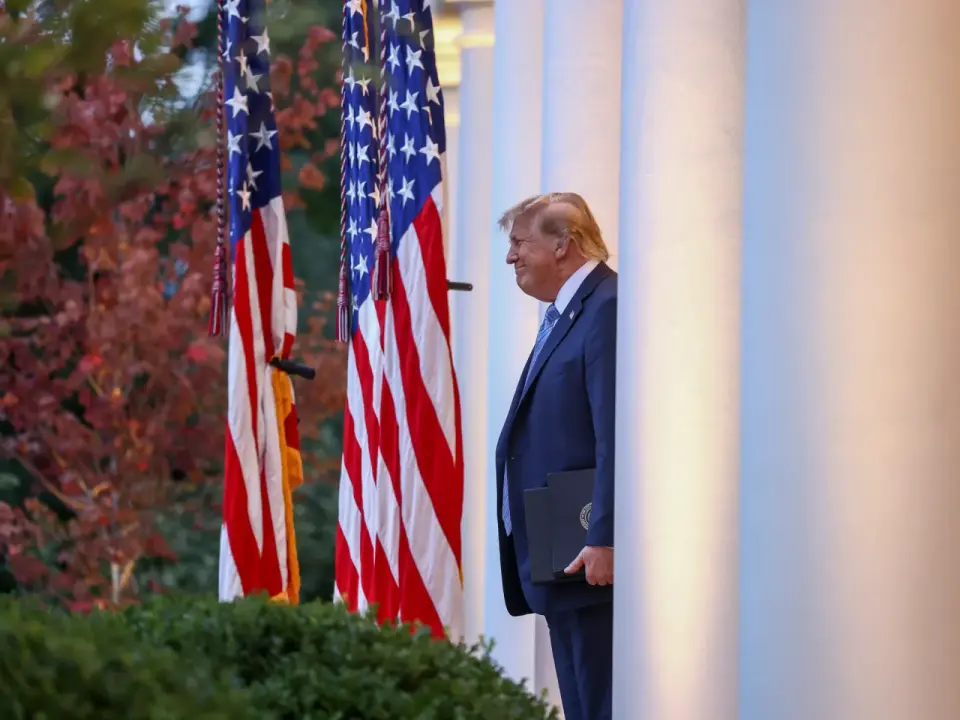
Qatari Prime Minister Sheikh Mohammed bin Abdulrahman Al Thani is meeting US President Donald Trump and Vice President JD Vance in Washington to finalize a two-day interim agreement with Iran. The proposal involves lifting the US naval blockade and unfreezing $8 billion in Iranian funds in exchange for reopening the Strait of Hormuz and allowing inspections of nuclear sites. While Vance pushes for a deal to end the conflict, senior officials like Secretary of State Marco Rubio and Defense Secretary Pete Hegseth oppose it, citing Iranian demands as unrealistic and intelligence suggesting Iran’s economy is collapsing.
Key points
- Sheikh Mohammed bin Abdulrahman Al Thani, acting as a key mediator, is holding closed-door talks with Trump and Vance to advance a draft proposal.
- The proposed agreement requires the US to lift its naval blockade and release frozen Iranian funds on day one, followed by the reopening of the Strait of Hormuz and resumption of nuclear talks on day two.
- Iran has reportedly dropped its demand to collect transit fees from the Strait of Hormuz but refuses to discuss its nuclear program until its seven core demands are met.
- Vice President JD Vance is actively pushing for a deal to end the war early next year, while Secretary of State Marco Rubio and Defense Secretary Pete Hegseth oppose it, calling Iranian demands 'outrageous' and 'ridiculous.'
- Trump stated in a CBS interview that he sees no reason to escalate the war, noting Iran’s nuclear material is 'buried under thousands of tons of rock,' though he warned of identified targets if diplomacy fails.
Background
This diplomatic push follows the US midterm elections, where the war’s impact on fuel prices contributed to Republican losses. Previous mediation efforts, including a memorandum of understanding signed in Pakistan in June, collapsed after Iranian attacks on oil tankers. Qatar’s emir had earlier urged Trump to prioritize diplomacy to prevent renewed strikes, while Iran’s foreign minister warned of a 'devastating response' if the US escalates.
How outlets are covering it
Outlets highlight significant internal divisions within the Trump administration. Israel Hayom reports that Treasury Secretary Scott Bessent, Commerce Secretary Howard Lutnick, and Secretary of State Marco Rubio oppose the deal, arguing it would 'save the regime' in Iran despite intelligence showing its economy is collapsing due to sanctions. Conversely, Axios and Al Jazeera emphasize that Vice President JD Vance is driving the negotiations, believing the administration needs time to rebuild public trust before the next presidential election. While Al Jazeera notes Iran’s willingness to negotiate only after its demands are met, Israel Hayom suggests Iran has dropped its demand to control the Strait of Hormuz, a point not explicitly confirmed by other sources.
Why it matters
The outcome of these talks determines whether the US resumes military strikes or pursues a diplomatic resolution. A successful interim deal could stabilize global oil markets and reduce tensions in the Middle East, while a failure may lead to renewed US attacks on Iranian infrastructure, including 38 bridges identified by the US military.
What to watch
The White House is expected to review the Qatari proposal in the coming days. If no agreement is reached, the US military, which has three aircraft carriers in the region, may resume major operations against Iran. Iran’s foreign minister has stated that Tehran is waiting for a US response, warning that failure to meet its demands could lead to renewed conflict.
- Qatar PM to meet Trump: What’s the latest on US-Iran negotiations? Al Jazeera
- Iran war live: Diplomacy intensifies as Qatar PM to meet Trump and Vance Al Jazeera
- Trump to meet Iran war mediator Qatar, no imminent deal seen to end the war The Detroit News
- $8 billion lifeline? Iranian deal set to land on Trump's desk www.israelhayom.com
- Trump to meet Qatari prime minister about mediation efforts with Iran Axios
Want the full story? Read the original reporting
Read on Al Jazeera