
Ancient DNA reveals 1,600-year-old Peruvian infant with cyclopia had trisomy 13
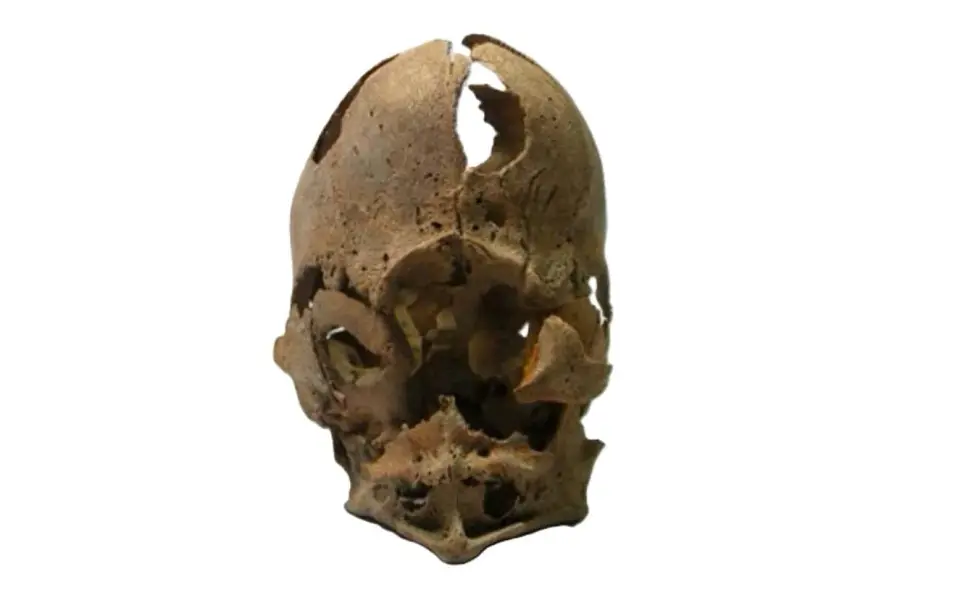
Researchers identified trisomy 13 in a 1,600-year-old Nasca infant with cyclopia, confirming the first archaeological case of this chromosomal disorder. The infant, buried in Peru’s Palpa Valley, likely survived briefly after birth, as indicated by dental development, despite the condition’s typically fatal nature.
Key points
- Ancient DNA analysis confirmed the infant had trisomy 13, a chromosomal abnormality causing cyclopia.
- The infant was buried in a ceramic urn at Jauranga, Peru, alongside another child during the Middle Nasca period (325–440 CE).
- Dental evidence suggests the infant may have survived for months, though skeletal growth was stunted.
- The burial lacked special grave goods, indicating the child was treated similarly to other infants in death.
- This is the first archaeological confirmation of trisomy 13, previously identified only in modern or historic anatomical collections.
Background
Recent advances in ancient DNA analysis have allowed researchers to identify genetic disorders in prehistoric remains, such as Down syndrome and Edwards syndrome in a 2024 study. This discovery adds trisomy 13 to the list of chromosomal disorders identified in ancient human remains, enhancing understanding of historical health and social treatment of individuals with disabilities.
How outlets are covering it
ZME Science and Live Science emphasize the rarity of cyclopia and the significance of identifying trisomy 13 in ancient remains. The Independent highlights the physical evidence of the condition, such as the single eye socket and fused optic nerves. All sources agree on the burial practices but differ in emphasis: ZME Science focuses on the conflicting age indicators, while Live Science notes the lack of special treatment in death. The Independent provides a detailed description of the skeletal abnormalities.
Why it matters
This discovery provides the first archaeological evidence of trisomy 13, offering insights into the prevalence and impact of chromosomal disorders in ancient populations. It also sheds light on how the Nasca culture treated infants with severe disabilities, suggesting that such individuals were integrated into standard burial practices rather than excluded or treated differently.
What to watch
Researchers will continue to analyze ancient DNA to identify more chromosomal disorders in prehistoric populations. Further studies may explore the social and cultural implications of disabilities in ancient societies, potentially revealing more about how communities cared for and integrated individuals with severe conditions.
- A 1,600-Year-Old Baby Had a Single Eye Socket. Ancient DNA Finally Revealed Why ZME Science
- Ancient DNA reveals rare genetic condition behind a 1,600-year-old infant's single eye socket Phys.org
- Nazca infant had rare, fatal birth defect that left her with one central eye 1,600 years ago Live Science
- Rare Malady of Cyclopia Discovered in Ancient Nazca Burial in Peru Haaretz
- Strange 1,600-year-old infant skull with single ‘cyclops’ eye unearthed in Peru The Independent
Want the full story? Read the original reporting
Read on ZME Science