
Study reveals Constantinople, not Rome, was the Roman Empire's true road hub
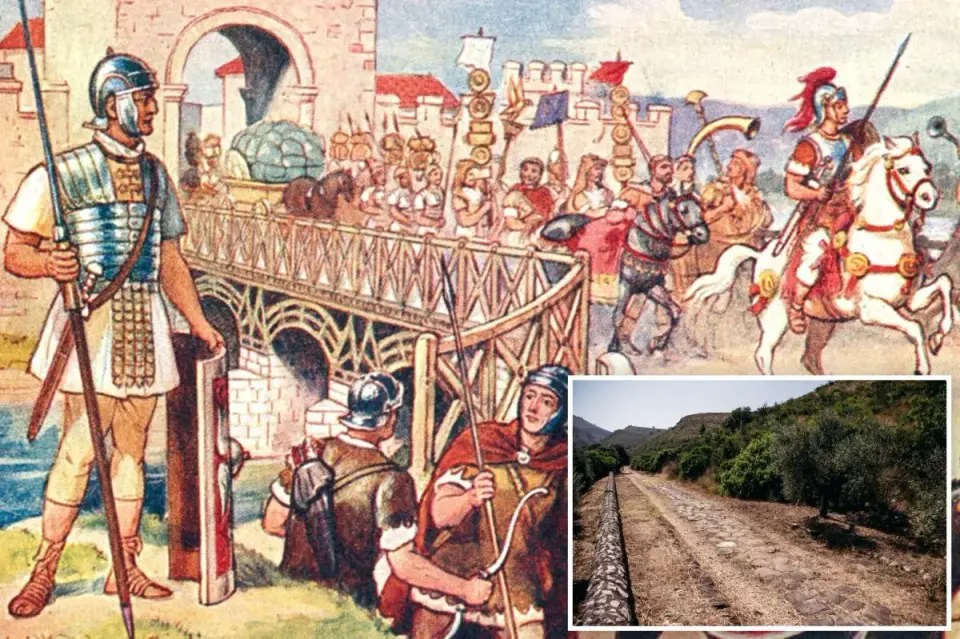
A new study published in Nature Communications challenges the proverb 'all roads lead to Rome.' By analyzing 190,000 miles of ancient routes, researchers found that Constantinople (modern Istanbul) was the central hub for overland travel, while Rome remained the political capital. The study also clarifies that Roman roads were not uniformly straight and that maritime routes were more critical for trade.
Key points
- A study in Nature Communications analyzed 190,000 miles of Roman roads across Europe, the Middle East, and North Africa.
- Researchers found Constantinople was the most central hub for overland travel after Emperor Constantine moved the capital there in the 4th century AD.
- The proverb 'all roads lead to Rome' is medieval in origin and not literally accurate, as no roads in Roman Britain actually led to Rome.
- Roman roads were built as straight as possible given terrain and technology, but were not uniformly straight as often assumed.
- Maritime transportation was the primary and cheaper method for moving goods across the empire, surpassing road networks in connectivity.
Background
This study builds on the digital atlas 'Itiner-e,' published last year, which mapped 186,000 miles of Roman roads. The findings correct popular misconceptions about Roman infrastructure, emphasizing that while Rome was the political center, geographic and logistical factors made other cities more central to the physical road network.
How outlets are covering it
Fox News and the New York Post highlight the surprise that Constantinople, not Rome, was the road hub, noting the proverb's medieval origins. CNN provides deeper context, explaining that the study used the 'Itiner-e' atlas and that the myth of straight roads is partially true but limited by terrain. CNN also notes that the study confirms previous broad assumptions mathematically, while Fox News emphasizes the shift in capital under Constantine. All sources agree that Rome remained the political and ideological center, but the physical connectivity was more distributed.
Why it matters
The study corrects a widespread historical misconception and provides a more accurate understanding of the Roman Empire's infrastructure. It highlights the importance of Constantinople in the empire's logistics and the role of maritime routes in trade, offering insights into how ancient networks influenced modern geography and connectivity.
What to watch
Researchers plan to add river and sea connections to the network in future studies. The findings may lead to more accurate models of the ancient world and further debunk myths about Roman roads, such as the assumption that all straight roads are Roman.
- Famous historical saying about Rome may be wrong, new study suggests New York Post
- One of history's most famous sayings about Rome may be wrong, new study suggests Fox News
- New study reveals surprising truth about popular phrase about Ancient Rome Yahoo
- All Roads Lead to... Istanbul? Newser
- Why all roads don’t lead to Rome CNN
Want the full story? Read the original reporting
Read on New York Post