
Ancient Teeth Reveal 25,000-Year-Old Betel Nut Addiction in Indonesia
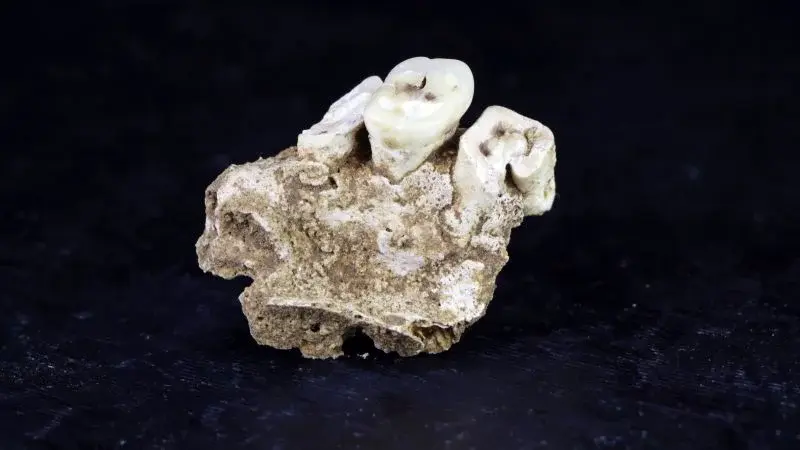
A new study published in Science Advances identifies the earliest known evidence of habitual psychoactive drug use, dating back 25,000 years. Analysis of teeth from two foragers in Sulawesi, Indonesia, reveals deep grooves and traces of arecoline, the active compound in betel nuts. Researchers conclude these individuals sucked on whole nuts for pain relief, creating a cycle of dental damage and addiction. This discovery pushes the timeline of human drug use back by over 10,000 years, predating the Neolithic Revolution and the invention of beer.
Key points
- Two sets of remains from Leang Bulu Bettue and Leang Cappolombo caves in Sulawesi show distinct, deep grooves in teeth, indicating habitual sucking on hard objects.
- Dental tissue analysis confirmed the presence of arecoline, the psychoactive alkaloid in betel nuts, in both individuals.
- The older individual lived between 25,000 and 16,000 years ago; the younger lived between 7,600 and 6,300 years ago.
- Researchers hypothesize the practice began as a pain remedy for toothaches, but the abrasive nature of the nuts worsened dental health, leading to a 'vicious cycle' of addiction.
- This predates the Neolithic Revolution (approx. 13,000 years ago) and the earliest known beer production in Israel (approx. 13,000 years ago).
Background
Previous archaeological evidence suggested psychoactive drug use began around 13,000 years ago with the Neolithic Revolution, specifically linked to beer production in Israel. Recent archive coverage from September 2026 already highlighted this Sulawesi discovery as a potential record for the oldest drug use. This new study refines that timeline, confirming the practice existed during the Ice Age among foragers, not just farmers. It also contrasts with earlier findings of Neanderthal range expansion in Arabia, showing that while Neanderthals may have used plants, this is the first direct evidence of habitual, addictive use in Homo sapiens.
How outlets are covering it
CNN and The Guardian emphasize the 'vicious cycle' of addiction, noting that the numbing effect of the nuts treated pain but caused further dental damage, leading to increased use. The Conversation and Smithsonian Magazine focus on the broader implications for understanding human behavior, highlighting that this was a cultural practice among foragers, not just farmers. The Conversation notes the distinction between the older 'sucking' habit and the later 'chewing' practice introduced by Austronesian farmers. All sources agree on the significance of the arecoline traces, but CNN and The Guardian provide more detail on the physical mechanism of the tooth grooves, comparing them to 'clay pipe facets' from later historical periods. The Conversation adds that the practice likely evolved into the modern quid-chewing tradition when Austronesian settlers arrived in Sulawesi.
Why it matters
This discovery rewrites the history of human substance use, showing that addiction and the negative health consequences of psychoactive drugs were part of the human experience long before agriculture. It challenges the assumption that drug use began with farming societies and provides a new framework for understanding the evolution of cultural practices in the Asia-Pacific region. It also offers a rare glimpse into the daily lives and health struggles of Ice Age foragers, revealing that they faced similar cycles of pain and relief as modern users.
What to watch
Researchers plan to investigate other potential early drug uses, such as fermented beverages, to see if they predate the Neolithic Revolution. The study may prompt further archaeological searches for similar dental wear patterns in other prehistoric sites, potentially revealing even earlier evidence of psychoactive plant use. It also opens new avenues for studying the social and cultural contexts of drug use in prehistoric societies, moving beyond the focus on farming communities.
- Commonly used psychoactive substance may have prehistoric origins CNN
- Ice Age origins of one of humanity's oldest drug habits discovered Phys.org
- Ancient teeth reveal the Ice Age origins of the world’s 4th most common addictive drug The Conversation
- Indonesian foragers may have sucked on mind-altering nuts 25,000 years ago, research finds The Guardian
- Archaeologists Discover the World's Oldest Evidence of Habitual Drug Use in the Teeth of a Hunter-Gatherer Who Lived Up to 25,000 Years Ago Smithsonian Magazine
Want the full story? Read the original reporting
Read on CNN