
Orbiting Satellites and Ground Crowds Capture the Aug. 12 Solar Eclipse
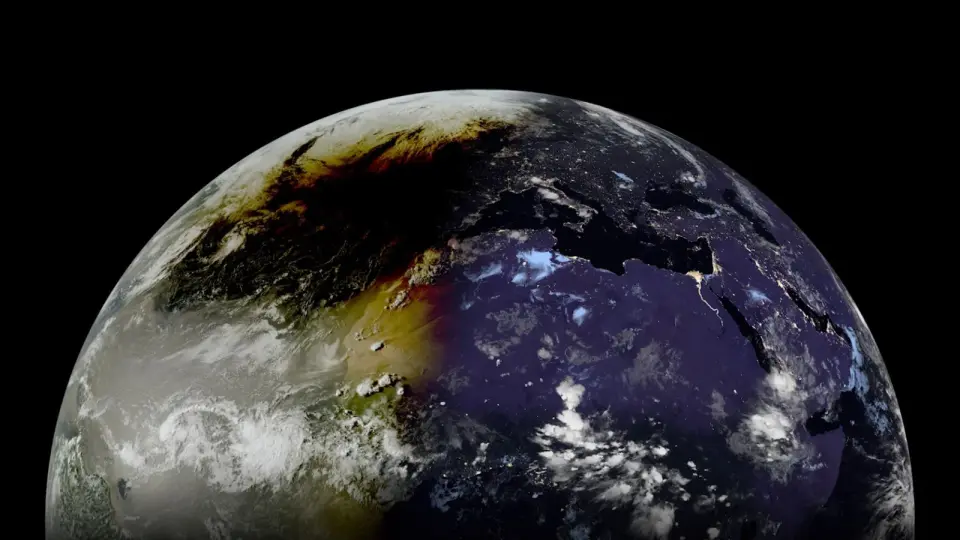
The August 12, 2026, total solar eclipse drew global attention as the Moon’s shadow crossed Greenland, Iceland, and Spain. While ground observers in Europe witnessed a rare golden corona, spacecraft in orbit provided unique overhead views of the event.
Key points
- The path of totality crossed parts of Greenland, Iceland, Spain, and Portugal, with the longest duration reaching approximately two minutes and 18 seconds.
- It was the first total solar eclipse visible from mainland Spain since 1905, drawing thousands of spectators to rural locations like Duratón and Benavente.
- NASA astronaut Jessica Meir captured images of a partial eclipse from the International Space Station, noting about 18% solar coverage from that vantage point.
- ESA’s MTG-I1 satellite and other orbiting spacecraft recorded the Moon’s shadow darkening Earth’s surface from space.
- Observers in Spain reported an unusually golden solar corona, attributed to the low sun angle and smoke from nearby forest fires filtering blue light.
Background
Prior coverage highlighted the rare coincidence of the total solar eclipse and the Perseid meteor shower peak on August 12. Citizen science initiatives, such as the Dynamic Eclipse Broadcast Initiative, were active in Spain to livestream the event, while earlier reports emphasized safety protocols and weather uncertainties along the path of totality.
How outlets are covering it
Space.com and NASA focused on the orbital perspective, highlighting images from the ISS and ESA satellites that showed the Moon’s shadow moving across Earth. In contrast, Ars Technica and NPR emphasized the ground-level experience in Spain, detailing crowd sizes, the historical significance for Spain, and the visual impact of the eclipse. NASA’s Astronomy Picture of the Day specifically analyzed the scientific anomaly of the golden corona, linking it to atmospheric conditions and smoke, a detail not emphasized in the general news coverage.
Why it matters
The event demonstrated the global reach of astronomical phenomena and the value of multi-platform observation. The unusual golden corona provided a unique scientific data point regarding atmospheric scattering, while the orbital images offered a new perspective on the scale of the eclipse’s shadow on Earth.
What to watch
The next partial solar eclipse visible in the United States is scheduled for August 2, 2027. The next total solar eclipse visible in the contiguous United States will not occur until August 23, 2044.
- See gorgeous views of the Aug. 12 total solar eclipse captured from space Space
- Photos: See the best photos from this year's total solar eclipse : The Picture Show NPR
- The Moon’s shadow raced across the heart of Spain, and I was there to see it Ars Technica
- APOD: 2026 August 17 - A Golden Corona Eclipse NASA Science (.gov)
- Scenes From the 2026 European Solar Eclipse The New York Times
Want the full story? Read the original reporting
Read on Space