Tag

Aav

All articles tagged with #aav

Engineered super-enhancers enable targeted viral immunotherapy in glioblastoma
science2 days ago

Engineered super-enhancers enable targeted viral immunotherapy in glioblastoma

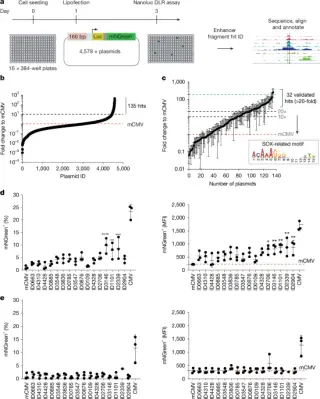
A team created synthetic super-enhancers by assembling natural enhancer fragments bound by SOX2 and SOX9 in glioblastoma stem cells to achieve high, selective transgene expression. They packaged these SSEs into AAV vectors to drive a dual payload (HSV-TK/GCV cytotoxic system and IL-12) in a mouse glioblastoma model, achieving tumor clearance and immunological memory; SSE activity was validated in primary human GSCs and brain tissue slices, suggesting SSEs could enable cell-state-specific, potent gene therapy with broad applicability.

"Revolutionizing Protein Engineering with Computational Techniques and AI Integration"
science-and-technology2 years ago

"Revolutionizing Protein Engineering with Computational Techniques and AI Integration"

MIT researchers have developed a computational approach to predict mutations that will lead to improved proteins, making it easier to engineer proteins with useful functions. Using a convolutional neural network trained on experimental data, the researchers created fitness landscapes to predict optimized versions of green fluorescent protein (GFP) and a protein from adeno-associated virus (AAV). The approach has the potential to accelerate the process of optimizing proteins for research and medical applications, and could be applied to other protein engineering problems.

In Vivo Prime Editing Achieved with Dual AAVs.
science-and-technology2 years ago

In Vivo Prime Editing Achieved with Dual AAVs.

Researchers have demonstrated high-efficiency, therapeutically-relevant prime editing in vivo in mice with a dual-AAV system, demonstrating prime editing in the mouse brain and liver by installing putative protective mutations in vivo for Alzheimer’s disease in astrocytes and for coronary artery disease in hepatocytes, respectively. The study opens the door to creating a wide variety of prime editing therapies, which will allow a much larger number of diseases and groups of patients to be addressed than has been before with editing technologies.