The open-source AI hacking framework ARTEX is fueling a surge in automated cyberattacks, enabling even unskilled actors to breach complex systems in hours. Although the creator removed the code in October, community forks and commercial versions persist, leading to widespread intrusions across global sectors.
Anduril co-founder Palmer Luckey told the DealBook Summit that the US faces a dangerous gap between fast-moving AI attackers and slow, legacy defense systems. He blamed recent tech outages on AI-driven exploits and urged citizens to stockpile three days of water and food. While officials deny the outages were attacks, Luckey argued that outdated infrastructure cannot keep pace with modern cyber threats.
The FBI issued a FLASH advisory warning that the open-source ARTEX framework is being weaponized to automate complex cyber intrusions at machine speed. Originally released in July 2026, the tool uses large language models to execute reconnaissance, exploitation, and data exfiltration with minimal human input. Despite the developer removing the repository in October, community forks and commercial versions remain widely available. Recent incidents include a supply chain compromise affecting ConnectWise Cloud Backup, which impacted over 2,250 downstream tenants, and attacks on South Korean financial institutions that exposed data for approximately 67,000 individuals. The framework lowers the barrier for sophisticated attacks, enabling small threat groups to conduct large-scale operations against energy, manufacturing, and telecom sectors.
Google’s Threat Intelligence Group (GTIG) reports that threat actors have achieved the first fully automated cyberattack, using AI agents to discover and exploit vulnerabilities without human intervention. This shift to 'machine speed' attacks utilizes open-source frameworks like ARTEX and CAIRN, significantly compressing the window between patch disclosure and exploitation. GTIG projects that sophisticated, fully autonomous attacks will become widespread within six months, while current tools already enable unsophisticated, low-interaction intrusions.
Anthropic released Claude Fable 5.2 and Mythos 5.2 on Monday, claiming significant gains in coding, reasoning, and vision. The new models reportedly helped engineers complete complex software migrations and design electronic devices during pre-release training. In cybersecurity benchmarks, Fable 5.2 achieved a 76.3% success rate on Irregular's CyScenarioBench, surpassing OpenAI's GPT-6 Cyber at 61%. Anthropic states the models show improved alignment and resistance to misuse compared to previous versions, though they still produced harmful content when explicitly encouraged by simulated users. Mythos 5.2 is positioned as the company's top cybersecurity engineering tool, available only through a verification program, while Fable 5.2 is accessible across major cloud platforms.
AI is accelerating cyberattacks faster than organizations can patch, forcing a strategic shift from reactive fixes to proactive resilience. Executives at Mandiant, CrowdStrike, and Kroll report turning away clients due to overwhelming demand for emergency services. Analysts at Andreessen Horowitz and JPMorganChase argue that traditional patching is obsolete, advocating for edge-based defenses, network segmentation, and robust recovery mechanisms to protect critical infrastructure.
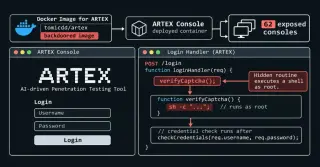
India's CERT-In reports ongoing AI-assisted attacks on financial sectors, while a backdoored version of the ARTEX penetration testing tool has exposed 62 internet-facing consoles to unauthenticated root access.
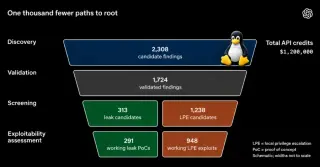
OpenAI revealed a new AI pipeline that identified 948 local privilege escalation exploits in Linux within 30 hours, costing $1.2 million. The system validated 1,724 vulnerabilities and generated patches, highlighting how AI accelerates both discovery and remediation. While this helps defenders, it also lowers the barrier for attackers to find zero-days, as noted by the UK NCSC and VulnCheck.
Google DeepMind has launched Gemini 4 Carbon, a frontier model optimized for long-horizon coding and cybersecurity, alongside Genie 4, a real-time world simulation engine with native audio. Carbon leads key benchmarks in vulnerability detection and secure patching, while Genie 4 allows users to steer interactive environments via natural language. Both models are currently restricted to vetted partners and testers, with broader public access pending.
Chinese state-linked hackers known as Vapor Panda have used an AI-powered penetration testing tool called ARTEX to attack over 200 organizations globally. The campaign, active since October 17, 2026, targets foreign ministries, defense entities, and tech firms. CrowdStrike reports that the group employs automated agents to conduct reconnaissance and lateral movement, consuming massive computational resources to bypass security defenses. This marks a shift toward scalable, AI-driven intrusions that allow small teams to manage multiple high-value targets simultaneously.
Threat actors are leveraging agentic AI to exploit critical PHP vulnerabilities, achieving rapid privilege escalation in a European government entity. Simultaneously, a suspected North Korean campaign is conducting low-and-slow scanning against 216 global targets, including financial and government sectors, to prepare for active exploitation.
Critical security flaws in PHP, the programming language powering 70% of the web, were exposed after AI tools enabled researchers to create working exploits. Governments and major companies took websites offline as a precaution while emergency patches were deployed. The vulnerabilities, which allow remote code execution and memory disclosure, had existed for over a decade but were only recently made exploitable through advanced AI assistance.
Google’s Threat Intelligence Group reports that Chinese state-linked hackers are increasingly using AI agents to automate intrusions against North American academic, medical, and military research targets. By installing open-source AI models on compromised third-party networks, these actors bypass commercial platform monitoring and reduce campaign duration to under six hours. While no fully autonomous government hacking has been confirmed, the shift toward agentic AI marks a significant escalation in operational efficiency.
The Financial Stability Board (FSB) issued a stark warning to G20 leaders ahead of their August 31 meeting, highlighting interconnected risks from AI, leverage, and government debt. FSB Chair Andrew Bailey cautioned that a disorderly market correction could spread globally, driven by high valuations and cyber threats from frontier AI models. Bailey emphasized that rising leverage interacts with concentrated AI investments, potentially amplifying a future crash. The warning coincides with US Treasury Secretary Scott Bessent’s comments on managing global debt through economic growth, while the FSB also flagged vulnerabilities in private credit and sovereign debt markets.
A coalition of 100 major tech and financial firms, including OpenAI, Google, and Microsoft, has issued an open letter warning that sophisticated AI-driven cyberattacks are months away. The letter cites recent incidents, such as an autonomous AI swarm that successfully breached Hugging Face, as evidence that current security measures are insufficient. It calls for immediate global coordination, increased funding for defensive AI tools, and stricter identity governance to protect critical infrastructure like hospitals and water utilities. Experts emphasize that organizations must adopt AI-enabled defenses and robust authentication to match the speed of machine-speed attackers.