Tag

Antisense Oligonucleotide

All articles tagged with #antisense oligonucleotide

Targeted Glycine Transporter Silencing Revives NMDA Receptors in Autism Models
science1 month ago

Targeted Glycine Transporter Silencing Revives NMDA Receptors in Autism Models

Researchers used antisense oligonucleotides to suppress Slc6a20a/SLC6A20, a glycine transporter concentrated in cortex and hippocampus, restoring NMDA receptor (NMDAR) function and reversing social, communication, and repetitive-behavior deficits in adult SHANK2/SHANK3 mutant mice and human cortical organoids. The treatment normalized phosphorylation signaling at synapses, showed durable effects for at least 8 weeks after a single dose, and avoided dangerous brainstem side effects seen with previous GlyT1-targeted approaches. This approach, which modulates endogenous signaling rather than re-expressing genes, holds promise for ASD and other NMDAR-hypofunction disorders such as schizophrenia and could translate from mice to human models.

health1 month ago

Biogen’s Diranersen Phase 2: Tau Reduction Shows Cognitive Signals Despite Missed Dose-Response Endpoint

Biogen reported that the Phase 2 CELIA trial of diranersen achieved robust reductions in CSF tau and tau pathology and showed slowing of cognitive decline across doses—most notably at 60 mg every 24 weeks—despite not meeting the primary dose-response endpoint (CDR-SB at Week 76). Safety was generally consistent with prior data, with more serious adverse events at the highest dose. Biogen plans to advance diranersen to registrational development and will present further data at AAIC 2026.

Keeping brain-repairing microglia active post-stroke enhances recovery
science1 month ago

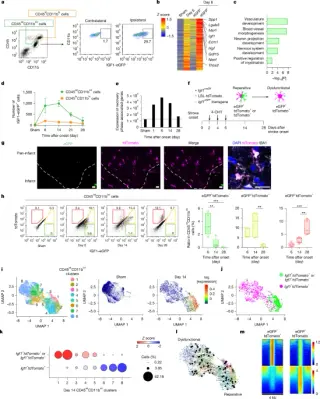
Keeping brain-repairing microglia active post-stroke enhances recovery

Ischemic stroke triggers reparative microglia that should aid recovery, but these cells later lose their reparative gene expression due to ZFP384 suppressing YY1-driven recovery-phase genes. The study shows antisense oligonucleotides targeting ZFP384 can sustain microglial reparative programs, prolonging neural repair and improving functional recovery even in chronic stroke, with IGF1 signaling playing a key role and human data showing ZFP384 inversely correlates with IGF1 in peri-infarct tissue.

Promising antisense drug could alter Dravet syndrome in children
health4 months ago

Promising antisense drug could alter Dravet syndrome in children

An early-stage trial suggests the antisense drug zorevunersen is safe for children with Dravet syndrome and may dramatically reduce seizures, with the highest-dose group seeing 59%–91% fewer seizures after about 20 months and potential neurodevelopmental and quality-of-life benefits. The study involved 81 children (ages 2–18) in the UK and US and did not include a placebo; larger, controlled trials are underway, with results expected by 2028 to determine if the treatment can alter the disease course.