Tag

Betelgeuse

All articles tagged with #betelgeuse

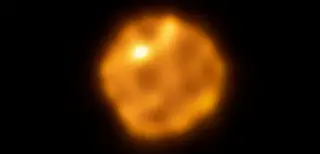
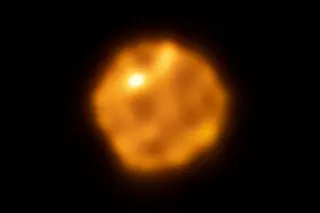
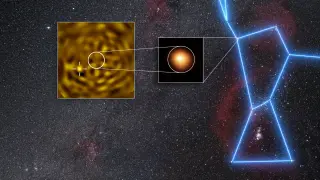
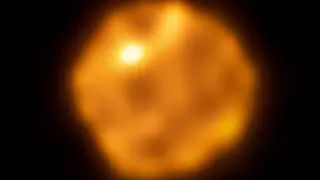
ALMA captures Betelgeuse’s bubbling surface in unprecedented detail
space1 day ago

ALMA captures Betelgeuse’s bubbling surface in unprecedented detail

Using ALMA, scientists captured 2023 images of Betelgeuse, a ~20-solar-mass red supergiant about 600 light-years away, revealing a turbulent, bubbling surface with bright hotspots caused by giant convective flows in its atmosphere; the warmest region in the northeast persists for at least seven years, hinting at long-lived surface structures and possibly a companion star; with atmospheric temperatures around 2,030°C and pockets hotter by about 530°C, these observations help explain mass loss and atmospheric dynamics as Betelgeuse nears its eventual supernova; the study will continue monitoring and is published in Astronomy & Astrophysics (arXiv).

Betelgeuse’s Hidden Binary Holds Clues to Its Inevitable Supernova
science11 days ago

Betelgeuse’s Hidden Binary Holds Clues to Its Inevitable Supernova

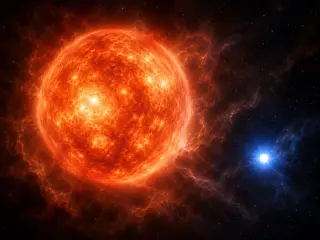
Betelgeuse, the bright red supergiant in Orion, will someday explode as a supernova but likely not for about 100,000 years. New observations strengthen the case that Betelgeuse has a binary companion (Betelgeuse B) hidden in its glare, which could influence its evolution. When it finally collapses, the explosion will unleash an enormous energy burst—mostly in the form of neutrinos—and could heat and strip some mass from the companion, though both stars would largely survive. Earth’s distance would likely keep the event from being catastrophic, but many details about the system and timing remain uncertain.

Naked-Eye Stars Aren’t Dead: Most Are Still Shining Within Reach
science13 days ago

Naked-Eye Stars Aren’t Dead: Most Are Still Shining Within Reach

The common claim that the night sky is full of dead stars is mistaken: the stars visible without a telescope lie within roughly 4,000–10,000 light-years and have lifetimes from millions to trillions of years, so the light we see is a snapshot of their past rather than evidence of their demise. Because the naked-eye sample is nearby and long-lived, only about one visible star is expected to die every ~10,000 years as a rough Milky Way estimate, far slower than stellar lifespans. Exceptions exist (e.g., Earendel at great distance and Betelgeuse, which is not due to explode for ~100,000 years), but for ordinary observers the sky remains largely “alive.”

Astronomers Capture Clear Image of Betelgeuse's Hidden Companion Siwarha
space25 days ago

Astronomers Capture Clear Image of Betelgeuse's Hidden Companion Siwarha

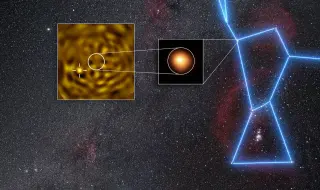
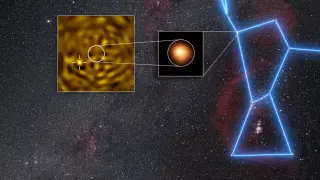
Using ESO's Very Large Telescope with the SPHERE instrument, astronomers obtained the clearest image yet of Betelgeuse's suspected companion, Betelgeuse B (Siwarha), estimated at 2–3 solar masses. While it remains to confirm whether the companion is gravitationally bound, the discovery reshapes our understanding of Betelgeuse’s environment and could influence models of its future evolution and mass loss as it heads toward a supernova in the distant future.

astronomy27 days ago

Betelgeuse's Hidden Partner Emerges in Sharp New Image

Astronomers using the European Southern Observatory's Very Large Telescope with the SPHERE instrument released the clearest image yet of Betelgeuse B, a possible companion star, suggesting Betelgeuse is a binary system. Betelgeuse B is estimated to have 2–3 times the Sun’s mass. Follow‑up observations over a full orbit are needed to confirm the companion's path and to assess any influence on Betelgeuse’s future supernova.

Betelgeuse's Secret Twin Emerges: Betelgeuse B Unveiled as a Companion
astronomy28 days ago

Betelgeuse's Secret Twin Emerges: Betelgeuse B Unveiled as a Companion

A sharp image from ESO's Very Large Telescope reveals a faint companion near Betelgeuse, named Betelgeuse B: a young, hot star about 2.6–3.1 solar masses orbiting the red supergiant at roughly the Saturn–Sun distance. The finding, supported by two independent image-processing methods and strong statistical significance, suggests Betelgeuse is a binary/multiple system; although orbital motion still needs to be observed to confirm binding, the result has important implications for how massive stars form and how their winds and mass loss operate.

Betelgeuse's Hidden Companion Seen in Sharp New Image
space29 days ago

Betelgeuse's Hidden Companion Seen in Sharp New Image

Astronomers using the Very Large Telescope’s SPHERE instrument in Chile captured the strongest direct evidence yet that Betelgeuse has a faint stellar companion, Betelgeuse B, making Betelgeuse a binary system. The image suggests Betelgeuse B is about two to three times the Sun’s mass—more massive (and brighter) than earlier predictions—though researchers will need to observe Betelgeuse B again in about a year to confirm it's gravitationally bound and to understand how its presence could influence Betelgeuse A’s future evolution.

Wake of a Hidden Stellar Partner Reveals Betelgeuse's Secret Neighbor
science-space7 months ago

Wake of a Hidden Stellar Partner Reveals Betelgeuse's Secret Neighbor

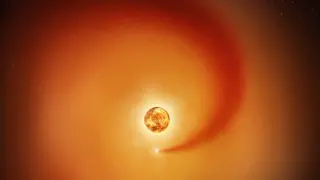
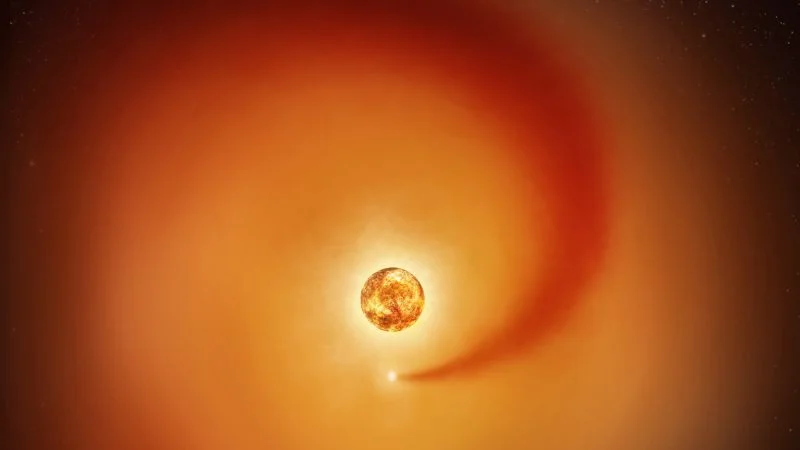
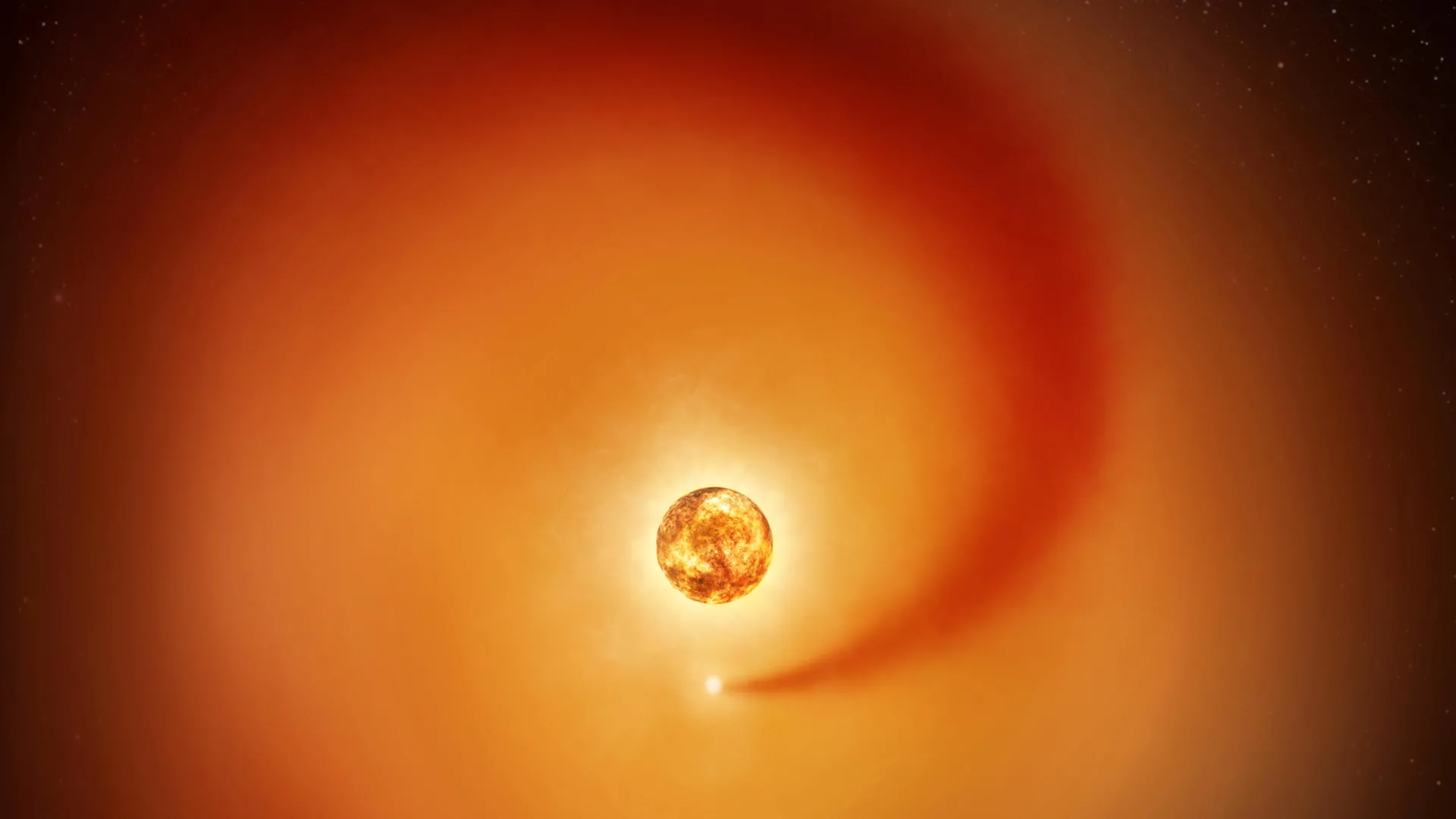
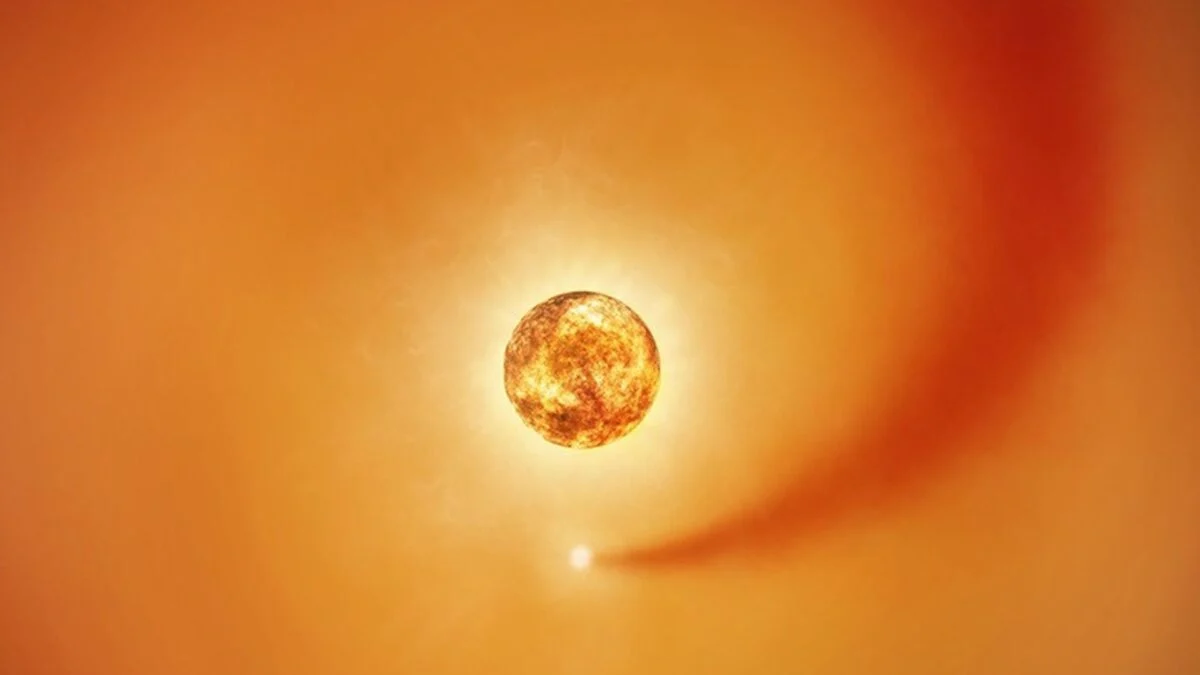
Astronomers using the Hubble Space Telescope and ground-based observatories have found direct evidence of a hidden companion star to Betelgeuse, Siwarha, whose orbital wake through the red supergiant’s atmosphere explains Betelgeuse’s six-year brightness cycle and other variability, with the wake matching predictions from an orbiter that completes a six-year orbit and potentially merging with Betelgeuse in the distant future; findings are published in the Astrophysical Journal.

Revealing the Hidden Companion of Betelgeuse
science10 months ago

Revealing the Hidden Companion of Betelgeuse

Astronomers from Carnegie Mellon University have confirmed that Betelgeuse has a hidden companion star, nicknamed 'Betelbuddy,' which is a young solar-sized star. This discovery, made using NASA's Chandra X-ray Observatory and the Hubble Space Telescope, helps explain Betelgeuse's six-year brightness cycle and challenges existing models of binary star formation due to the significant mass difference between the two stars.