Tag

Chandra X Ray Observatory

All articles tagged with #chandra x ray observatory

From Frenzy to Freeze: Chandra Maps a 10-Billion-Year Slowdown in Black Hole Growth
science16 days ago

From Frenzy to Freeze: Chandra Maps a 10-Billion-Year Slowdown in Black Hole Growth

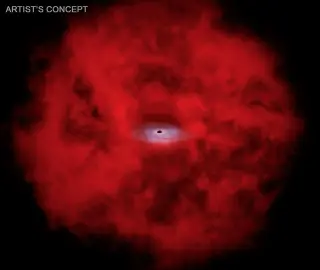
NASA’s Chandra X-ray Observatory shows that supermassive black holes grew rapidly in the early universe but have slowed dramatically over more than ten billion years, likely due to dwindling cold gas, fewer galaxy mergers, and feedback processes; the study combines multiple X-ray datasets to provide a comprehensive view of this long-term decline and its implications for how galaxies evolve.

NASA Turns Space Data into Sound: A Sonic Tour of Jupiter and Saturn
space1 month ago

NASA Turns Space Data into Sound: A Sonic Tour of Jupiter and Saturn

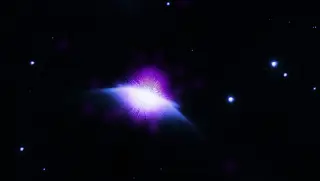
NASA’s Chandra X-ray Observatory is converting solar X-ray data into audible soundscapes, letting listeners hear Jupiter’s auroras and Saturn’s rings. By mapping data attributes like brightness, position, and energy to musical qualities such as pitch and volume, scientists create accessible, immersive representations of space that expand how the public experiences planetary data.

Six-Planet Night Sky Parade Graces February Evenings
space1 month ago

Six-Planet Night Sky Parade Graces February Evenings

Six planets—Jupiter, Saturn, Venus, Mercury, Neptune and Uranus—will be visible at once in the early-evening sky over the next few days, a rare alignment last seen with all seven last year and not due again until 2040. Neptune and Uranus require binoculars or a telescope, while Venus will be the brightest and Mercury the faintest near the horizon. The best viewing windows are after sunset (about 5:45 pm UK / 6:00 pm US), with the lineup forming a curved arc across the western sky; the pattern differs in the southern hemisphere. NASA has released new sonifications from the Chandra X-ray Observatory for Jupiter, Saturn, and Uranus. The Moon will also be visible, and observers should avoid looking at the Sun through binoculars or telescopes.

Chandra captures first X-ray image of a sun-like star’s wind-driven bubble
astronomy1 month ago

Chandra captures first X-ray image of a sun-like star’s wind-driven bubble

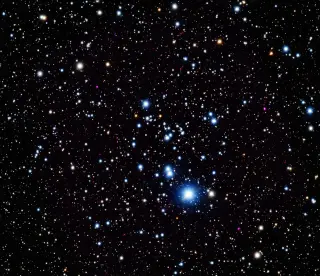
Astronomers using NASA’s Chandra X-ray Observatory imaged the faint X-ray glow around HD 61005, a young sun‑like star about 120 light‑years away, revealing a wind‑blown bubble called an astrosphere—the first X-ray evidence of such a bubble around a star similar to the Sun. HD 61005 is ~100 million years old, and its stellar wind is roughly three times faster and 25 times denser than the Sun’s today, inflating a brighter astrosphere in a dense interstellar environment. The finding offers a rare glimpse into the early solar system’s conditions and how stellar winds shape planetary environments.

James Webb and Chandra Reveal Likely Most Distant Protocluster, Challenging Cosmology
space1 month ago

James Webb and Chandra Reveal Likely Most Distant Protocluster, Challenging Cosmology

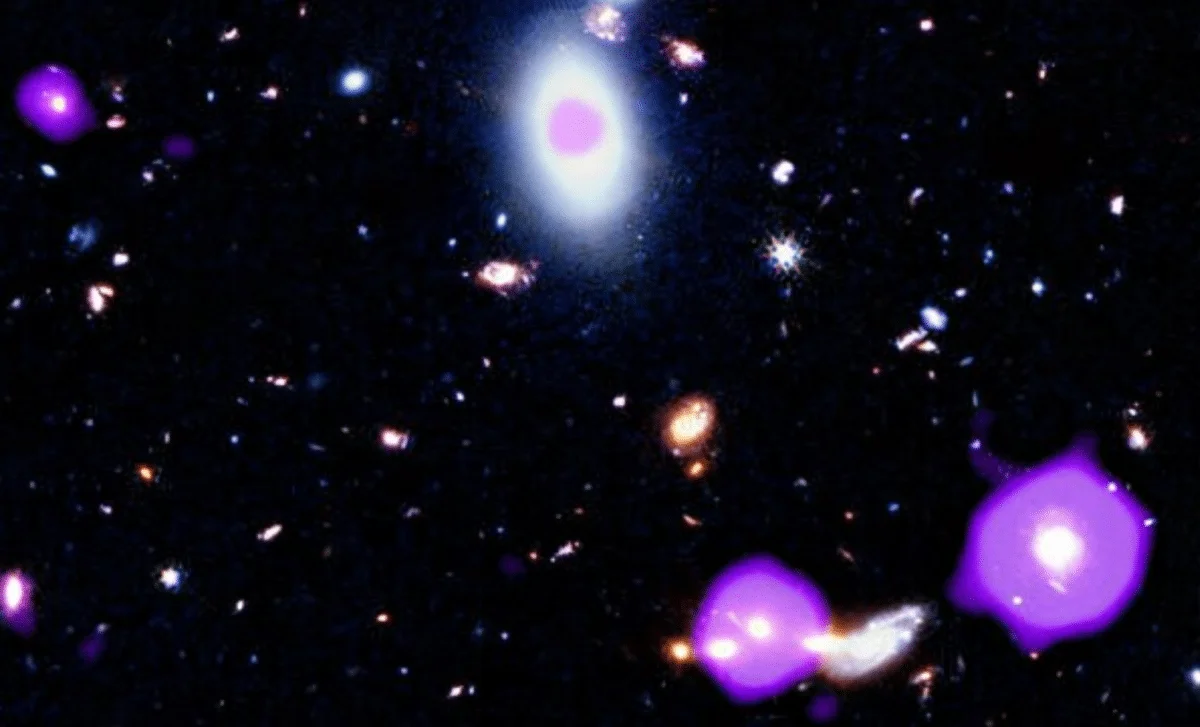
Astronomers using the James Webb Space Telescope and the Chandra X-ray Observatory have captured the clearest image yet of a galaxy protocluster, JADES‑ID1, located about 12.7 billion light‑years away. The structure hosts at least 66 galaxies with a combined mass of roughly 20 trillion suns, embedded in a huge cloud of hot gas detected in X‑rays. Formed when the universe was about 1 billion years old, this protocluster appears more massive and earlier than current cosmological models predict, sparking questions about how such enormous structures grow in the early universe.

Ancient Protocluster Defies Early-Universe Timing
space1 month ago

Ancient Protocluster Defies Early-Universe Timing

Astronomers using the James Webb Space Telescope and the Chandra X-ray Observatory identified JADES-ID1 as a protocluster with at least 66 galaxies and enveloped in million-degree gas, already amassing about 20 trillion solar masses just one billion years after the Big Bang—far earlier than models predict and prompting questions about how the universe’s largest structures form.

Chandra Expands X-ray Universe With 400k-Source Catalog and Sonic Map
science2 months ago

Chandra Expands X-ray Universe With 400k-Source Catalog and Sonic Map

NASA's Chandra X-ray Observatory released CSC 2.1, a vastly expanded catalog with more than 400,000 X-ray sources and 1.3 million detections up to 2020, plus new imagery of the Galactic Center around Sagittarius A* and a 22-year sonification of Chandra data—demonstrating cross-mission science with JWST and Hubble and that Chandra continues observing beyond 2021.

Black Hole Growth Surpasses Scientific Limits, Defying Physics
science6 months ago

Black Hole Growth Surpasses Scientific Limits, Defying Physics

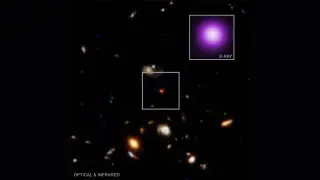
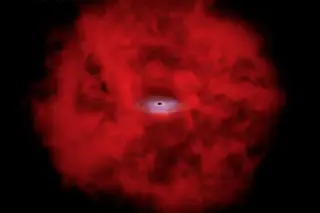
Astronomers using NASA's Chandra X-ray Observatory have discovered a distant quasar with a black hole growing faster than the Eddington limit, shedding light on how supermassive black holes formed early in the universe. The black hole, about a billion times the Sun's mass, is accreting material at a rate 2.4 times the typical maximum, which may explain the rapid emergence of massive black holes shortly after the Big Bang.