Tag

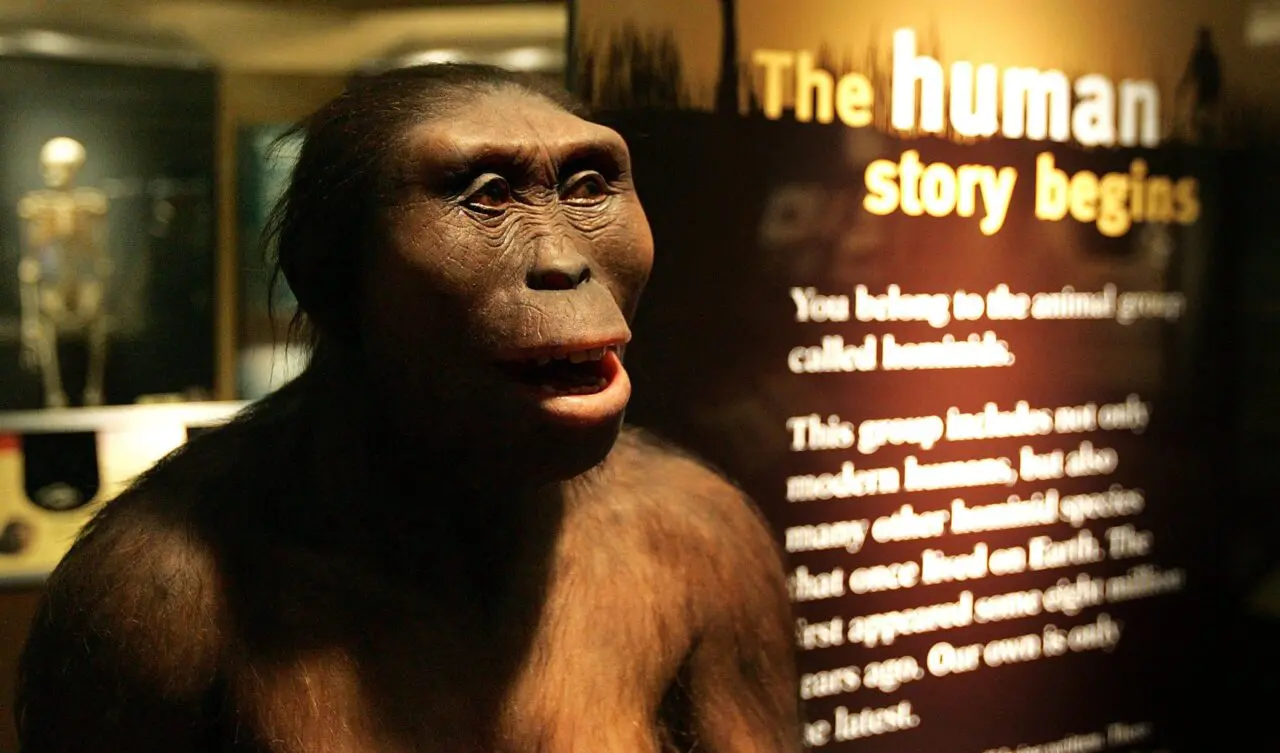
Australopithecus Afarensis

All articles tagged with #australopithecus afarensis

Lucy’s Hunter: A giant Pliocene crocodile hunted early hominins in Ethiopia
science23 days ago

Lucy’s Hunter: A giant Pliocene crocodile hunted early hominins in Ethiopia

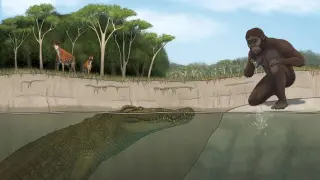
Scientists describe Crocodylus lucivenator ('Lucy’s Hunter'), a 12–15 ft (3.7–4.6 m) crocodile from Ethiopia’s Hadar Formation, as the era’s largest predator around 3.4–3 million years ago and a likely hunter of Australopithecus afarensis (Lucy), with a distinctive mid-snout hump and ambush-style hunting across Hadar’s varied landscapes.
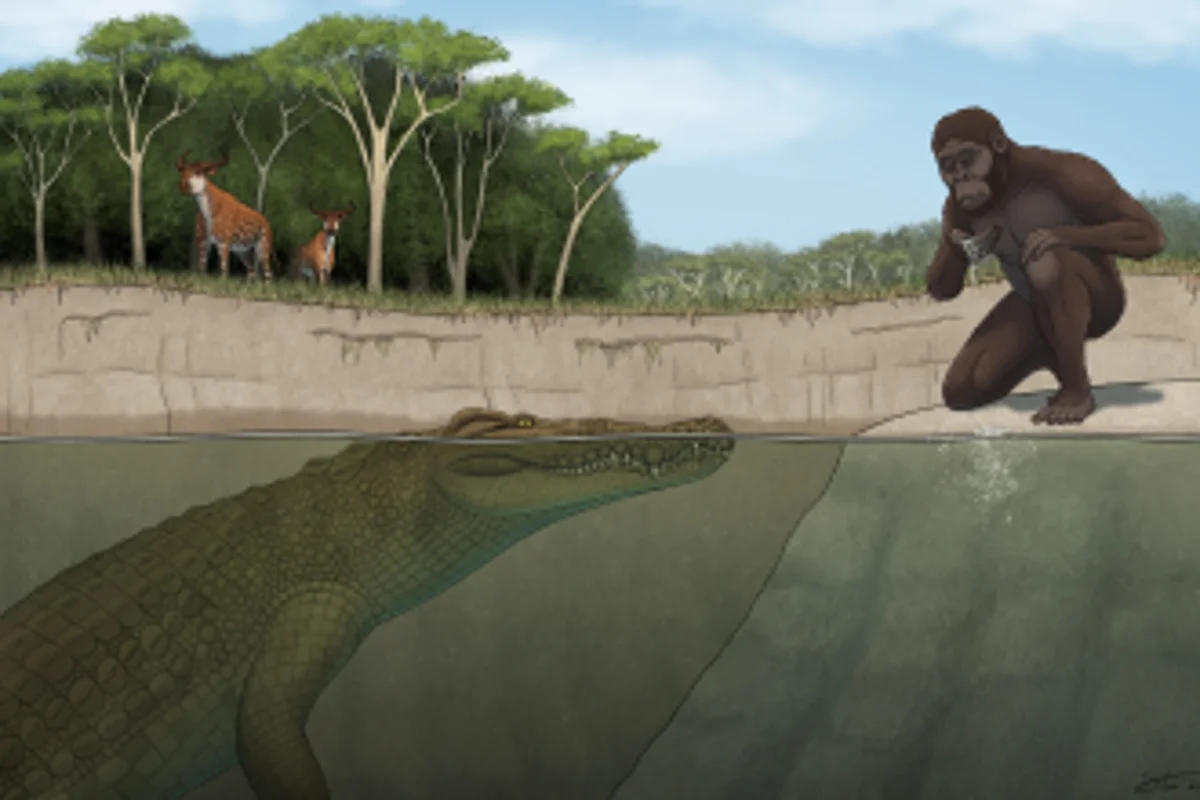
Lucy’s hunter: a 15-foot, half-ton crocodile that preyed on Lucy’s kin
science3 months ago

Lucy’s hunter: a 15-foot, half-ton crocodile that preyed on Lucy’s kin

Scientists identified a new giant prehistoric crocodile, Crocodylus lucivenator (“Lucy’s hunter”), weighing roughly 270–590 kg and reaching about 12–15 ft, as the largest predator in its Hadar-area ecosystem in what is now Ethiopia. Based on 121 fossil remains from the Hadar site, researchers say this ambush predator likely hunted Lucy’s species, Australopithecus afarensis, around 3 million years ago, with a distinctive hump on its snout that may have helped males attract mates.

Celebrating 50 Years of Lucy: A Call to Decolonize Paleoanthropology
science1 year ago

Celebrating 50 Years of Lucy: A Call to Decolonize Paleoanthropology

Lucy, a 3.2-million-year-old Australopithecus afarensis fossil discovered in Ethiopia in 1974, became a global icon in human evolution due to her completeness and age, confirming early upright walking in human ancestors. Her fame was propelled by her catchy nickname, the public engagement efforts of her discoverer Donald Johanson, and her role in advancing the study of human origins. Despite newer discoveries, Lucy remains a benchmark in paleoanthropology.

Celebrating 50 Years of Lucy: A Catalyst for Evolving Human Origins
science1 year ago

Celebrating 50 Years of Lucy: A Catalyst for Evolving Human Origins

The discovery of Lucy, a 3.18-million-year-old Australopithecus afarensis skeleton found in Ethiopia in 1974, significantly advanced the understanding of human evolution. Lucy's remains, which are about 40% complete, revealed that human ancestors existed over three million years ago and provided a framework for interpreting other fossil finds. While initially considered a direct ancestor, newer discoveries suggest Lucy might be more of a distant relative. Ongoing research continues to explore her life and the broader implications for human ancestry.

Lucy: 50 Years of Evolutionary Insights and Misunderstandings
science1 year ago

Lucy: 50 Years of Evolutionary Insights and Misunderstandings

The discovery of "Lucy," an Australopithecus afarensis fossil found in Ethiopia in 1974, revolutionized the understanding of human evolution by showing that bipedalism preceded the development of large brains. Lucy's remains, dated to 3.2 million years ago, demonstrated that early human ancestors walked upright, challenging previous beliefs that large brains evolved first. Her discovery has significantly influenced paleoanthropological research and remains a cornerstone in the study of human origins.

science3 years ago

The Evolution of Upright Walking in Humans and Lucy.

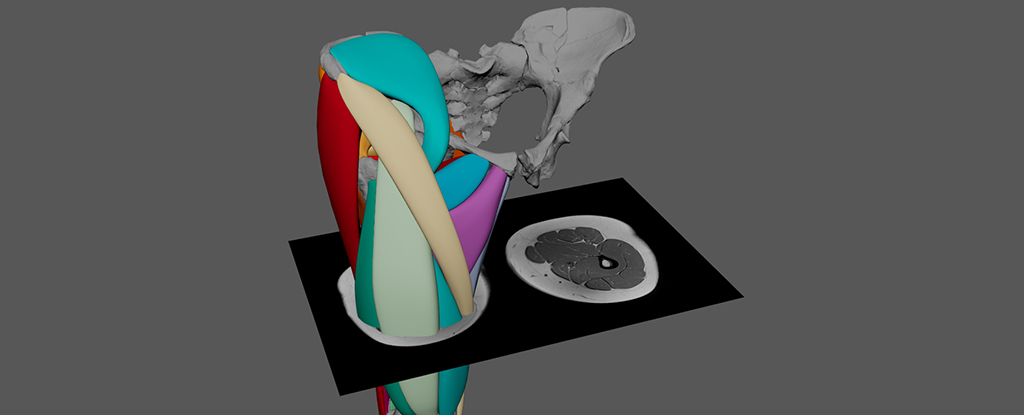
New research has used digital polygonal muscle modeling to reconstruct the soft tissue composition of Lucy, the most famous early human ancestor, and shed light on the evolution of bipedalism. The study found that Lucy and her species, Australopithecus Afarensis, walked upright with an erect position of the knee, similar to humans today. However, Lucy likely had a range of movement types that humans today are not capable of, and her muscles suggest she was as proficient at bipedalism as humans while also being at home in the trees.

Unveiling the Secrets of 'Lucy': Reconstruction of an Ancient Human Ancestor.
science3 years ago

Unveiling the Secrets of 'Lucy': Reconstruction of an Ancient Human Ancestor.

Using 3D modeling software, paleoanthropologist Ashleigh Wiseman reconstructed the muscles of the 3.2 million-year-old Australopithecus afarensis fossil, 'Lucy'. The models show that Lucy had strong leg and pelvic muscles for both tree-climbing and upright walking, suggesting that the species was able to exploit both habitats effectively. This is the first time that the soft tissue of an early human ancestor has been reconstructed in this way, and the same modeling technique could be used on other fossils to reveal the spectrum of physical movement that propelled our evolution.