Tag

Crocodiles

All articles tagged with #crocodiles

Crocodiles may have been warm-blooded, reshaping the crocodile–bird saga
science11 days ago

Crocodiles may have been warm-blooded, reshaping the crocodile–bird saga

New research suggests both crocodile and dinosaur–bird lineages began warm-blooded; modern crocodiles retain a warm-blooded‑like heart but low blood flow, implying their ancestors were warm-blooded. The crocodile lineage then reverted to cold-blooded metabolism around 66 million years ago to enable long breath-holds as aquatic ambush predators, while birds remained warm-blooded and flight-capable—rewriting the deep evolutionary story of archosaurs.

Israel moves to guard Palestinian prisoners with Nile crocodiles
worldpolitics1 month ago

Israel moves to guard Palestinian prisoners with Nile crocodiles

Israel's Environment Minister reclassified Nile crocodiles as a specially managed wild animal, enabling a proposal to build a detention facility for Palestinians encircled by crocodiles. The decree drew opposition from the Environment Ministry's legal adviser, the Israel Nature and Parks Authority, and environmental groups who said it lacks a legal basis and risks animal welfare and public safety, though security minister Itamar Ben Gvir praised the plan as a deterrent.

Lucy’s Hunter: A giant Pliocene crocodile hunted early hominins in Ethiopia
science2 months ago

Lucy’s Hunter: A giant Pliocene crocodile hunted early hominins in Ethiopia

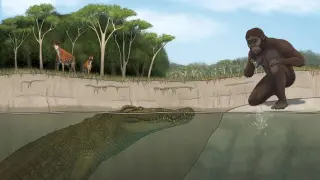
Scientists describe Crocodylus lucivenator ('Lucy’s Hunter'), a 12–15 ft (3.7–4.6 m) crocodile from Ethiopia’s Hadar Formation, as the era’s largest predator around 3.4–3 million years ago and a likely hunter of Australopithecus afarensis (Lucy), with a distinctive mid-snout hump and ambush-style hunting across Hadar’s varied landscapes.

Komati River: officer lowered from helicopter to recover remains from crocodile
africa3 months ago

Komati River: officer lowered from helicopter to recover remains from crocodile

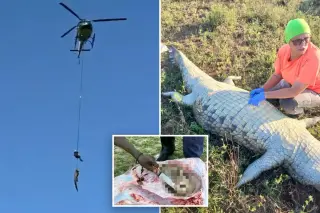
South Africa’s police captain Johan Potgieter was lowered from a helicopter into the crocodile-infested Komati River to recover the body of a businessman swept away by floods; after police shot a suspect crocodile, the team tied it and Potgieter found remains inside, with DNA tests to confirm identity. The operation, deemed highly dangerous, aimed to give the family closure.

Remains found in 15-foot river croc after hunt for SA hotelier
world-news3 months ago

Remains found in 15-foot river croc after hunt for SA hotelier

Rescuers in flood‑ravaged South Africa recovered the remains of Gabriel Batista, 59, from inside a swollen 15‑foot crocodile caught in the Komati River; the giant animal—over 1,000 pounds—was killed and dissected to reveal body parts and a ring, while six pairs of shoes were found in its stomach as DNA testing continues and investigators pursue missing‑person links.

Crocodile Threat and Hunger Risks Rise as Southern Africa Faces Massive Floods
africa7 months ago

Crocodile Threat and Hunger Risks Rise as Southern Africa Faces Massive Floods

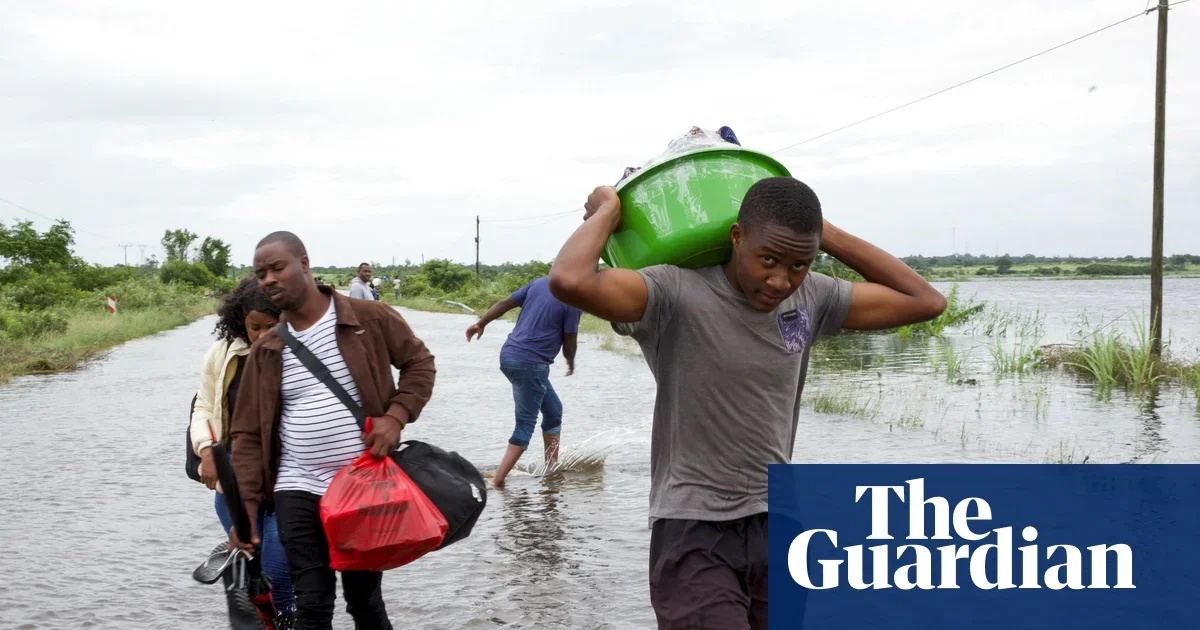
Massive floods across Zimbabwe, Mozambique and South Africa have killed more than 100 people and displaced about 400,000, with crocodiles washed into towns; Mozambique’s floods are among the worst since 2000, farmland and livestock losses mount, cholera and other waterborne diseases threaten camps, and funding for relief and infrastructure repair remains slow.

Crocodile Head Scales: The Mystery of Compressive Folding Unveiled
science1 year ago

Crocodile Head Scales: The Mystery of Compressive Folding Unveiled

A study by researchers at the University of Geneva has uncovered that the irregular head scales of crocodiles are formed through compressive mechanical instabilities rather than tensile stress. This process occurs during embryonic development, where the skin grows faster than the bone beneath it, leading to the formation of polygonal scales. The findings, published in Nature, suggest that variations in head-scale patterns among crocodilians may be due to evolutionary differences in embryonic skin growth.

Crocodile Scale Patterns Explained by Skin Growth Mechanics, Not Genetics
science1 year ago

Crocodile Scale Patterns Explained by Skin Growth Mechanics, Not Genetics

Researchers have discovered that the irregular scales on crocodile heads form through a mechanical process rather than genetic control. Unlike typical scale formation, which is gene-driven, the scales on crocodile heads arise because the skin grows faster than the underlying tissues, causing it to fold and create irregular patterns. This finding, published in Nature, was supported by experiments with Nile crocodile embryos and computer simulations, highlighting the role of skin growth rate and material properties in scale patterning.

"The Indestructible Nature of Crocodiles: Unveiling 3 Reasons"
science-and-nature2 years ago

"The Indestructible Nature of Crocodiles: Unveiling 3 Reasons"

Crocodilians, including crocodiles, gharials, alligators, and caimans, have survived for over 200 million years due to a combination of anatomical and behavioral adaptations. Their almost impenetrable body armor, powerful antioxidants in their blood, and ability to remain still for long periods contribute to their resilience. These survival tactics have drawn the attention of researchers for potential applications in treating human diseases, showcasing how nature's resilience can inform and transform our approach to health challenges.

"Perilous Floods in Australia: Evacuations and Crocodile Dangers"
natural-disasters2 years ago

"Perilous Floods in Australia: Evacuations and Crocodile Dangers"

Desperate Australians in flood-ravaged areas are risking their lives by wading through crocodile-infested waters to escape their damaged homes or reach higher ground. Some towns remain isolated, with dwindling supplies and power. Evacuation efforts have been hindered by dangerous weather conditions, but authorities have managed to rescue some residents, prioritizing the elderly and vulnerable. The flooding, caused by Tropical Cyclone Jasper, has caused extensive damage to properties, roads, and farms. The recovery effort is expected to be costly, and there are concerns about potential insurance claims.