Iran vowed retaliation after U.S. strikes, naming Bahrain and Kuwait as targets, and moved to limit its oil sales in response to ship attacks, signaling heightened regional tension.
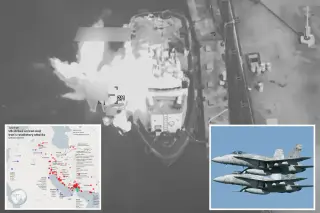
Live updates show Kuwait’s forces intercepting missiles and drones after Iran threatened retaliation for fresh US strikes on Iran, with Iran’s IRGC claiming to hit US facilities in Bahrain and Kuwait and to have downed a drone. Bahrain reports sirens and air-defense activity as the US confirms strikes on Iran targeting air defenses, coastal surveillance, and anti-ship capabilities in response to attacks on vessels in the Strait of Hormuz, fueling a spike in oil prices as tensions escalate.
Iran, via the IRGC, fired ballistic missiles and drones at U.S. targets in Kuwait and Bahrain in retaliation for U.S. strikes on Iranian facilities, prompting condemnations and raising the risk of wider escalation around the Strait of Hormuz amid a fragile ceasefire.
On day 121 of the US-Israel confrontation with Iran, the US conducted a second day of strikes on Iranian coastal targets near the Strait of Hormuz, triggering air-raid sirens in Bahrain and heightened Kuwaiti defences. Iran’s IRGC said it retaliated by firing missiles and drones at the US Ali Al Salem base in Kuwait and the US Fifth Fleet HQ in Bahrain. Gulf states including Oman, Qatar, Kuwait and the UAE condemned the Bahrain attack, while a US official said there were no reported casualties or major damage. In parallel, Israel carried out new strikes in southern Lebanon amid a US-brokered framework deal with Beirut, which drew mixed reactions from regional actors.
Iranian Air Force personnel described a high-risk, radio-silent, low-altitude strike against Camp Buehring in Kuwait in early March, with three pilots in two F-15s flying under 50 feet to bomb the base in roughly 50 minutes. They said the mission included a deception maneuver to avoid interception, caused widespread damage, and involved enemy aircraft scrambling and being engaged. The crew stressed the operation’s urgency as retaliation amid broader U.S.-Israeli aggression against Iran, and they claimed the mission was completed and the aircraft returned safely to Iranian airspace.
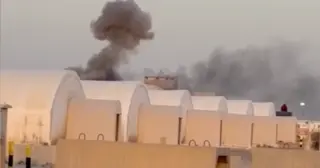
Iran's Revolutionary Guards claim a US Patriot interceptor hit Kuwait's international airport in a failed strike and deny Iran fired at the airport; the US military says the claim is false and that Iran attacked the civilian facility with drones. Kuwait expelled two Iranian diplomats in response. One person died and more than 60 were injured as missiles and drones targeted Kuwait International Airport, with flights halted and Terminal One damaged.
Parts of Kuwait International Airport began reopening after Iranian strikes killed one person, with authorities resuming select operations while investigations continue and security measures are tightened.
Kuwait International Airport partially reopened after Iranian missile- and drone-attacks damaged Terminal 1, killing one Indian national and injuring several others; flights were suspended and later resumed at other terminals (4 and 5), with Kuwait summoning Iran’s envoy as repair work continued.
The United States carried out self-defense strikes on an Iranian ground-control station on Qeshm Island after Iran fired missiles at Kuwait and Bahrain. Iran retaliated with missiles and drones targeting Bahrain and Kuwait; some missiles failed or were intercepted, while Iranian drones hit Kuwait International Airport, killing an Indian national and injuring 63 people, prompting flight suspensions. Bahrain intercepted missiles and drones with no reported casualties. Iran’s IRGC claimed strikes on the U.S. Fifth Fleet HQ in Bahrain and an American air base. Talks between the United States and Iran remain deadlocked as regional tensions escalate.
Iran launched missiles and drones at Kuwaiti targets, including Kuwait International Airport, killing at least one and injuring many as U.S. and allied forces conducted self-defense strikes against Iranian facilities; Iran also claimed strikes on U.S. bases in Kuwait. Bahrain said it intercepted missiles and drones in the region. President Trump said negotiations with Iran are ongoing and he has not yet decided on a deal, suggesting he might meet Iran’s new supreme leader if circumstances allow. The conflict buoyed oil prices and market volatility amid ongoing uncertainty about a broader ceasefire and regional tensions.
Iranian drones heavily damaged Kuwait International Airport, injuring several and forcing a suspension of commercial flights, as the United States carried out retaliatory strikes on Iran and Iran fired missiles at Kuwait and Bahrain—part of a widening Gulf confrontation tied to Lebanon, the region’s war dynamics, and ongoing talks over Iran’s nuclear program.
Kuwait suspended air traffic and diverted flights from Kuwait International Airport after Iranian missiles and drones hit Terminal 1, injuring several people and causing structural damage. The assault coincides with U.S. retaliation against Iran and a broader drone/missile escalation in the Gulf, with CENTCOM reporting ongoing countermeasures against further threats.
US Central Command said Iran fired several ballistic missiles toward Kuwait and Bahrain, which either fell short or were intercepted, while US forces shot down drones and carried out self-defence strikes on Qeshm Island; a new wave of Iranian drones targeted Kuwait but caused no hits, and Bahrain was attacked for the first time since the ceasefire in early April. Iran claimed the US Fifth Fleet HQ was hit, a claim Centcom denied. The flare-up comes as ceasefire talks stall and oil prices edged up.
A U.S. Air Force F-15E pilot who was downed over Iran had already survived a Kuwaiti-friendly-fire incident at the war’s start, ejecting after three F-15Es were shot down; weeks later the same aircraft was shot down by an Iranian missile, prompting a daring rescue and earning praise for the pilot, the weapons system officer, and the rescue teams.
After Iran shot down a U.S. drone, the United States bombed Iranian radar and drone sites; Iran later fired missiles toward U.S. troops in Kuwait, which Washington said it shot down, signaling a renewed escalation that could derail stalled ceasefire talks and threaten shipping through the Strait of Hormuz and global energy markets.