Eight people were wounded—among them an 11-year-old—when Russia launched ballistic missiles at Kyiv early July 11, causing damage across several districts and prompting air- force warnings as Ukraine endures ongoing attacks.
Ukraine, citing US intel, warned of a possible Oreshnik medium‑range missile launch by Russia before June 14 from Kapustin Yar, with a high probability of a strike within 24 hours; Moscow warned the US and partners, though no official US warning had been issued at publication; Russia previously used Oreshnik in May near Bila Tserkva, and Putin said one strike was to test the warhead rather than for combat.
Turkey says NATO defenses intercepted a ballistic missile launched from Iran before it entered Turkish airspace; there were no reported casualties or damage. The incident highlights ongoing regional security tensions and NATO’s role in intercepting threats near Turkish territory.
A Russian ballistic missile hit a Philip Morris warehouse in eastern Ukraine’s Kharkiv region, sparking a fire over 5,000 square meters. More than 80 firefighters and 20 units battled the blaze; there were no casualties as staff sheltered inside.
At an emergency UN Security Council session, the US and Britain condemned Russia's firing of a nuclear-capable Oreshnik missile at Ukraine as a dangerous escalation; Moscow said the strike hit an aviation repair factory, while Kyiv has not confirmed the target. Observers say the two Oreshnik strikes have been largely political or symbolic, possibly using dummy warheads, and question the missile's accuracy for delivering non-nuclear bombs. The wider assault continued with casualties in Kyiv, Kharkiv and Odesa, including attacks on civilian sites and ships in the Black Sea. Separately, a US-linked investor group won rights to mine Ukraine's Dobra lithium deposit (TechMet and Rock Holdings), with Ronald Lauder reported among investors.
The United Kingdom announced Project Nightfall to rapidly develop ground-launched long-range ballistic missiles for Ukraine, capable of traveling over 500 kilometers with a 200‑kilogram warhead. Production plans call for up to 10 missiles per month at a maximum cost of about $1.07 million each, with three industry teams awarded a total of $12 million in development contracts to deliver the first test missiles within a year, as Kyiv seeks to increase pressure on Russian targets behind the front lines.
An aviation expert argues that Russia’s Oreshnik missile used to strike Lviv Oblast was likely assembled from older Soviet components and functions as a political, psychological intimidation tool rather than a decisive military asset; Moscow reportedly informed the US ahead of the launch, signaling a message to Europe, while speed claims of 13,000 km/h are disputed. Ukraine lacks intercept capability, but the strike is not expected to alter the frontline balance.
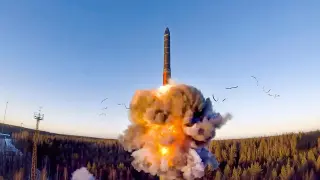
Russia launched the Oreshnik missile into Ukraine, marking its second use since 2022, with the missile capable of carrying nuclear or conventional payloads and designed to be highly destructive and difficult to intercept, signaling an escalation and warning to the West amid ongoing tensions.
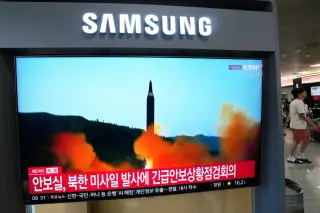
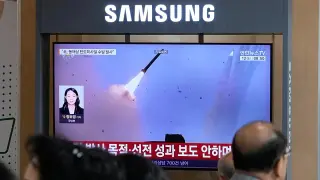
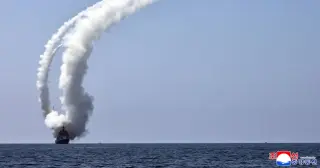
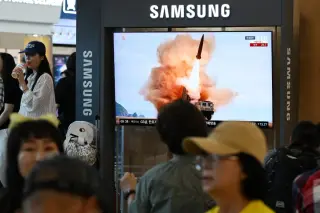
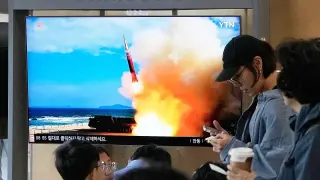
North Korea launched an unidentified ballistic missile towards the Sea of Japan, prompting responses from South Korea and Japan. Kim Jong-un has called for increased production of weapons amid a series of missile tests and visits to military facilities, signaling a focus on enhancing missile capabilities ahead of a major party congress.
North Korea launched a ballistic missile toward the east, just days before the APEC summit in South Korea, amid ongoing tensions and missile tests by Kim Jong Un's regime, which aims to gain recognition as a nuclear weapons state and potentially ease sanctions.
Iran's IRGC announced the use of the Sejil missile in its 12th wave of strikes on Israel, marking the first direct confrontation with this missile, which has a range of about 2,000 km and can carry nuclear warheads, indicating a shift in Tehran's military strategy.
The Missile Defense Agency successfully conducted its first-ever ballistic missile intercept test from Guam, marking a significant step in developing an integrated air and missile defense system for the strategic island. The test involved an Aegis Guam System using an AN/TPY-6 radar and a Standard Missile-3 Block IIA interceptor to destroy a Medium Range Ballistic Missile target. This effort is part of a broader initiative to enhance Guam's defense capabilities against evolving threats, with the U.S. Army leading the acquisition and execution plan for the Guam Defense System.
The Israeli Defense Forces (IDF) intercepted a ballistic missile launched by Yemen's Houthi rebels over central Israel, following sirens that sounded across the region. The missile was intercepted before entering Israeli territory, and police are searching for remnants. Four people were injured while seeking shelter, and others are being treated for anxiety. The Houthis have vowed to continue attacks until Israel halts its actions in Gaza and lifts the siege. This incident follows previous Houthi missile launches towards Israel, including one that hit Tel Aviv in September.
The Oreshnik is a new Russian ballistic missile, highlighting advancements in military technology and defense capabilities. Details about its specifications and strategic role remain limited, but it underscores Russia's ongoing efforts to enhance its missile arsenal.
Russian President Vladimir Putin announced that Russia will continue testing and begin mass production of a new hypersonic ballistic missile, following its recent use against Ukraine. The missile, claimed to be unstoppable by current air defenses, marks a significant escalation in the conflict. Ukraine, in response, is consulting with allies to develop new air defense systems. The missile, known as "Oreshnik," reportedly carries multiple warheads, and its deployment has prompted NATO and Ukraine to plan talks. The situation is seen as a pivotal moment in the ongoing war.