New Atlas Maps Cancer Targets by Spatial Proximity, Not Just Expression
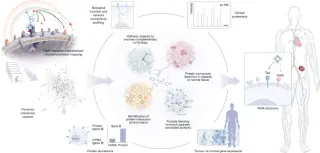
Researchers have developed a high-throughput method to map the physical proximity of proteins on cancer cell surfaces, identifying a new class of therapeutic targets defined by spatial location rather than mere abundance. By analyzing 248 proximity maps across 12 receptor tyrosine kinases and 28 tumor cell systems, the team created an atlas that reveals how proteins cluster in disease-specific microenvironments. This approach led to the identification of a specific pair, EGFR and CDCP1, which are spatially co-enriched in tumors but not in normal tissues. Validated through bispecific antibody-drug conjugates, this pair demonstrates enhanced tumor cell killing, suggesting that spatial organization is a critical factor for designing safer, more effective precision therapies.