Tag

Chemotherapy

All articles tagged with #chemotherapy

Newborn’s Unusual Breathing Leads to Rare Neuroblastoma Diagnosis and Six-Month Treatment
health1 day ago

Newborn’s Unusual Breathing Leads to Rare Neuroblastoma Diagnosis and Six-Month Treatment

Breanne Cruz noticed her newborn daughter Leiah breathing heavily shortly after birth in December 2024. Despite initial reassurance from pediatricians, Cruz sought a second opinion, leading to an emergency room visit on Christmas Eve. A CT scan revealed an 8-centimeter mass in Leiah’s chest, which was later confirmed as neuroblastoma, a rare cancer affecting immature nerve cells. Leiah underwent six rounds of chemotherapy at Children's Hospital Los Angeles, facing complications including sepsis and allergic reactions. By June 2025, the tumor had shrunk significantly, allowing treatment to end early. Leiah is now thriving, with the tumor reduced to less than half its original size, and is scheduled for follow-up scans in December 2026.

Wistar Institute Study Links Fructose Release to Ovarian Cancer Metastasis
health-and-medicine11 days ago

Wistar Institute Study Links Fructose Release to Ovarian Cancer Metastasis

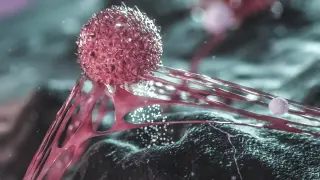
Researchers at The Wistar Institute have identified a new mechanism by which fructose, a common sugar, may facilitate the spread of aggressive ovarian cancer. Published in Nature Aging, the study reveals that cancer cells surviving chemotherapy release fructose, which acts as a chemical signal to weaken the bonds holding neighboring tumor cells together. This weakening allows cancer cells to detach and metastasize. The findings also suggest that high dietary fructose intake and the use of cholesterol-lowering statins may inadvertently promote this spread, raising questions about the interaction between diet, medication, and cancer progression.

Georgetown Model Estimates 9.4-Year Life Loss from Breast Cancer Chemotherapy
health11 days ago

Georgetown Model Estimates 9.4-Year Life Loss from Breast Cancer Chemotherapy

A new population model from Georgetown University’s Lombardi Comprehensive Cancer Center suggests that aggressive chemotherapy for breast cancer may accelerate biological aging, potentially costing survivors an average of 9.4 years of healthy life. Published in JAMA Network Open on November 10, 2026, the study indicates that while chemotherapy saves lives by curing cancer, it also damages healthy tissues, increasing the risk of age-related diseases. Researchers propose that physical activity and specific medications could help mitigate these long-term effects, though further studies are needed to personalize survivorship care.

Georgetown Model Links Breast Cancer Chemo to 9.4-Year Life Loss via Aging
health12 days ago

Georgetown Model Links Breast Cancer Chemo to 9.4-Year Life Loss via Aging

A new population model estimates that aggressive chemotherapy for breast cancer may accelerate biological aging, causing survivors to lose an average of 9.4 years of healthy life. While the treatment saves lives by curing cancer, it also damages healthy tissues, increasing the risk of age-related diseases. Researchers suggest that lifestyle changes and future therapies could help mitigate these long-term effects.

Prosigna Gene Test Trial Shows Low-Risk Breast Cancer Patients Can Safely Skip Chemotherapy
health28 days ago

Prosigna Gene Test Trial Shows Low-Risk Breast Cancer Patients Can Safely Skip Chemotherapy

A major international trial led by University College London demonstrates that the Prosigna gene test can safely identify early-stage breast cancer patients who do not require chemotherapy. By analyzing 50 genes, the test assigns a recurrence risk score, allowing approximately two-thirds of eligible patients to skip chemo without compromising survival rates. This approach reduces severe side effects and saves healthcare systems millions in costs, though it currently applies only to specific hormone-sensitive, HER2-negative cases.

health1 month ago

Mayo Clinic Study Links Pre-Treatment Gut Microbes to Cancer Survival and Chemo Side Effects

A large-scale study by Mayo Clinic researchers, published in Cell, identifies distinct gut bacterial signatures in 1,364 cancer patients that correlate with specific cancer types, survival rates, and chemotherapy side effects. The findings suggest that pre-treatment microbiome profiles may predict outcomes, particularly for colorectal and breast cancers in younger adults, and link specific bacteria to diarrhea caused by the drug 5-fluorouracil.

Mother’s children’s book aims to ease hair loss fears in pediatric cancer wards
health1 month ago

Mother’s children’s book aims to ease hair loss fears in pediatric cancer wards

Holly, a mother from London, wrote a children’s book titled 'Edie's Magic Hair' to help her daughter Edie cope with hair loss during chemotherapy for bone cancer. Now that Edie is in remission, Holly is crowdfunding to distribute copies to pediatric cancer units across the UK to help other children facing similar treatment side effects.

ABC News Correspondent Will Reeve Details Journey Through Testicular Cancer Treatment
health-and-lifestyle1 month ago

ABC News Correspondent Will Reeve Details Journey Through Testicular Cancer Treatment

ABC News correspondent Will Reeve, 34, publicly disclosed his diagnosis of embryonal testicular cancer in April 2026, just months after his January wedding. Following an orchiectomy in May, he underwent a lymph node dissection in June and two cycles of chemotherapy at Memorial Sloan Kettering in July. Reeve stated that the treatment reduced his recurrence risk to nearly 1% and aims to raise awareness about the disease.

Coventry patient reveals 11 years of unnecessary chemotherapy after misdiagnosis
health2 months ago

Coventry patient reveals 11 years of unnecessary chemotherapy after misdiagnosis

A 33-year-old woman in Coventry has revealed that she underwent 11 years of chemotherapy for a brain tumour she never had. The treatment, prescribed by a consultant at University Hospitals Coventry and Warwickshire, caused severe side effects and impacted her career and family life. She was later diagnosed with a treatable inflammation. More than 40 patients are now taking legal action against the trust, following a review that found significant failures in patient care and oversight.

Psilocybin Prevents Chemotherapy Nerve Damage in Mice
health-and-science2 months ago

Psilocybin Prevents Chemotherapy Nerve Damage in Mice

A study published in Science shows that psilocybin, the psychoactive compound in magic mushrooms, can prevent chemotherapy-induced peripheral neuropathy in mice. By activating specific receptors, psilocybin helps maintain mitochondrial transport in nerve endings, protecting them from damage caused by platinum-based drugs. This is the first evidence that a therapy can prevent this debilitating side effect, which affects up to 75% of cancer patients. Researchers at MD Anderson are launching a Phase 2 trial in November to test this approach in humans.

Seven Years of Ignored Symptoms Lead to Stage 4 Bowel Cancer in a 25-Year-Old Mom
health2 months ago

Seven Years of Ignored Symptoms Lead to Stage 4 Bowel Cancer in a 25-Year-Old Mom

Australian mom Kellie Finlayson was diagnosed with stage 4 bowel cancer just three months after giving birth, after years of changes in her bowel habits and fluctuating weight were dismissed. She has since undergone extensive treatment, including surgery and over 80 rounds of chemotherapy, with cancer later spreading to her lungs. Now 30, she continues treatment to keep the disease stable and uses her platform to raise awareness and encourage others to take warning signs seriously.

Psilocybin May Shield Nerves From Chemotherapy Damage in Early Mouse Trials
health2 months ago

Psilocybin May Shield Nerves From Chemotherapy Damage in Early Mouse Trials

A new study published in Science suggests that psilocybin may prevent chemotherapy-induced peripheral neuropathy (CIPN), a common side effect causing pain and numbness. In mouse trials, two doses of psilocybin before cisplatin treatment protected nerve endings by maintaining mitochondrial transport. Researchers plan a human trial involving 80 cancer patients starting in November 2026, with results expected in five years.

Fructose Secreted by Chemo-Surviving Cells May Drive Ovarian Cancer Metastasis
health-and-science3 months ago

Fructose Secreted by Chemo-Surviving Cells May Drive Ovarian Cancer Metastasis

A study in Nature Aging reveals that fructose, a common sugar, acts as a signal from chemotherapy-surviving ovarian cancer cells to promote metastasis. By lowering cholesterol in neighboring cells, fructose weakens cell adhesion, allowing tumors to spread. While preclinical, the findings suggest dietary fructose and statin use may influence cancer progression.

health-and-medicine3 months ago

Fructose Secreted by Senescent Cells May Drive Ovarian Cancer Metastasis

A study published in Nature Aging reveals that fructose, a common sugar, acts as a signaling molecule released by chemotherapy-surviving ovarian cancer cells. This signal suppresses cholesterol production in neighboring tumor cells, weakening their adhesion and promoting metastatic spread. The findings suggest that high dietary fructose intake and statin use may influence cancer progression, though clinical trials are needed.

Fructose from Surviving Cancer Cells May Drive Ovarian Tumor Spread
health-and-medicine3 months ago

Fructose from Surviving Cancer Cells May Drive Ovarian Tumor Spread

A study in Nature Aging reveals that fructose, a common dietary sugar, acts as a signal from chemotherapy-surviving ovarian cancer cells to promote metastasis. By suppressing cholesterol in neighboring cells, fructose weakens cellular adhesion, allowing tumors to spread. While the findings are preclinical, they suggest dietary fructose and statin use may influence cancer progression.