Tag

Blackholes

All articles tagged with #blackholes

Darkening Jets: New Remnant Radio Galaxies Reveal How a Galaxy’s Black Hole Goes Quiet
space3 days ago

Darkening Jets: New Remnant Radio Galaxies Reveal How a Galaxy’s Black Hole Goes Quiet

Astronomers using MeerKAT, the Jansky VLA and LOFAR studied 14 fading radio galaxy candidates in the XMM-LSS field and confirmed 12 as remnant radio galaxies. The remnants fade over 8–42 million years (average ~12 Myr), with jets quieting at different stages of evolution, suggesting a previously overlooked population of short-lived remnants and offering new insights into the life cycles of galaxies and the engines powering their radio lobes.
JWST Reveals Black Holes Ahead of Some Early Galaxies
space1 month ago

JWST Reveals Black Holes Ahead of Some Early Galaxies

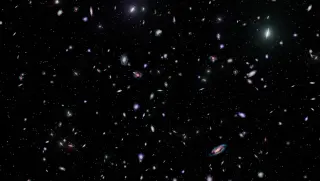
JWST observations of the early universe show several systems where central black holes are already disproportionately massive or dominant compared with their hosts, challenging the traditional view that galaxies form first and then grow their central black holes. Notable cases include UHZ1 behind Abell 2744, where a black hole may be tens of millions of solar masses with a relatively small stellar host, and a strongly lensed z~7 object with a ~50 million-solar-mass black hole. These findings support heavy-seed/direct-collapse formation scenarios and/or rapid accretion, but mass estimates remain model-dependent and not all objects fit a single story. The broader takeaway is that multiple pathways likely governed early black hole–galaxy co-evolution, with black holes sometimes leading galaxy growth. Future spectra, X-ray data, lensing, and gravitational-wave observations will help distinguish true heavy seeds from apparent overgrowth due to compact, dusty hosts.

Earthquakes, Gravastars, and Century-Long Butterflies: A Surprising Science Roundup
science2 months ago

Earthquakes, Gravastars, and Century-Long Butterflies: A Surprising Science Roundup

The week’s science digest covers (1) a core-reflected seismic wave from the 2011 Tohoku-Oki quake that triggered a dual-boundary megathrust slip and moved Japan about 6 millimeters, (2) a theoretical gravastar model as an alternative to black holes with a de Sitter interior, (3) detection of plutonium-244 in a ferromanganese crust pointing to a distant kilonova r-process event, and (4) an unexpected 25-fold range in lifespan among Heliconius butterflies linked to pollen feeding, illustrating the uncanny diversity of life and cosmic events.

Milky Way Core Winds: Evidence of Gas Outflows From Sgr A*
science2 months ago

Milky Way Core Winds: Evidence of Gas Outflows From Sgr A*

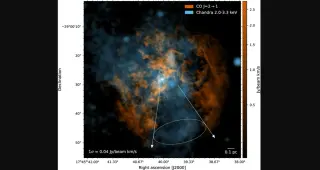
Astronomers used five years of ALMA observations, along with supporting data, to identify a wind emanating from the Milky Way’s central black hole, Sagittarius A*, including a southern lobe and evidence for a northern lobe. The wind consists of small gas wisps radiatively driven by the SMBH, demonstrating galactic-center feedback even from a relatively quiescent black hole.

JWST Finds Black Holes That Precede Galaxies in the Early Universe
astronomy2 months ago

JWST Finds Black Holes That Precede Galaxies in the Early Universe

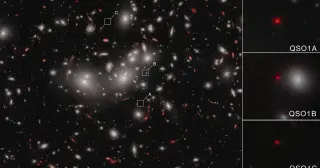
Using JWST, astronomers study a triply lensed background galaxy Abell 2744-QSO1 at z=7.04 and measure a central black hole of about 50 million solar masses concentrated with little surrounding stellar mass, providing strong evidence that supermassive black holes formed before their host galaxies and favoring heavy-seed formation scenarios in the early universe.

Ultra-energetic neutrino hints at black-hole powered blazars as cosmic accelerators
space2 months ago

Ultra-energetic neutrino hints at black-hole powered blazars as cosmic accelerators

Scientists traced an ultra-high-energy neutrino detected in 2023 to potential cosmic accelerators, with the event being about 30,000 times more energetic than previous neutrinos and observed by KM3NeT in the Mediterranean. Analyses suggest a population of black-hole–driven blazars could explain such bursts without violating gamma-ray background limits, though a single definitive source hasn’t been confirmed. More data from current and future detectors is needed to pin down the neutrino’s origin.

X-ray Dot Bridges Little Red Dots and Growing Black Holes
space3 months ago

X-ray Dot Bridges Little Red Dots and Growing Black Holes

Astronomers using Webb and Chandra have identified a unique X-ray–emitting object, 3DHST-AEGIS-12014, about 11.8–12 billion light-years away, that appears as a “little red dot” yet glows in X-rays. The finding could mark a transitional phase between dusty, obscured little red dots and ordinary growing supermassive black holes, offering a key clue to how SMBHs form in the early universe. If this interpretation holds, it would link the LRD population to SMBH growth; further observations are planned to confirm the scenario.

Andromeda Star Quietly Forms a Black Hole Without a Supernova
science6 months ago

Andromeda Star Quietly Forms a Black Hole Without a Supernova

Astronomers tracked a massive star in the Andromeda Galaxy (M31-2014-DS1) that brightened in infrared in 2014, then faded and effectively disappeared by 2022–2023, indicating it collapsed into a black hole rather than exploding in a supernova. The remaining dust and gas emit a long-lasting mid-infrared glow as material slowly falls back, a process driven by convection that delays accretion and explains the dimming over decades. This event, linked to a similar case (NGC 6946-BH1), supports a broader class of failed supernovae and improves understanding of how some massive stars end their lives.

Supermassive Black Holes Eject Light-Speed Winds
science1 year ago

Supermassive Black Holes Eject Light-Speed Winds

Scientists have discovered that supermassive black holes emit high-velocity, bullet-like winds that are highly inhomogeneous and chaotic, challenging previous models of steady outflows. These clumpy winds can significantly influence galaxy evolution by regulating star formation, with implications for understanding black hole feedback and galaxy growth. Observations from XRISM are helping to unravel the complex structure and impact of these winds.

Could Black Holes Be Lurking in Everyday Objects?
science1 year ago

Could Black Holes Be Lurking in Everyday Objects?

Scientists theorize that primordial black holes, potentially formed after the Big Bang, could be tunneling through Earth unnoticed. These tiny black holes might help explain cosmic mysteries like dark matter. Although the likelihood of detecting them is low, researchers suggest searching ancient structures for evidence. Discovering these black holes could advance our understanding of the universe and future energy harvesting technologies.

Gravitational Waves Unveil Hidden Cosmic Structures and Black Holes
science1 year ago

Gravitational Waves Unveil Hidden Cosmic Structures and Black Holes

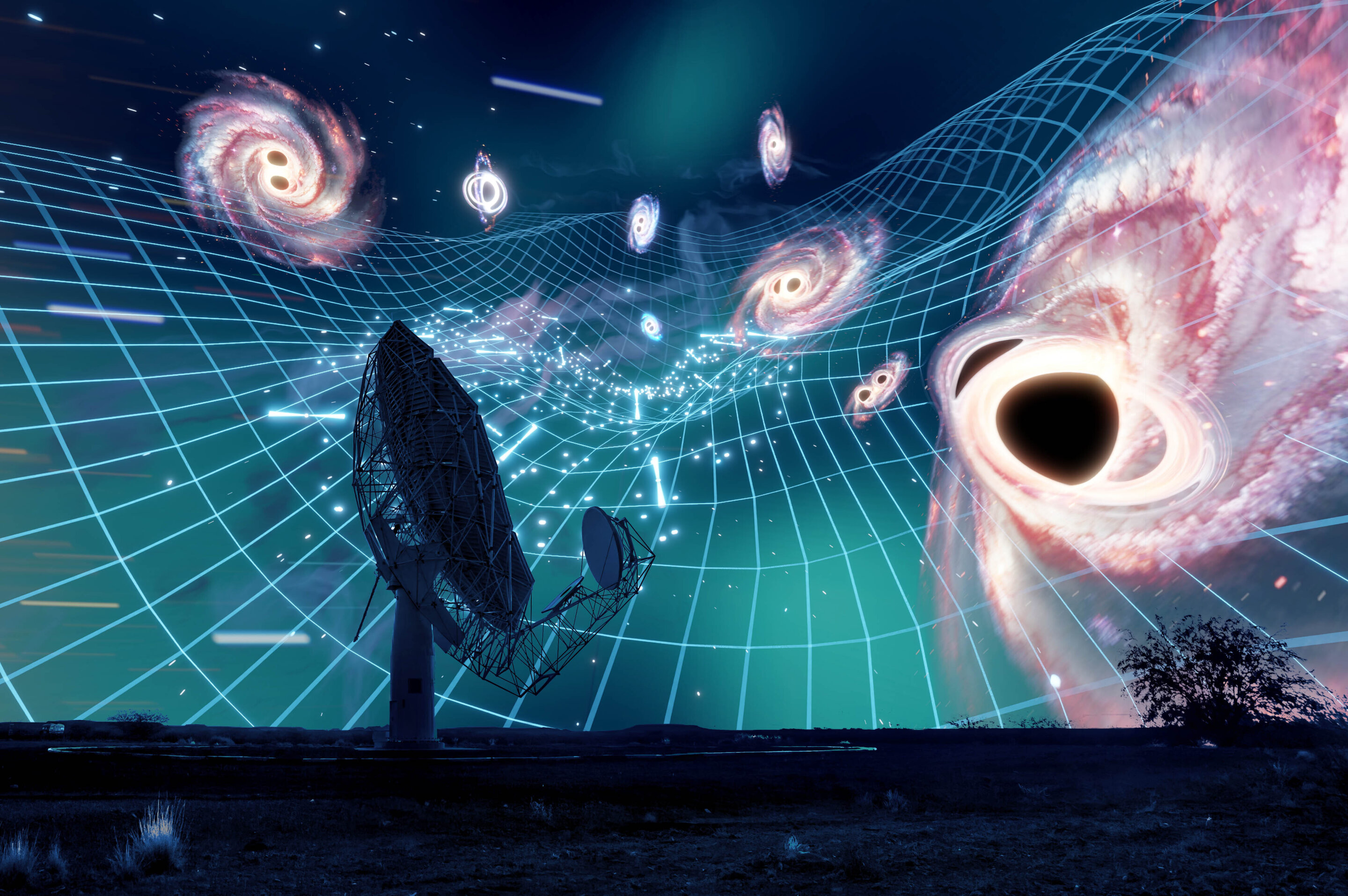
Astronomers from Swinburne University have created the most detailed maps of gravitational waves, revealing hidden black holes and cosmic structures. Using the MeerKAT Pulsar Timing Array, they detected a strong gravitational wave signal from merging supermassive black holes, uncovering unexpected hotspots that suggest directional biases. This research offers new insights into the universe's evolution and the formation of massive black holes, challenging previous assumptions about the gravitational wave background's distribution.