Tag

Alma

All articles tagged with #alma

Milky Way Core Exposed: ALMA Reveals Complex Gas Web at Galactic Center
science27 days ago

Milky Way Core Exposed: ALMA Reveals Complex Gas Web at Galactic Center

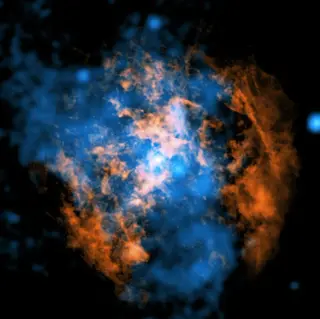
Astronomers using the ALMA array produced the largest mosaic of the Milky Way’s center to date, mapping the Central Molecular Zone across roughly 650 light-years and revealing a web of cold gas filaments and dense clouds that feed star formation. The ACES collaboration, involving about 160 scientists from over 70 institutions, aims to test how star formation and chemistry operate in this extreme galactic environment. The dataset will sharpen our understanding of the galaxy’s evolution and will be followed by upgrades to ALMA and future telescopes for even deeper studies.

Interstellar Comet 3I/ATLAS Shows Methanol-Rich Chemistry
space1 month ago

Interstellar Comet 3I/ATLAS Shows Methanol-Rich Chemistry

ALMA observations reveal the interstellar comet 3I/ATLAS is unusually methanol-rich, with methanol originating from both the nucleus and coma. This chemical fingerprint suggests formation under conditions different from those of Solar System comets and provides a glimpse into the chemistry of distant star systems, with more interstellar visitors anticipated as powerful observatories come online.

Interstellar Visitor 3I/ATLAS Exhibits Methanol-Rich Comet Chemistry
space1 month ago

Interstellar Visitor 3I/ATLAS Exhibits Methanol-Rich Comet Chemistry

ALMA observations of the interstellar object 3I/ATLAS reveal an unusually high methanol abundance in its coma and core—among the highest seen in comets—paired with a high methanol-to-hydrogen cyanide ratio, indicating distinctive formation conditions in that distant system. The methanol appears to come from both the core and the coma, and future observations with advanced telescopes could help explain the object’s origin as it exits the solar system.

Interstellar comet 3I/ATLAS reveals methanol-rich fingerprint from another star
astronomy1 month ago

Interstellar comet 3I/ATLAS reveals methanol-rich fingerprint from another star

ALMA observations show the interstellar comet 3I/ATLAS is unusually rich in methanol, released from both the nucleus and icy grains in the coma. The methanol-to-hydrogen cyanide ratio is higher than in Solar System comets, suggesting 3I/ATLAS formed under colder or chemically different conditions in another planetary system, providing a chemical fingerprint from a different star.

3I/Atlas Reveals Methanol-Rich Signature as It Leaves the Solar System
space1 month ago

3I/Atlas Reveals Methanol-Rich Signature as It Leaves the Solar System

Observations of interstellar comet 3I/Atlas show its coma is unusually rich in methanol—up to four times typical levels—along with carbon dioxide and other organics, suggesting formation in a colder or chemically distinct environment. The study, based on ALMA data, indicates methanol (and other gases) may be released from both the nucleus and sublimating icy grains in a hyperactive comet, supporting a natural origin. As it travels away from the Sun at about 60 km/s, 3I/Atlas reinforces that more interstellar visitors are likely to be found with advancing detection capability.

Milky Way’s Galactic Core Unveiled in Record-Breaking ALMA Image
science1 month ago

Milky Way’s Galactic Core Unveiled in Record-Breaking ALMA Image

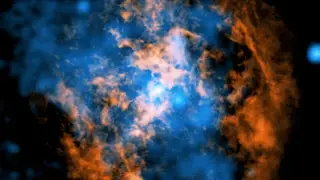
Using ALMA, astronomers released the largest image yet of the Milky Way’s center—the 650-light-year Central Molecular Zone—revealing a complex network of cold gas filaments that feed star-forming clumps; the ACES survey brings together 160 scientists from 70 institutions to study extreme central-galaxy conditions and test star-formation theories, with upgrades planned to probe even deeper.

Milky Way’s heart mapped: ALMA reveals a 3D gas map of star birth
space1 month ago

Milky Way’s heart mapped: ALMA reveals a 3D gas map of star birth

Scientists using the ALMA telescope captured the most detailed map yet of the Milky Way’s center, charting the cold molecular gas in the Central Molecular Zone and its motions with spectroscopy. The four-year ACES survey reveals where gas is shredding into stars and planets, offering insights into the solar system’s origins and serving as a window into conditions similar to the early universe, all produced by a large international collaboration and mapping more than 70 molecular lines.

ALMA mosaic reveals Milky Way's chaotic center in unprecedented detail
science1 month ago

ALMA mosaic reveals Milky Way's chaotic center in unprecedented detail

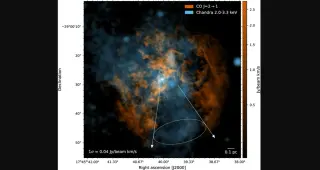
A new, large mosaic image of the Milky Way’s center captured by the ALMA telescope array in the Chilean Atacama Desert reveals cold molecular gas across the Central Molecular Zone in unprecedented detail over a span of about 650 light-years, highlighting gas filaments and clouds around the galaxy’s central supermassive black hole. The image, produced by stitching many observations, is the largest ALMA image to date and offers insight into how stars form in extreme galactic centers, informing theories of galaxy growth and evolution. The study identifies complex chemistry across dozens of gas structures and foreshadows deeper studies with future upgrades like ALMA’s wideband sensitivity and ESO’s Extremely Large Telescope.

ALMA maps the Milky Way’s chaotic center in unprecedented detail
space1 month ago

ALMA maps the Milky Way’s chaotic center in unprecedented detail

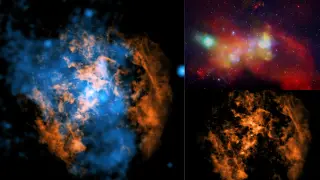
Scientists using the ALMA telescope have produced the largest, most detailed image of the Milky Way’s chaotic center—the Central Molecular Zone (CMZ)—covering about 650 light-years. The mosaic reveals massive streams of turbulent gas, fast-moving stars, and rare structures like the Millimeter Ultra-Broad Line Object (MUBLO), offering new insights into how extreme galactic centers form stars and resemble early-universe environments. The ACES survey, involving ~160 scientists across 70 institutions, aims to develop a 3D CMZ map to unravel how matter flows and shapes star birth near Sagittarius A*.

Early Universe’s Metal-Rich Dusty Galaxies Unearthed by JWST and ALMA
astronomy1 month ago

Early Universe’s Metal-Rich Dusty Galaxies Unearthed by JWST and ALMA

Astronomers using the James Webb Space Telescope (JWST) and the Atacama Large Millimeter/submillimeter Array (ALMA) have identified 70 dusty, star-forming galaxies at the edge of the observable universe, seen less than 1 billion years after the Big Bang. From an initial set of around 400 bright galaxies, JWST follow-up confirmed these candidates as metal-rich, suggesting that heavy-element production and star formation began earlier than current models predict, potentially reshaping our understanding of cosmic evolution and linking these galaxies to both ultrabright early systems and older, quiescent populations.

ALMA reveals the chaotic teenage years of growing planets
space2 months ago

ALMA reveals the chaotic teenage years of growing planets

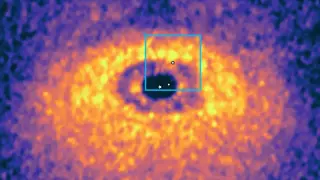
Astronomers using the Atacama Large Millimeter/submillimeter Array (ALMA) as part of the Resolve exoKuiper belt Substructures (ARKS) survey captured 24 disks around young stars, showing complex rings, halos and asymmetries that indicate a turbulent, collision‑driven “teenage” phase of planet formation and offering new clues to how planetary systems evolve—including hints about our Solar System’s early history.