Tag

Gravastar

All articles tagged with #gravastar

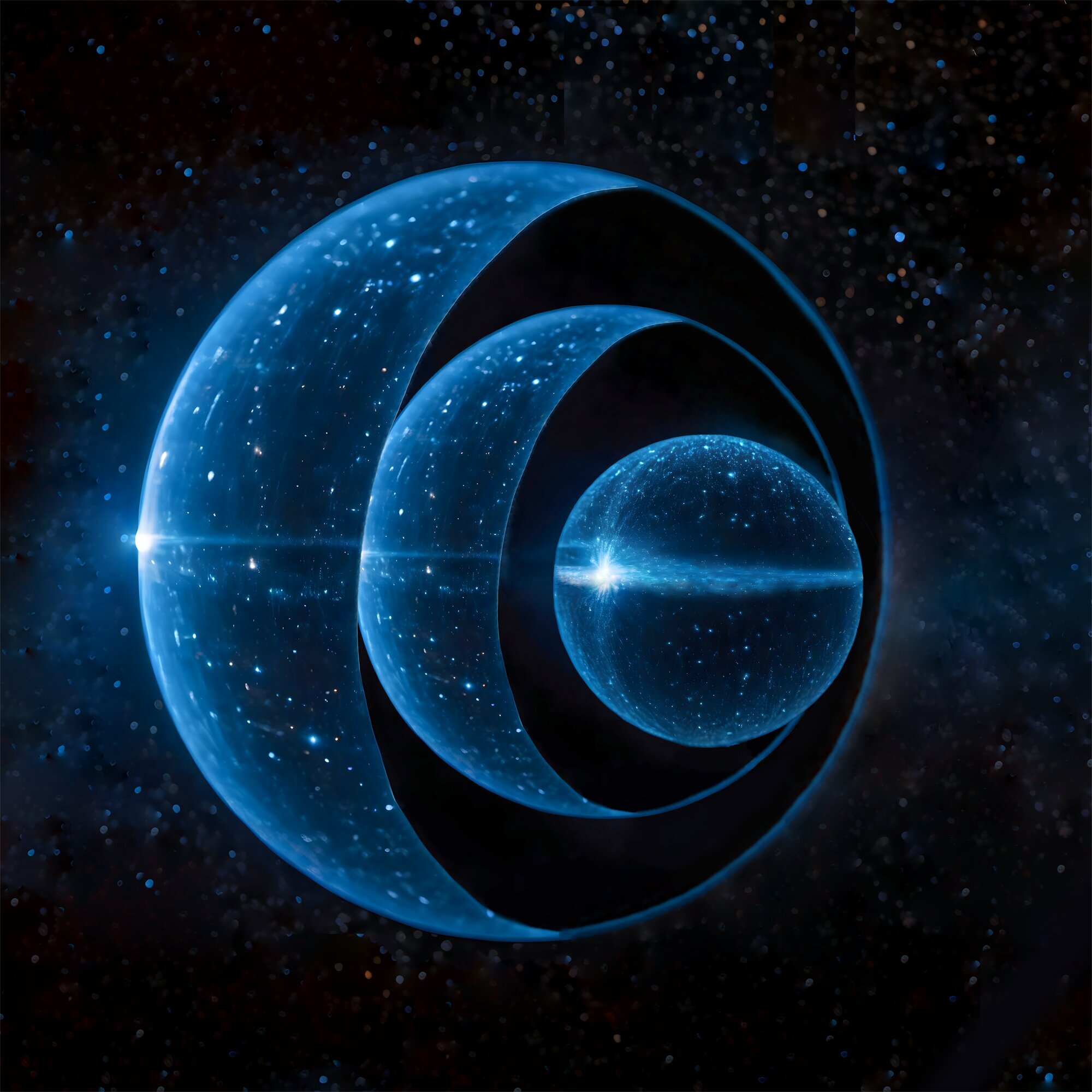
Star Collapse May Forge a Mini-Universe: Gravastars as Black Hole Alternatives
space1 month ago

Star Collapse May Forge a Mini-Universe: Gravastars as Black Hole Alternatives

A new study proposes gravastars—ultra-compact objects formed when collapsing stars create a miniature universe inside, with dark-energy interiors that halt collapse and mimic black holes without horizons or singularities—offering a GR-consistent alternative to black holes. Yet the mechanism requires fine-tuning, questions of stability remain, and it’s unclear how such objects could be distinguished observationally; formation remains a key open problem.
Earthquakes, Gravastars, and Century-Long Butterflies: A Surprising Science Roundup
science2 months ago

Earthquakes, Gravastars, and Century-Long Butterflies: A Surprising Science Roundup

The week’s science digest covers (1) a core-reflected seismic wave from the 2011 Tohoku-Oki quake that triggered a dual-boundary megathrust slip and moved Japan about 6 millimeters, (2) a theoretical gravastar model as an alternative to black holes with a de Sitter interior, (3) detection of plutonium-244 in a ferromanganese crust pointing to a distant kilonova r-process event, and (4) an unexpected 25-fold range in lifespan among Heliconius butterflies linked to pollen feeding, illustrating the uncanny diversity of life and cosmic events.

Dying Stars May Spawn Tiny Universes to Form Gravastars Instead of Black Holes
science2 months ago

Dying Stars May Spawn Tiny Universes to Form Gravastars Instead of Black Holes

A new dynamic solution to Einstein’s equations suggests that collapsing massive stars could birth a miniature expanding universe inside, creating a gravastar that counteracts collapse and avoids a singularity or event horizon, potentially explaining a theoretical alternative to black holes. The mechanism hinges on an outward-expanding mini-universe powered by dark energy, balancing gravity to produce a stable gravastar, though it remains a theoretical model and not observational evidence.

"Nested Gravitational Stars: A Revolutionary Solution to Black Hole Weirdness"
astrophysics2 years ago

"Nested Gravitational Stars: A Revolutionary Solution to Black Hole Weirdness"

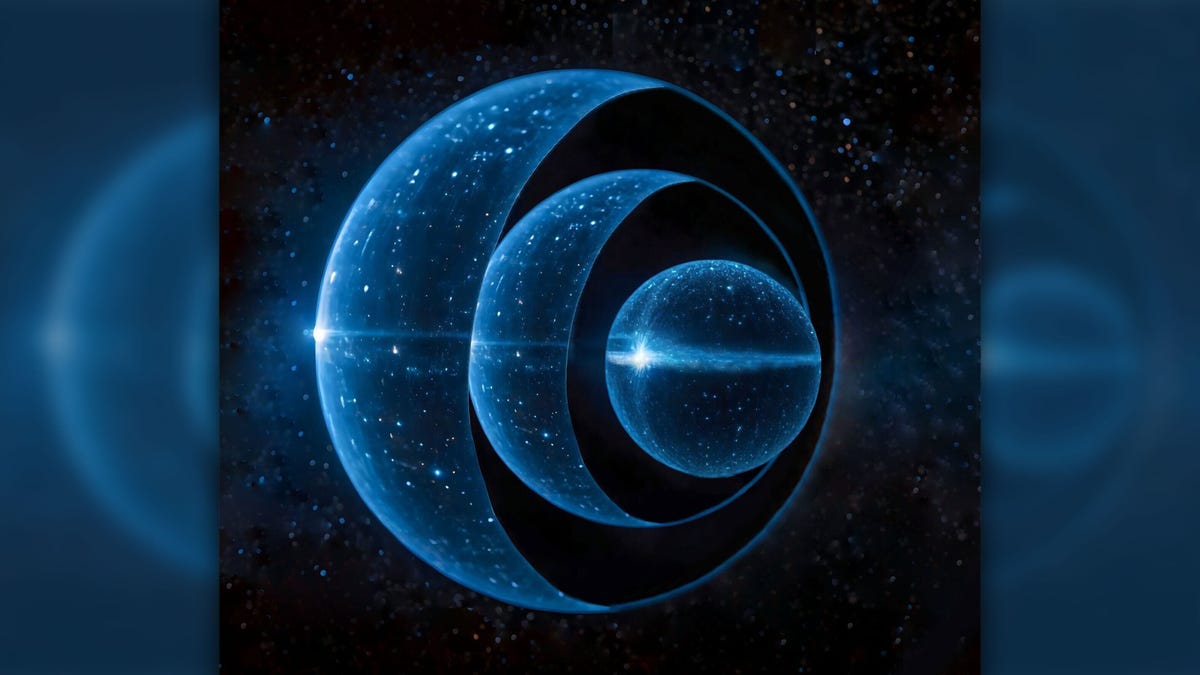
Astrophysicists propose the concept of "nestars," which are nested gravastars, as a potential solution to a blind spot in Einstein's general theory of relativity. These theoretical objects, similar to matryoshka dolls, could offer a new solution to the Einstein equations and help address the mysteries of dark energy and dark matter in the universe. While the existence of nestars remains uncertain, exploring their mathematical properties could enhance our understanding of black holes and the fundamental nature of the cosmos.

"Nested Gravitational Stars: Unraveling Black Hole Weirdness"
astronomyphysics2 years ago

"Nested Gravitational Stars: Unraveling Black Hole Weirdness"

Physicists have proposed a new solution to the equations describing black holes, envisioning them as nested "bubble-like" structures called nestars, which could help make sense of the mysterious behavior of these celestial objects. This concept, reminiscent of a matryoshka doll, offers a unique twist on the traditional depiction of black holes and may provide insights into their enigmatic nature, despite the current lack of understanding on how such structures could be created.

"Revisiting Einstein, Atlantic Predictions, and Brain Echoes"
science2 years ago

"Revisiting Einstein, Atlantic Predictions, and Brain Echoes"

Physicists propose a new solution to Einstein's field equations, describing a gravastar inside another gravastar, resembling a Russian matryoshka doll; researchers predict the Atlantic Ocean will develop an Atlantic subduction system in the next 20 million years; a study reveals how the human brain handles echoes, suggesting that auditory stream segregation accounts for the ability to distinguish speech in reverberant spaces; analysis of a dinosaur fossil in the Italian Alps disappointingly reveals a painted coating, but also uncovers tiny bony scales on the specimen's back.