JCB's Hydromax set a new FIA-recognized land speed record for hydrogen-powered vehicles at 406.320 mph at the Bonneville Salt Flats. The record was achieved by Andy Green, who also holds the outright land speed record. This milestone follows the FIA's digitization of its historical land speed record archives.
Andy Green, the only person to break the sound barrier in a car, set a new world record for hydrogen-powered vehicles at 406 mph. The 64-year-old retired pilot achieved this speed at Utah's Bonneville Salt Flats using the JCB Hydromax, doubling the previous hydrogen record.
Andy Green, the only driver to break the sound barrier in a car, returned to the Bonneville Salt Flats in Utah to attempt a new land speed record using a hydrogen-powered vehicle. The JCB Hydromax, a 32-foot streamliner powered by two hydrogen internal combustion engines producing 1,600 horsepower, achieved a verified class record of 368.347 mph during practice runs. This speed surpasses the previous diesel record of 350.092 mph set by Green in 2006 and exceeds current electric vehicle land speed records. The official attempt, sanctioned by the Fédération Internationale de l’Automobile, is scheduled for Tuesday. Green, a retired Royal Air Force pilot, aims to demonstrate hydrogen as a viable clean energy source for heavy industry, though critics note that most hydrogen is currently derived from fossil fuels.
The JCB Hydromax streamliner achieved a new class record at the Bonneville Salt Flats with a two-run average speed of 368.347 mph. This result, validated by the Southern California Timing Association, surpasses the previous benchmark of 348.342 mph set in 2010. The vehicle utilizes two hydrogen-burning internal combustion engines producing approximately 1,600 horsepower combined. This milestone serves as a critical benchmark for an upcoming Fédération Internationale de l’Automobile (FIA) world record attempt.
Andy Green, the only person to break the sound barrier in a car, is attempting a new land speed record in Utah using a hydrogen-powered vehicle. He aims to surpass his 2006 diesel record of 350.092 mph with the JCB Hydromax, a 32-foot car powered by 1,600 horsepower. The attempt serves as a demonstration of hydrogen as a clean energy source, though critics note current hydrogen production relies heavily on fossil fuels.
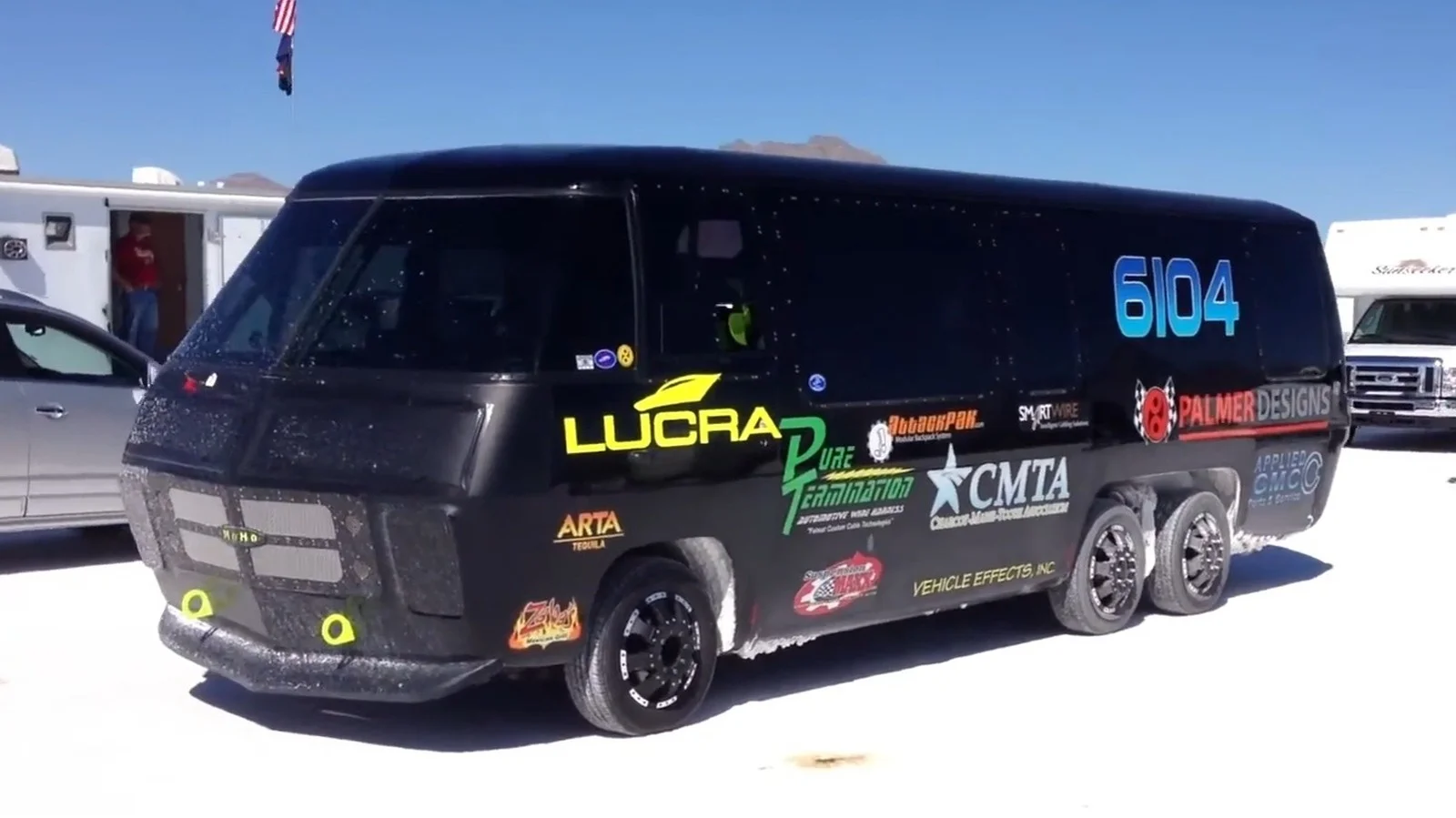
A 1970s GMC motor home nicknamed MoHo was retrofitted with a Ram Jet 502 engine, nitrous, and weight-saving hollowing of the interior to reach about 122 mph on the Bonneville Salt Flats, reportedly beating a land-speed record. However, the interior removal and lack of traditional motor‑home amenities raise the question of whether it still qualifies as a motor home, with critics arguing it’s more like a fast van than a proper Class A RV.
Racer Chris Raschke tragically died in a crash while attempting to break the land speed record at Utah's Bonneville Salt Flats, highlighting the dangers of high-speed racing and prompting tributes from the racing community.
A driver attempting to set a land speed record at Utah's Bonneville Salt Flats died after losing control of his vehicle during a high-speed run, highlighting the inherent dangers of motorsports despite strict safety measures.
Driver Chris Raschke died after losing control of his vehicle during a land speed record attempt at Utah's Bonneville Salt Flats, a site famous for speed records and motorsport history, highlighting the inherent dangers of motorsports.
Chris Raschke, a veteran land-speed driver, died in a crash while driving the Speed Demon 3 at nearly 300 mph at Utah's Bonneville Salt Flats, prompting an ongoing investigation into the incident.
A driver attempting a speed record at Utah's Bonneville Salt Flats died after losing control of his vehicle during a race, with the incident under investigation.
A 60-year-old racer, Chris Raschke, died after losing control of his vehicle during a land-speed racing event at the Bonneville Salt Flats while attempting to set a record. The crash occurred about two and a half miles into his run, and the cause is under investigation. Raschke was an experienced speed racer and part of the Speed Demon Racing Team, known for setting speed records.
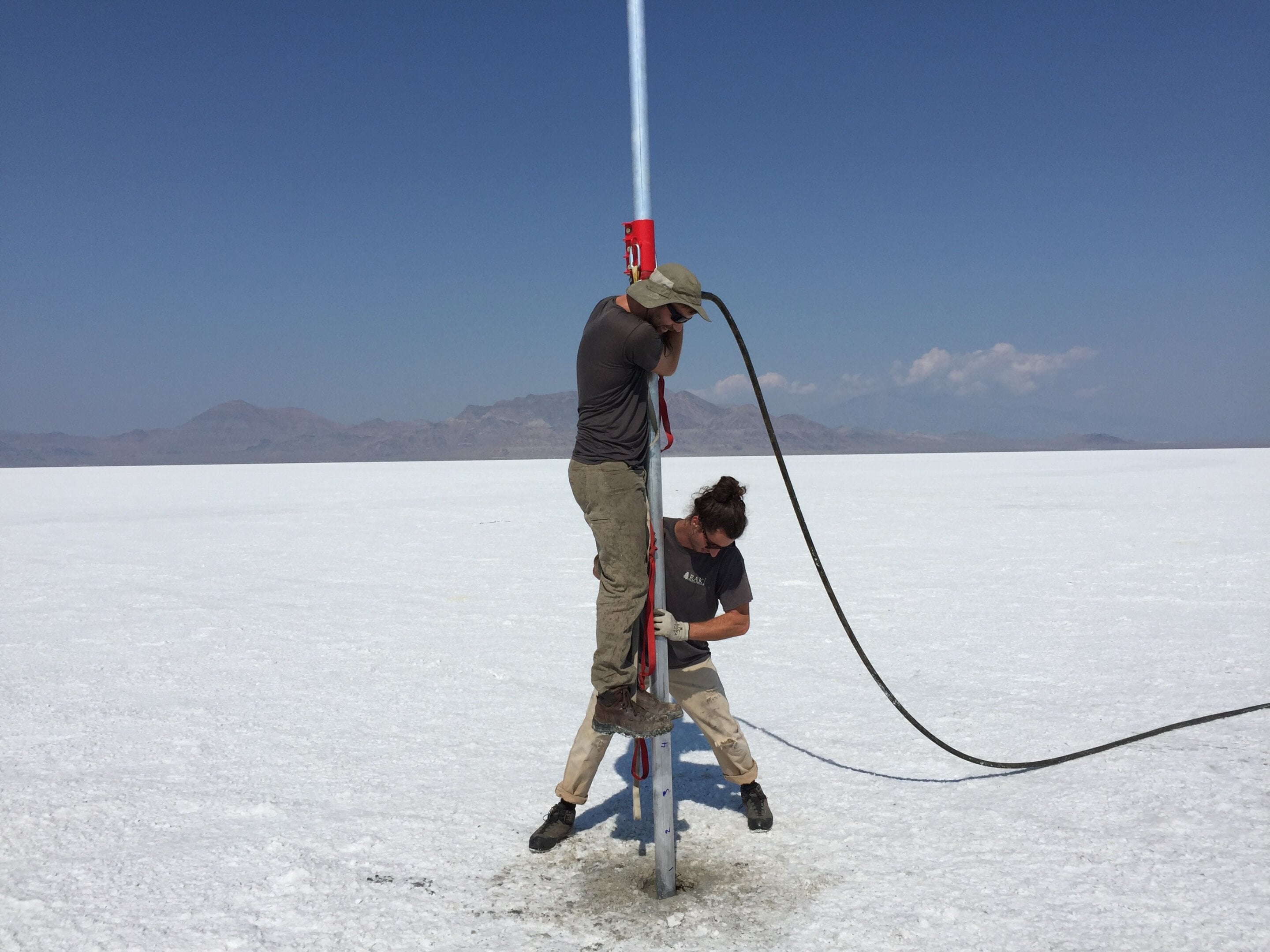
Recent research using radiocarbon analysis has revealed that the Bonneville Salt Flats are much younger than previously believed, forming between 5,400 and 3,500 years ago, millennia after the ancient Lake Bonneville disappeared. The decline of the salt flats is attributed to declining groundwater caused by human disturbances, and efforts to flood the flats may be doing more harm than good. The findings suggest that the salt flats are an ephemeral feature of the Great Basin, and their disappearance may be inevitable due to climate change and human water demands.
New research from the University of Utah challenges the long-held belief that the Bonneville Salt Flats were formed as Lake Bonneville dried up 13,000 years ago, revealing that the salt crusts actually began accumulating between 5,400 and 3,500 years ago. This study, published in the journal Quaternary Research, suggests that the landscape is more dynamic than previously understood, with evidence of erosion and accumulation of gypsum sand during dry periods. The findings have implications for managing the shrinking salt flats and offer insights into how this unique geological feature could be managed differently in the future.