Tag

Chicxulub

All articles tagged with #chicxulub

Could We Spot a Doomsday Asteroid Before It Strikes?
science-and-tech7 days ago

Could We Spot a Doomsday Asteroid Before It Strikes?

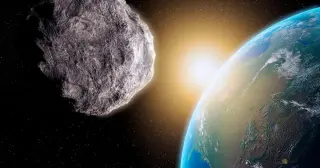
The article asks if humanity could detect an extinction-level asteroid before impact, using the dinosaurs’ 10 km carbonaceous impactor as a case study. It explains that warning time depends on the object’s origin, speed (~21 km/s), and whether it brightens from outgassing; best-case scenarios could offer weeks to a month of naked-eye visibility if the body comes from the night side and becomes bright, but more typical cases might yield only days or hours, or no warning at all if it’s sun-ward or depleted of volatiles. It also highlights how albedo and orbital geometry affect detectability, and stresses the need for planetary defense to gain decades of lead time for meaningful intervention.

Yucatán Impact Triggered Global Darkness and Mass Extinction
science20 days ago

Yucatán Impact Triggered Global Darkness and Mass Extinction

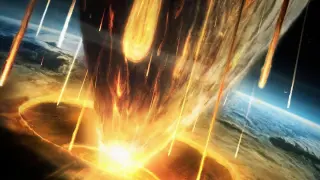
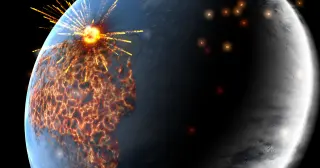
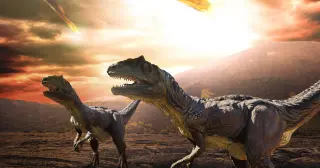
About 66 million years ago, a 10–15 km asteroid hit the Yucatán, creating the Chicxulub crater (~180 km across) and releasing energy equivalent to about 5 billion Hiroshima bombs. The impact ejected vast material, lofting dust, soot, and aerosols that blocked sunlight and likely caused a prolonged “impact winter,” leading to the mass extinction of non-avian dinosaurs and roughly 75% of species. Survival was uneven: around 12% of land species persisted, while freshwater life fared better (~90%). The crater’s link to the extinction was established in the 1990s, with 2016 drilling confirming deep-Earth material in the peak ring; scientists continue debating the exact roles of soot versus sulfur and how long the dark interval lasted.

When the sky became a weapon: the long aftershocks of the Chicxulub impact
science1 month ago

When the sky became a weapon: the long aftershocks of the Chicxulub impact

The Chicxulub impact 66 million years ago released molten debris that heated the upper atmosphere and sulfur- and soot-rich aerosols that blocked sunlight for years, triggering a drastic cooling that collapsed photosynthesis and reshaped life on Earth; while fires may have started in some regions, debates continue about how much the global die-off was due to heat, dust, or smoke, with survivors mainly among small, burrowing or detritus-eating species.

End-Cretaceous Extinction Hinged on Ground Beneath Chicxulub
science1 month ago

End-Cretaceous Extinction Hinged on Ground Beneath Chicxulub

New modeling suggests the Chicxulub impact's global killing power hinged on striking hydrocarbon-rich, sulfur-bearing coastal rocks. The study estimates such geology could generate enough stratospheric soot to trigger 8–11°C global cooling, a major driver of the mass extinction, whereas rocks with lower hydrocarbon content would have caused milder effects. The claim is model-based and contingent on late-Cretaceous geology and the impact angle, and while it fits with related research, it remains not a settled consensus.