Browning Nagle, a Jets' second-round pick in 1991 and Fiesta Bowl MVP at Louisville, died at 57 from colon cancer. He played six NFL seasons (Jets, Colts, Falcons), started 14 games, throwing 8 TDs and 20 interceptions.
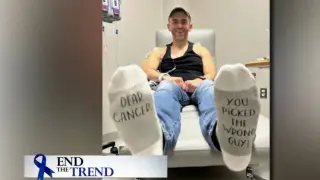
Brooke Pangrazio, diagnosed with stage 4 colon cancer at 33 (later 35) with liver and lung metastases, says she is “treatable, but not curable” as she undergoes chemotherapy. Her story highlights rising colorectal cancer rates among younger adults, the need for earlier screening, and the importance of self-advocacy—urging others to push for medical evaluation (like colonoscopies) if something feels off, even as she remains hopeful about longer-term outcomes.
Mel Schilling, the dating expert known for Married at First Sight Australia and the UK edition, died at 54 after a December 2023 colon cancer diagnosis that spread to her brain. Her husband Gareth Brisbane announced she passed away peacefully, and she leaves daughter Maddie. Tributes poured in from colleagues and networks, with colleagues calling her warm, inspiring, and central to MAFS’ success.
Australian psychologist and dating expert Mel Schilling, known for guiding couples on Married at First Sight, died at 54 after a colon cancer diagnosis that spread to her brain; she continued filming during chemotherapy and is survived by her husband Gareth Brisbane and daughter Maddie.
Colon cancer rates are rising among people in their 20s and 30s in the US, but adults under 45 often struggle to get insurance coverage for colonoscopies since the ACA mainly covers preventive screenings for those 45 and older. Diagnostic colonoscopies can be denied or costlier, leading to delays and out-of-pocket expenses (one case cited around $2,000). Doctors note referral loops and misattributions of symptoms contribute to late evaluations. Some experts suggest stool tests like Cologuard to expedite access, while the debate about lowering screening age continues due to capacity and disparities. Researchers also advocate broader study of cancer causes (the exposome) to inform policy and screening strategies.
Business Insider reports that colon cancer is now the deadliest cancer in the US and is increasingly diagnosed in people under 50, with researchers citing an unidentified environmental or behavioral exposure driving cases, especially in the rectum. The article emphasizes the personal and financial impact on younger patients and highlights risk-reduction steps, at-home screening options, and related resources.
A 42-year-old Virginia Beach father, Ronnie Dixon Jr., was diagnosed with stage 4 colon cancer after initially fearing a hemorrhoid, and is undergoing aggressive treatment. His case, with no family history of colorectal cancer, highlights a rising trend of younger adults being diagnosed at advanced stages. Health experts now recommend starting screening at 45, and Dixon hopes his story prompts others to seek earlier testing. His family has raised almost $20,000 via a GoFundMe to cover medical costs.
After a grim prognosis of two to three years, Spencer Laird’s stage IV colon cancer dramatically improved on a Duke Cancer Center immunotherapy trial with botensilimab and balstilimab: about a year in, nearly all 13 tumors disappeared and the largest remaining lesion shrank to 0.6 cm, while his CEA marker fell, offering the family more time with their daughter and renewed hope. The study targets microsatellite-stable colorectal cancer and aims for long-lasting control with fewer side effects, and researchers plan to expand enrollment and biomarker work. The Lairds began with a second opinion and now travel for ongoing Duke visits.
Emma Weston-Dimery, diagnosed with stage 4 colon cancer at 23, was one of 12 patients in a Phase 1 trial of CRISPR-Cas9 gene-edited immune cells. After cells were edited to better attack the cancer and reinfused in early 2023, two nodules disappeared within a month and the remaining cancer vanished by month two. She is now cancer-free, the only patient in the trial to achieve complete remission. The study showed mixed results for others, with some stabilization and several deaths due to the disease. A Phase 2 trial and a pill-form version of the therapy are planned, and Weston-Dimery is now an advocate for clinical trials and patient awareness.
The piece explains how doctors use the Bristol Stool Chart to judge gut health, highlighting that type 3–4 stools—smooth, sausage- or banana-shaped—are ideal. It emphasizes increasing fiber from fruits, vegetables, and whole grains to improve stool consistency and colon health, notes that blood in stool can signal serious issues like colon cancer (which is increasingly affecting younger people), and advises consulting a healthcare professional if stool changes persist. A short post-meal walk is also suggested to aid digestion, with the goal of monitoring stool rather than chasing a perfect shape.
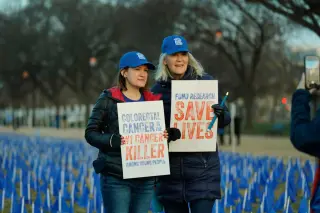
A American Cancer Society analysis shows colorectal cancer is now the leading cause of cancer death among Americans under 50, with about three-quarters diagnosed at an advanced stage because screening is less common in younger people. Experts urge prompt evaluation for persistent rectal bleeding or bowel changes and note stool-based tests can screen before colonoscopy. The trend contrasts with declines in older adults and may reflect a birth-cohort effect and possible environmental factors, underscored by personal stories of young patients diagnosed with advanced disease.
Nick Leeson, the trader whose unauthorized trades toppled Barings Bank, survived colon cancer diagnosed during a prison sentence after surgery and six months of chemotherapy; decades later he has had regular colonoscopies with no recurrence and credits a proactive mindset and ongoing medical care for a full life, while continuing a familiar lifestyle of exercise and occasional indulgences and avoiding self-diagnosis online.
A new American Cancer Society report shows colon cancer is rising among people under 65, with rectal cancer driving the trend and cases under 50 doubling from 1998 to 2022. Researchers suspect an environmental or behavioral exposure, not inactivity, as the trigger, and the trend is spreading globally. Experts urge earlier awareness and screening—starting colonoscopies at 45 and using home FIT tests—to detect and prevent disease, as many younger patients present with advanced cancer. Emphasizing symptom talk, especially bloody stool and cramps, can help prompt earlier diagnosis.
A 35-year-old father was diagnosed with late-stage colon cancer, underwent chemotherapy, then adopted a regimen of twice-weekly strength training plus cardio and a fiber-rich Mediterranean-style diet. He notes exercise may be as effective as drugs at preventing relapse and cites research, while advocating early screening and awareness for under-50s.
A 20-year-old college student experienced intermittent upper abdominal pain and was initially thought to have an ovarian cyst. After worsening symptoms and imaging, she was diagnosed with stage 2 colon cancer, underwent surgery, and faced chemotherapy side effects including severe fatigue, neuropathy, and vision loss, leading to a switch to an oral chemo regimen. She completed treatment in mid-2025 and was declared cancer-free; now a senior and intern, she advocates for awareness of colon cancer symptoms in young people and stresses listening to one’s body, with plans for ongoing blood tests and annual colonoscopies.