Tag

Dna Methylation

All articles tagged with #dna methylation

DNA Methylation Switches Help Explain What Makes Humans Unique
science11 days ago

DNA Methylation Switches Help Explain What Makes Humans Unique

A study comparing human, chimpanzee, and hybrid cells shows that cis-regulatory DNA methylation—driven by changes at CpG sites—primarily drives methylation differences between humans and chimps, with effects rippling to nearby sites. These epigenetic shifts correlate with human-specific traits in cognition, development timing, craniofacial features, and disease susceptibility, suggesting DNA methylation coordinates regulatory changes beyond gene expression to help define what makes us human.

Epigenetic clocks are research tools, not consumer health tests
science22 days ago

Epigenetic clocks are research tools, not consumer health tests

Epigenetic aging clocks sold as “biological age” tests are powerful research tools for studying aging at the population level but unreliable for individuals: dozens of clocks can disagree, results vary by sample type and short-term factors, and there is no universal gold standard. They are not medical diagnostics and should be used by researchers to identify population-level lifestyle factors that slow aging or to test therapies, not for personal health decisions or insurance decisions, though future work may eventually inform individualized care.

Obesity Leaves a Lasting Immune Memory After Weight Loss
science25 days ago

Obesity Leaves a Lasting Immune Memory After Weight Loss

A decade-long study shows that obesity can leave a persistent “memory” in both fat and immune cells through DNA methylation, sustaining inflammation and higher risk for obesity-related diseases even after weight loss. Maintaining weight loss for about five to ten years may gradually erode this memory, underscoring why relapse is common and highlighting potential therapies such as SGLT2 inhibitors to reverse obesity’s immune effects.

Weed Killer Picloram May Explain Surge in Young Colorectal Cancer
health1 month ago

Weed Killer Picloram May Explain Surge in Young Colorectal Cancer

A Nature Medicine study identifies DNA methylation fingerprints in tumors from people under 50 that link exposure to the weed killer picloram to higher rates of colorectal cancer. Glyphosate shows a weaker signal, but the researchers caution the study is observational and cannot prove causation; factors such as smoking, diet, obesity, and gut bacteria are also being explored as potential contributors. More research is needed to confirm picloram’s role.

MethylScan: A Low-Cost Blood Test for Early, Multi-Disease Detection
biotechnology1 month ago

MethylScan: A Low-Cost Blood Test for Early, Multi-Disease Detection

UCLA researchers report MethylScan, a simple, affordable test that analyzes DNA methylation in circulating cell-free DNA to detect multiple cancers and liver diseases, and to indicate tissue of origin and organ health. In 1,061 samples, it achieved about 98% specificity, ~63% cancer detection across stages (~55% for early-stage) and ~80% detection of liver cancers in high‑risk groups, with a sequencing depth of ~300× costing under $20 per test as costs fall. By reducing background DNA, it functions as a system-wide health monitor, though larger prospective studies are needed to confirm real-world effectiveness.

ThermoCas9: a methylation-sensitive CRISPR enzyme enabling epigenetic-aware editing
science1 month ago

ThermoCas9: a methylation-sensitive CRISPR enzyme enabling epigenetic-aware editing

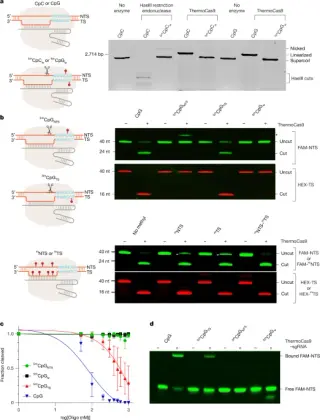
ThermoCas9 is a thermostable Cas9 whose activity is blocked by methylation of the PAM cytosine (5mC) in PAMs 5′-NNNNCGA-3′ or 5′-NNNNCCA-3′, restricting binding and cleavage to unmethylated sites. Cryo-EM structures of pre- and post-cleavage states reveal how PAM bases are recognized and why methylation prevents engagement. In human cells, unmethylated PAMs edit efficiently whereas methylated ones do not; a catalytically enhanced ThermoCas9 and optimized delivery methods boost editing at hypomethylated breast cancer loci ESR1 and GATA3, illustrating a new layer of precision for genome engineering and potential epigenetic screening applications.

A penny-a-day pill could slow ageing, says professor who now takes it
health1 month ago

A penny-a-day pill could slow ageing, says professor who now takes it

COSMOS trial analyses suggest a daily multivitamin may slow biological ageing in older adults, with DNA methylation markers showing participants on vitamins were about three months biologically younger than placebo after two years; earlier results also noted cognitive benefits from addressing subtle micronutrient gaps. The author, Professor Rob Galloway, now takes a multivitamin and argues the cheap, low‑risk option is reasonable, though the findings apply to older adults (men 60+, women 65+) and may not extend to younger people. The piece underscores nutrition as a potentially major determinant of long‑term health, while acknowledging more research is needed; it also touches on meningitis B vaccination policy for teens in light of evolving risk.

Daily multivitamin slows ageing markers in older adults, study suggests
health2 months ago

Daily multivitamin slows ageing markers in older adults, study suggests

A two-year, randomized COSMOS trial found that taking a daily multivitamin slowed certain epigenetic clocks of ageing in people around 70, reducing biological age by about four months versus non-users; the effect was more pronounced in individuals with accelerated ageing and was observed in two of five DNA methylation clocks linked to mortality risk. While promising, the authors emphasize the effects are small and do not yet imply improved clinical outcomes.

health4 months ago

Cambridge blood test could spark UK prostate cancer screening

Researchers at the University of Cambridge are developing a DNA methylation–based blood test that could not only detect prostate cancer but also indicate its aggressiveness and need for treatment, potentially underpinning a UK national screening programme. PSA tests currently used for screening are unreliable and UK advisers have urged targeted screening rather than broad population testing; a more accurate blood test could broaden screening, reduce unnecessary biopsies, and guide treatment decisions. The team plans UK clinical trials within 18–24 months and states the new test would complement, not replace, existing PSA testing. Prostate cancer is the UK’s most common cancer with about 12,000 deaths annually.

CRISPR breakthrough activates genes without DNA cuts
science4 months ago

CRISPR breakthrough activates genes without DNA cuts

Scientists at UNSW Sydney have developed a new CRISPR-based epigenetic editing technique that can turn genes on without cutting DNA, by removing chemical methyl groups that silence genes. This approach could lead to safer gene therapies for conditions like Sickle Cell disease, as it avoids the risks associated with DNA strand breaks. The research demonstrates that methylation directly controls gene activity and opens new possibilities for treating genetic disorders by reactivating silenced genes.

Scientists Discover Why Aging Gut Genes Go Silent
science4 months ago

Scientists Discover Why Aging Gut Genes Go Silent

Scientists discovered a specific epigenetic drift called ACCA that accumulates in aging gut stem cells, leading to gene silencing linked to inflammation and cancer risk. This process is influenced by iron metabolism and inflammation but can potentially be slowed or reversed by restoring iron levels or activating Wnt signaling, offering new insights into intestinal aging and cancer prevention.

CRISPR Innovation Promises New Era in Genetic Disease Therapy
science4 months ago

CRISPR Innovation Promises New Era in Genetic Disease Therapy

Researchers at UNSW Sydney have developed a safer CRISPR-based epigenetic editing technique that can switch genes on and off without cutting DNA, offering promising new treatments for genetic diseases like Sickle Cell by reactivating silenced genes through removal of methyl groups, potentially reducing risks associated with traditional gene editing.