The Protect College Sports Act passed the Senate 77-22 but faces significant hurdles in the House due to recess, partisan disagreements, and opposition from the Congressional Black Caucus.
Rep. Troy Carter (D-La.) has officially announced his bid to become the next chair of the Congressional Black Caucus (CBC), a role he is widely expected to win. Carter, currently the caucus vice chair, sent a letter to colleagues outlining his leadership philosophy, emphasizing ideological diversity and strong support for House Minority Leader Hakeem Jeffries. His candidacy comes amid significant challenges to Black representation due to Republican-led redistricting in the South following a recent Supreme Court decision limiting the Voting Rights Act. Carter has pledged to protect the rights of historically marginalized groups and resist attempts to silence the caucus, while also addressing internal debates over seniority rights and the creation of new majority-minority districts in blue states.
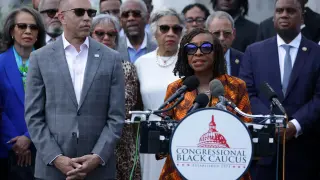
At the Congressional Black Caucus Annual Legislative Conference in Washington, lawmakers and tech leaders pressed for guardrails and transparency on artificial intelligence while discussing the economic and energy implications of data-center growth; the CBC shows broad support for AI regulation to protect communities without stifling innovation, amid concerns over redistricting and the midterm landscape that could affect minority representation.
The Congressional Black Caucus endorsed Democrat James Talarico in Texas’s high-stakes Senate race against Republican Ken Paxton. Talarico has pledged a $25 million outreach effort to Black voters and supports restoring federal oversight of state election laws under the Voting Rights Act, highlighting Democrats’ effort to mobilize Black and Latino voters in a race that could determine control of the Texas Senate amid Paxton’s scandals.
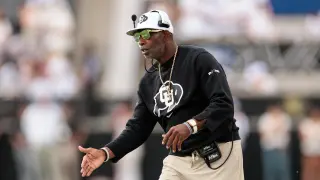
Colorado coach Deion Sanders recorded a political ad endorsing the Protect College Sports Act, saying it would stabilize college sports and help HBCUs, while the NAACP and the Congressional Black Caucus oppose the bill, arguing it weakens athletes’ rights and relies on vague funding promises; NCAA backing and a proposed five-year HBCU grant program are cited by supporters, though funding isn’t guaranteed. The bill has cleared a Senate vote (74-24) and now faces House action and potential presidential signature.
Debbie Wasserman Schultz enters Florida’s 20th District race—a majority-Black seat redrawn by Republicans—that has deepened Democratic divisions, with the Congressional Black Caucus warning the move disrupts Black representation even as she leans on seniority and more than $3.3 million in fundraising to position herself as a frontrunner in a crowded primary of younger challengers.
The Congressional Black Caucus criticized the bipartisan Protect College Sports Act, saying it hasn’t meaningfully included Black athletes in shaping it and urged Democrats to block it until the bill reflects Black communities’ interests. CBC Chair Yvette Clarke highlighted the central role Black athletes play in college sports and warned the bill would grant sweeping protections to powerful institutions without ensuring Black voices are heard throughout the process.
Rep. Terri Sewell and 61 CBC members pressed NCAA and major conferences to publicly address redistricting attacks on Black political power, threatening to withhold support for NIL reform (the SCORE Act) unless institutions speak out. The bill's vote was pulled amid CBC opposition, and House leaders plan a NAACP-backed briefing to condemn the legislation, signaling a broader clash over voting rights and college athletics' role in politics.
The SCORE Act, a bill to overhaul NIL oversight and college-athletics governance, was pulled from a planned House floor vote for a second time due to GOP resistance and a unified Congressional Black Caucus opposing the measure; two original co-sponsors withdrew, highlighting deep partisan and intra-party divisions ahead of the midterms.
The Congressional Black Caucus may lose up to 19 members as states redraw districts after a Supreme Court ruling narrowing Voting Rights Act protections, a development CBC leaders call devastating and that triggers plans for legal challenges and a strong turnout push on voting-rights to blunt the impact. Southern districts in Louisiana, Alabama, North Carolina, Missouri, Texas, Georgia and South Carolina are among those at risk, prompting Democratic strategy to defend Black representation and potentially affect leadership scenarios like a Black speaker if Democrats win the House.
Gov. JB Pritzker poured millions into backing Lt. Gov. Juliana Stratton over Rep. Robin Kelly in Illinois’ Democratic Senate primary, triggering ire among Congressional Black Caucus members who say he must justify his actions and that CBC endorsement leverage matters for future races, including a possible 2028 presidential bid. Some caucus leaders signal a reset and outreach will be necessary, Stratton’s win is celebrated within the CBC, while Kelly’s loss highlights tensions over influence and strategy within the bloc.
The chair of the Congressional Black Caucus, Rep. Yvette Clarke, offered a curt congratulations to Illinois Lt. Gov. Juliana Stratton after Stratton defeated Rep. Robin Kelly in the Democratic Senate primary, highlighting the party split over Gov. JB Pritzker's backing; Stratton advances to face Don Tracy in November and could become the second Black woman elected to Illinois' Senate.
The Congressional Black Caucus PAC is using a texting scandal involving Young Republicans to attack Rep. Mike Lawler, linking him to racist messages and past controversial actions, as part of their campaign ahead of the midterms.
Members of the Congressional Black Caucus condemned a bipartisan resolution honoring Charlie Kirk, arguing it legitimizes harmful and un-American beliefs, and criticized the use of tragedy to divide the country. The resolution, supported by most Democrats, was seen as an attempt to legitimize Kirk's worldview, which the caucus strongly opposes. The vote highlighted deep partisan divides, with most CBC members voting against it, and also included criticism of recent political rhetoric and actions following Kirk's death.
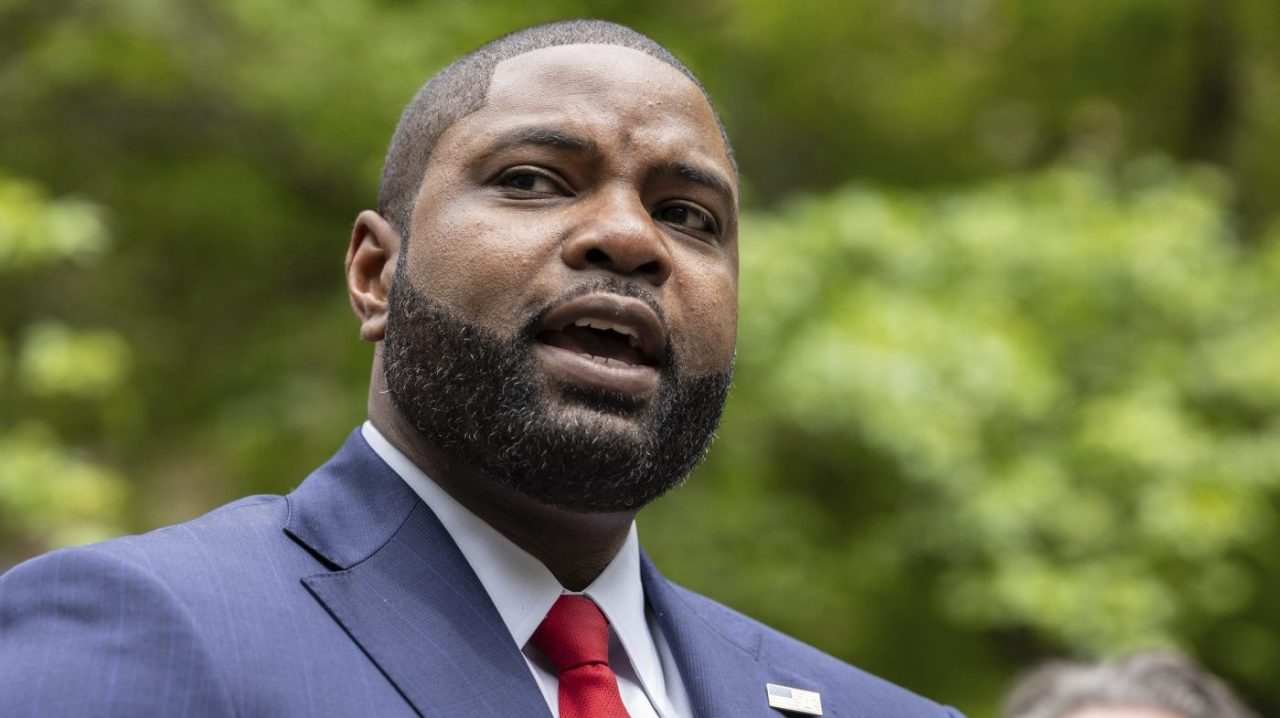
Rep. Byron Donalds (R-Fla.) claims the media misrepresented his comments about the Jim Crow era, which suggested Black families were better off then because they were "together." His remarks drew criticism from the Black community and Congressional Black Caucus, who called for an apology. Donalds defended his statements, arguing they were taken out of context and accusing critics of political gaslighting.