Brain Surgery Patient Reports Persistent Cat-Face Distortions in Humans
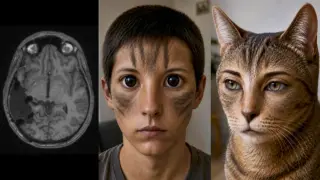
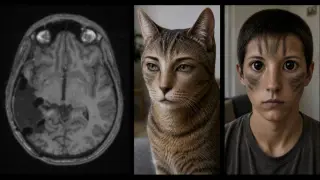
A 28-year-old man named Karl experiences a rare visual distortion called prosopometamorphopsia (PMO) following brain surgery. He sees his cat Luna’s features, such as enlarged pupils and fur patterns, on human faces, and vice versa. The condition began two years ago after surgery to remove an arteriovenous malformation in his right temporal lobe. Researchers from Dartmouth College and Brigham and Women’s Hospital published the case in the journal Cortex, noting that these distortions are coherent and can last all day. They utilized AI tools to visualize these experiences, arguing that such technology improves the accuracy of documenting perceptual disorders. The case mirrors a 1986 incident involving a poodle and suggests that facial processing relies heavily on memory integration rather than direct visual input alone.