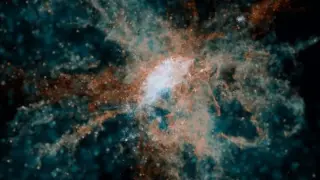
JWST observations show that galaxies began dispersing heavy elements into the intergalactic medium just 500 million years after the Big Bang, challenging the view that the early universe was chemically pristine.
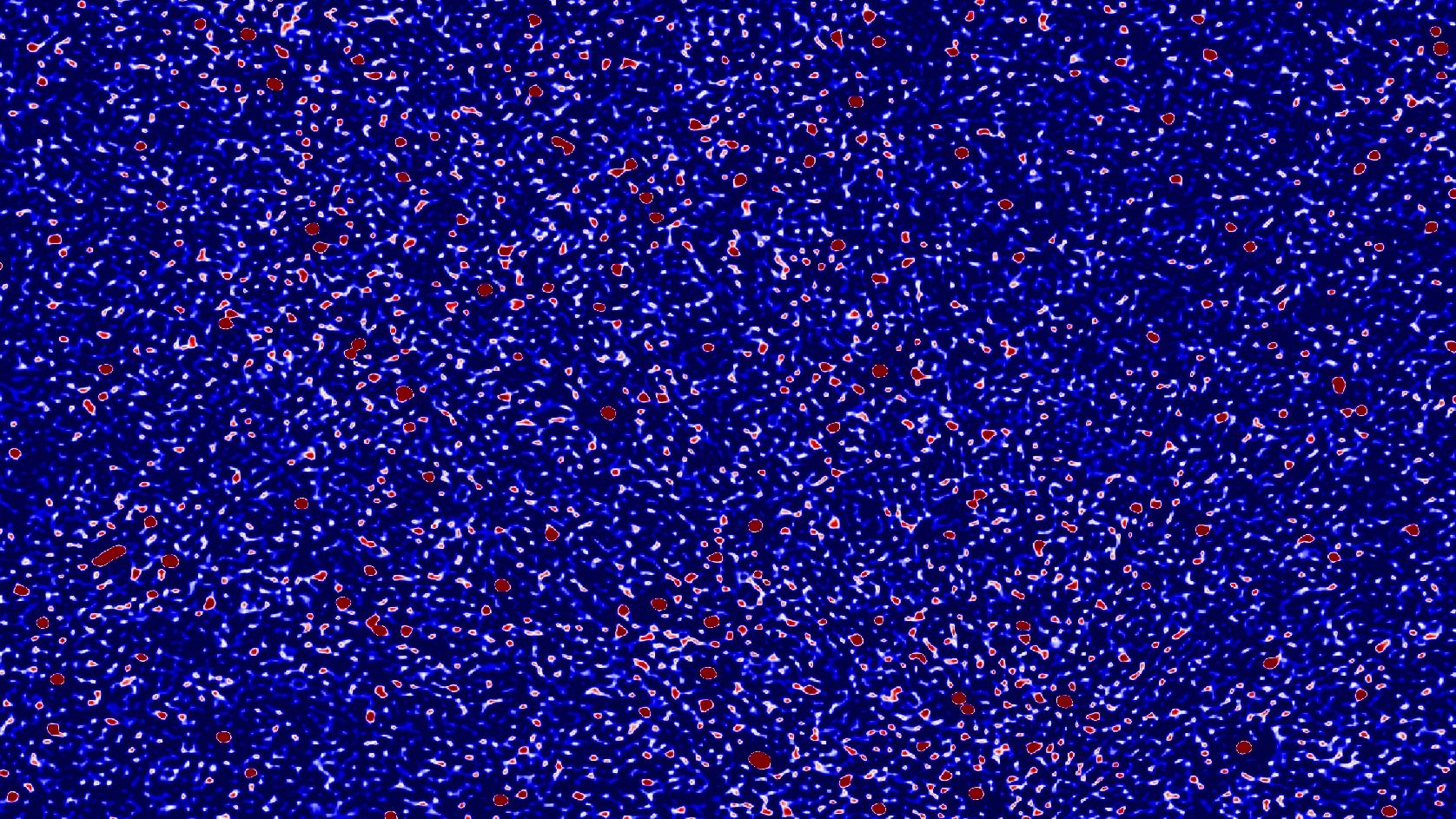
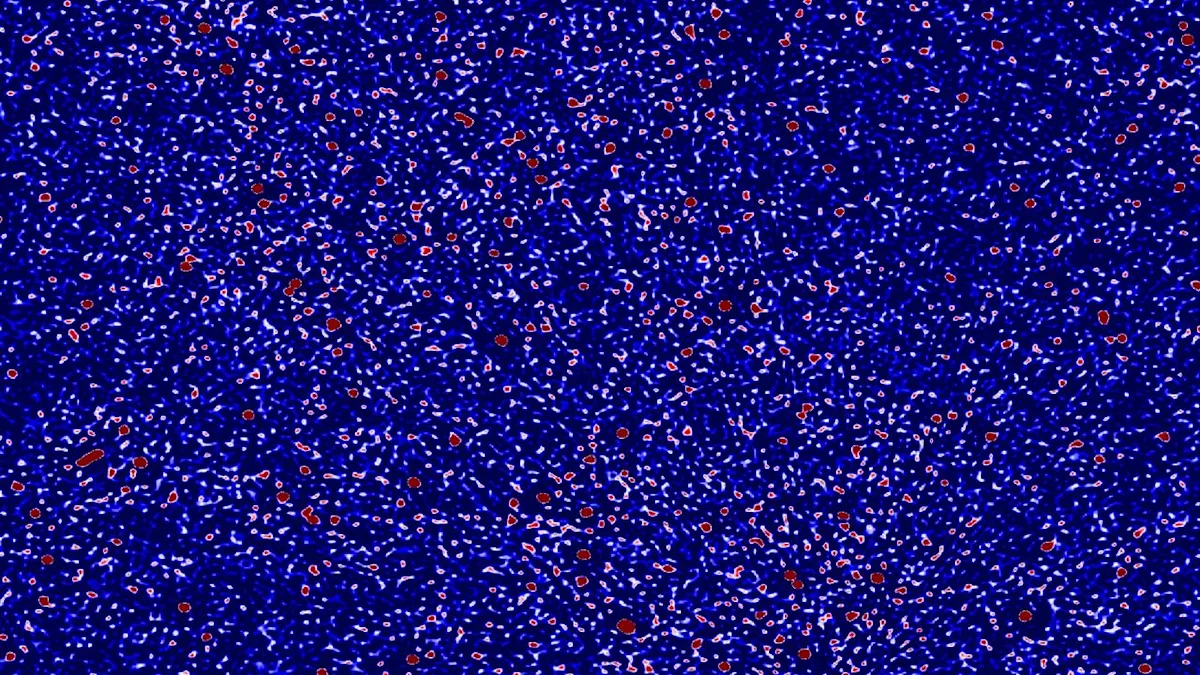
Astronomers using the Murchison Widefield Array have made the clearest attempt yet to detect ancient radio signals from the universe's early dark ages, but found no evidence of the expected 21-centimeter emission, suggesting the universe was warmer than previously thought around 800 million years after the Big Bang, paving the way for future observations with the upcoming Square Kilometre Array.
Astronomers using the Murchison Widefield Array have made the most detailed radio observations of the early universe, suggesting it was warmer than previously thought around 800 million years after the Big Bang, and bringing us closer to detecting the elusive 21-centimeter hydrogen signal that could reveal details about the first stars and black holes.
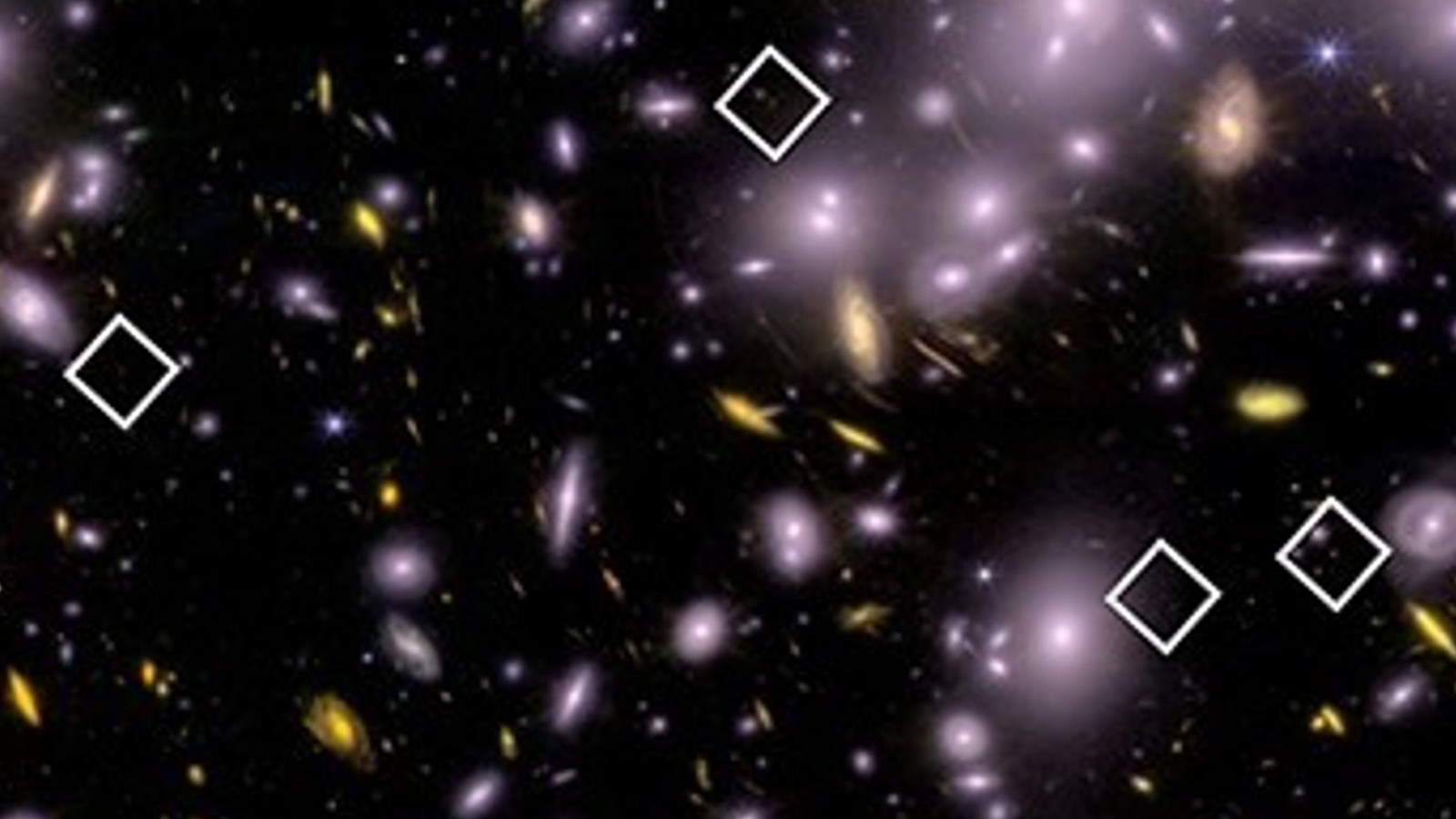
Astronomers using the JWST have discovered numerous tiny, energetic galaxies from about 800 million years after the Big Bang that likely played a key role in reionizing the universe, challenging previous ideas that larger galaxies or quasars were the main contributors.
NASA's James Webb Space Telescope has identified numerous small, starburst galaxies from about 800 million years after the Big Bang that likely played a key role in reionizing the universe, transforming it from a fog of neutral hydrogen into the ionized state we observe today, by emitting enough ultraviolet light to drive this cosmic renovation.
A study using JWST and Hubble data reveals that faint dwarf galaxies, rather than massive galaxies or black holes, played a crucial role in the Universe's reionization, shedding light on the cosmic dawn and challenging previous assumptions about early galaxy formation.
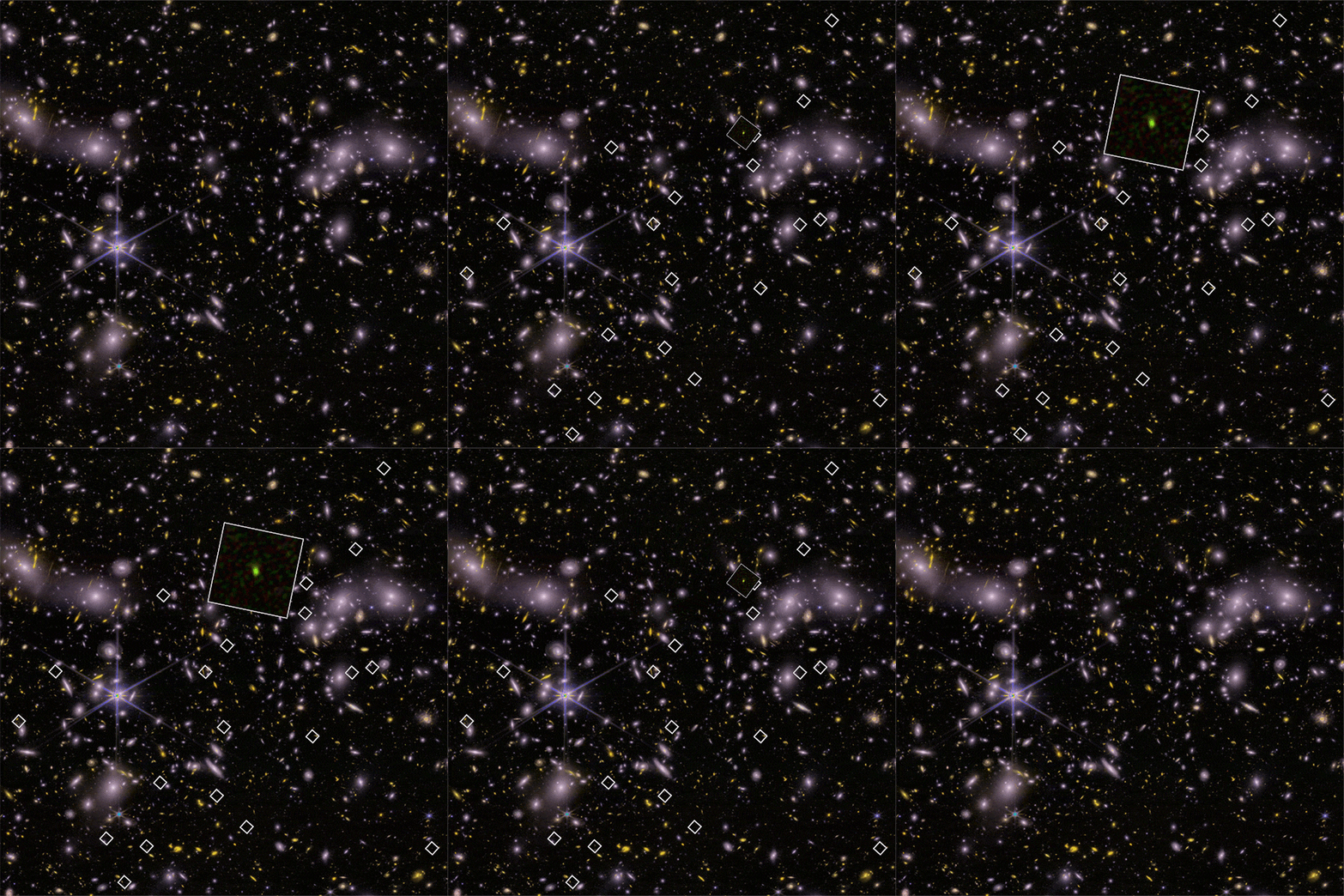
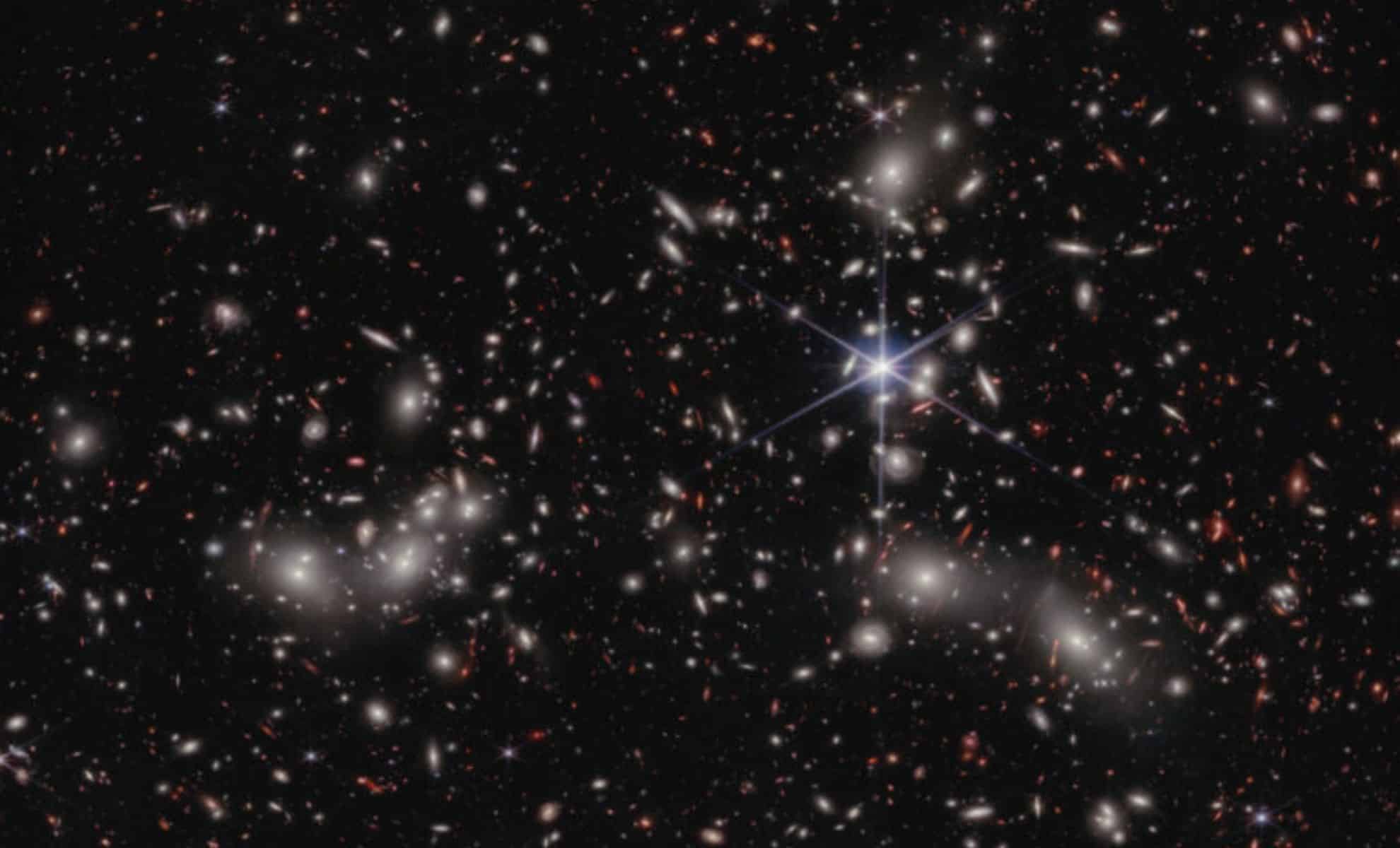
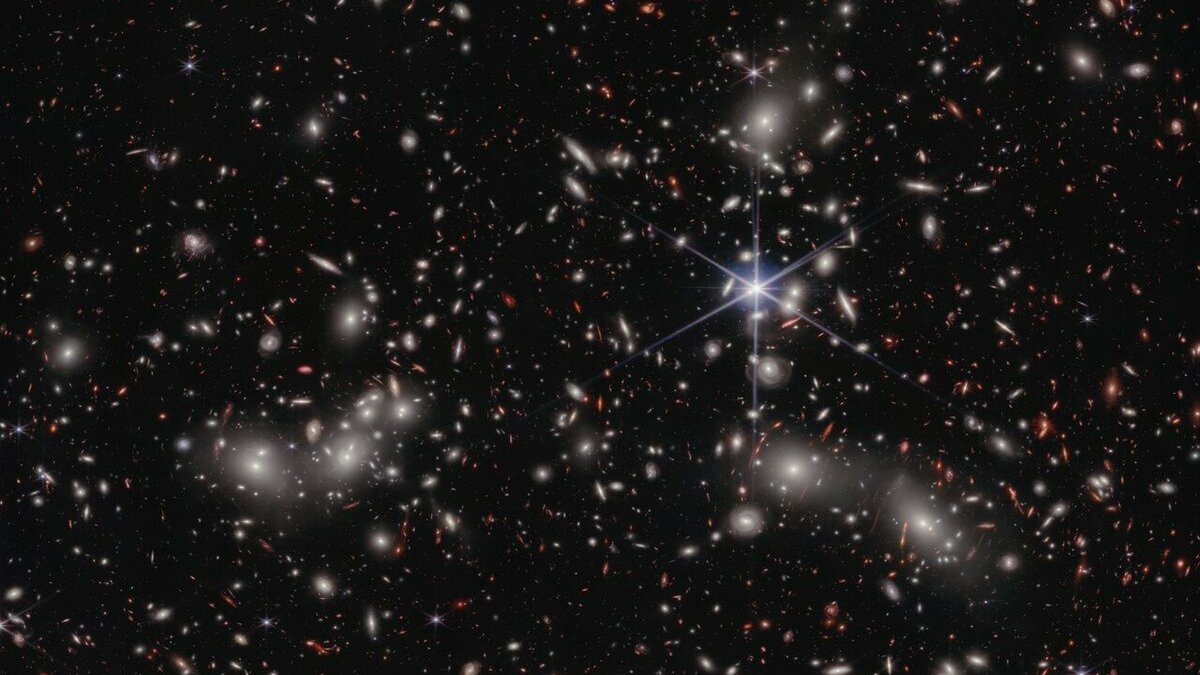
The James Webb Space Telescope has captured a stunning image of Pandora's Cluster, revealing how the universe transitioned from its Dark Ages to a clear, observable state. By observing faint, ancient galaxies through a natural gravitational lens, astronomers discovered that these galaxies were emitting significant amounts of ultraviolet light, enough to break down the dense gases suffocating space and reveal brilliant starlight. This breakthrough sheds light on the era of "reionization" and showcases the Webb telescope's unparalleled ability to peer into the early cosmos and study distant exoplanets.
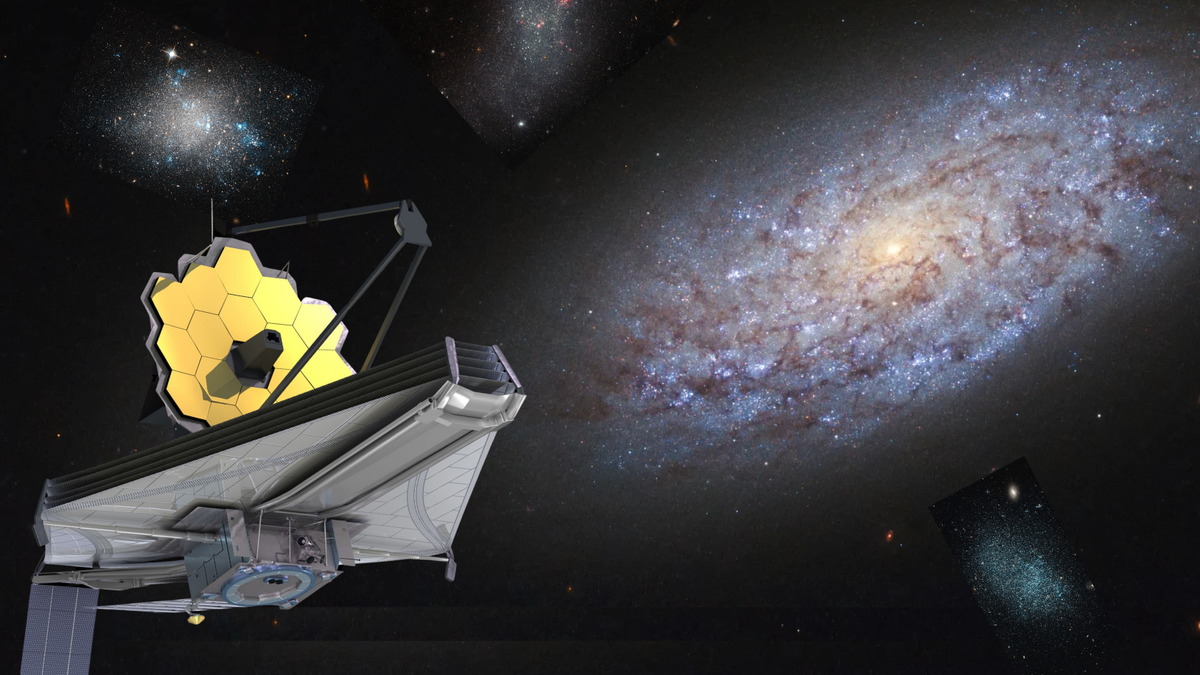
The James Webb Space Telescope has used gravitational lensing to discover that small galaxies in the early universe played a crucial role in shaping the cosmos, outnumbering larger galaxies and supplying the energy needed for cosmic reionization. These dwarf galaxies, resembling those existing today, were found to be four times more efficient at producing ionizing radiation than expected, challenging previous theories about the sources of this radiation. The telescope's findings could help understand the formation of the very first galaxies and were published in the journal Nature.