Tag

Darwin

All articles tagged with #darwin

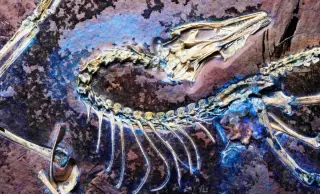
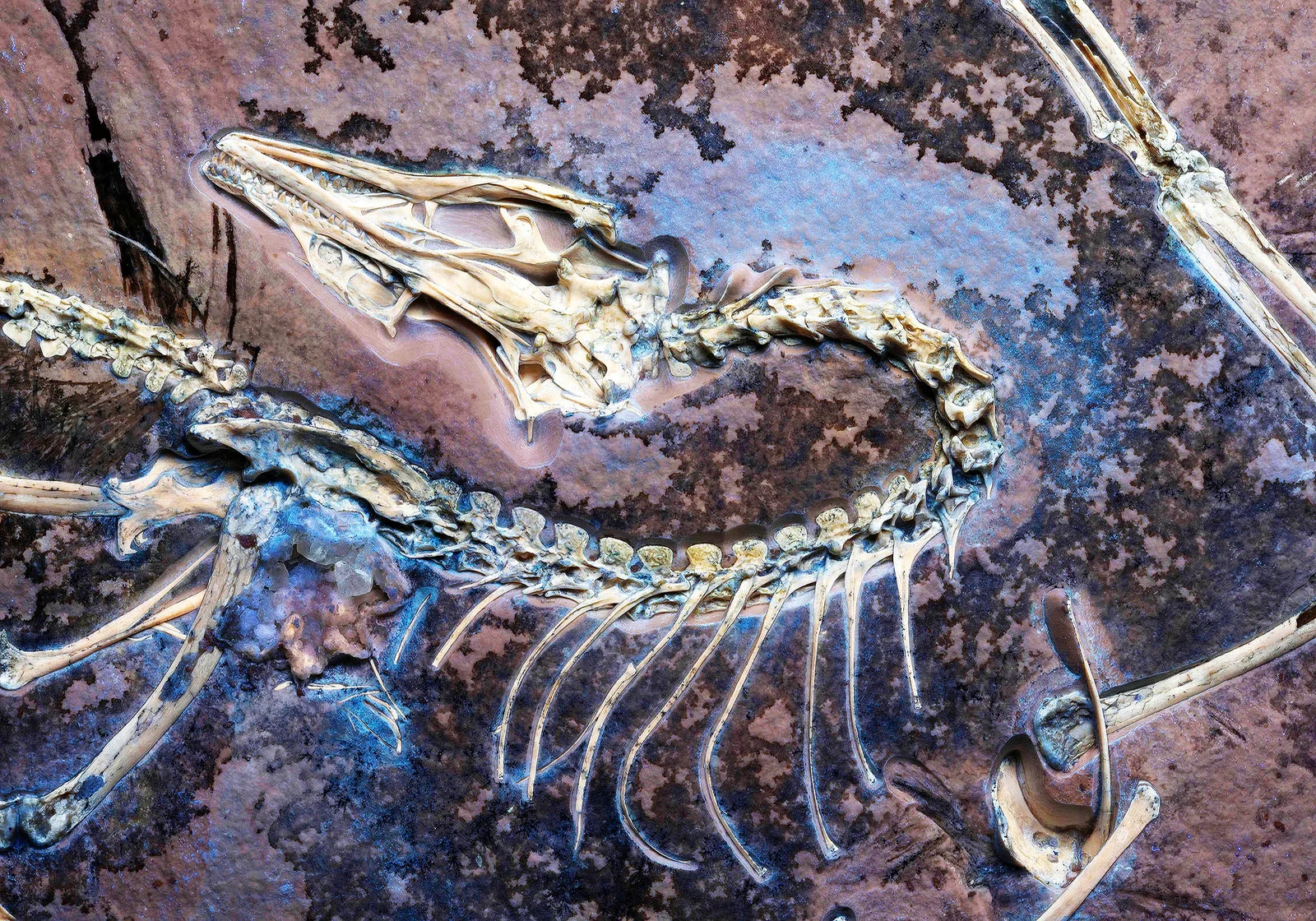
Tiny Archaeopteryx with preserved soft tissue reshapes view of bird flight origins
science17 days ago

Tiny Archaeopteryx with preserved soft tissue reshapes view of bird flight origins

Chicago’s Archaeopteryx fossil, unusually well-preserved with soft tissues, was CT-scanned and examined under UV light, revealing detailed anatomy from snout to tail and long tertial feathers. The findings suggest this bird could fly and imply that flight evolved more than once among dinosaurs, lending fresh support to Darwin’s theory of evolution.

Global study backs Darwin: humans and animals share taste in sounds
evolutionary-psychology18 days ago

Global study backs Darwin: humans and animals share taste in sounds

A global online experiment with 4,000+ participants tested whether humans' sound preferences align with those of other animals when judging mating calls from 16 species. Using audio recordings manipulated to isolate traits, the study found a broad overlap: humans tended to pick calls that animals also prefer, and when they did, choices were about 50 milliseconds faster. Both groups favored acoustic adornments and ancestral sounds, though humans showed a stronger preference for lower pitches; factors like training or occupation did not predict alignment. The authors conclude the results broadly support Darwin's idea that a common sensory basis underlies aesthetic taste across species, while noting limits and proposing future research.

New 26-Foot Giant Shark Rewrites Ocean Predator Timeline
science1 month ago

New 26-Foot Giant Shark Rewrites Ocean Predator Timeline

Researchers re-examined five large vertebrae found near Darwin, Australia, and concluded they belong to a previously unknown giant shark from the early Cretaceous Cardabiodontidae, about 115 million years old, reaching up to 26 feet (8 m) and weighing around 3,000 kg. This finding, published in Communications Biology in 2025, pushes back the emergence of giant sharks by ~15 million years and provides rare insight into cartilage-preserving fossils that reveal the anatomy of these prehistoric predators.

Global Bird Alarm Calls Hint at Language's Evolution
science1 month ago

Global Bird Alarm Calls Hint at Language's Evolution

Researchers found that more than 20 bird species across four continents share nearly identical warning cries for brood parasites; these calls are learned through social transmission but rest on an innate instinct, representing a rare case of a vocalization that blends learned meaning with an inborn response and offering clues about how language could evolve from instinctive sounds.

Lasers Reveal What Keeps Darwin’s 200-Year-Old Jars Preserved
science2 months ago

Lasers Reveal What Keeps Darwin’s 200-Year-Old Jars Preserved

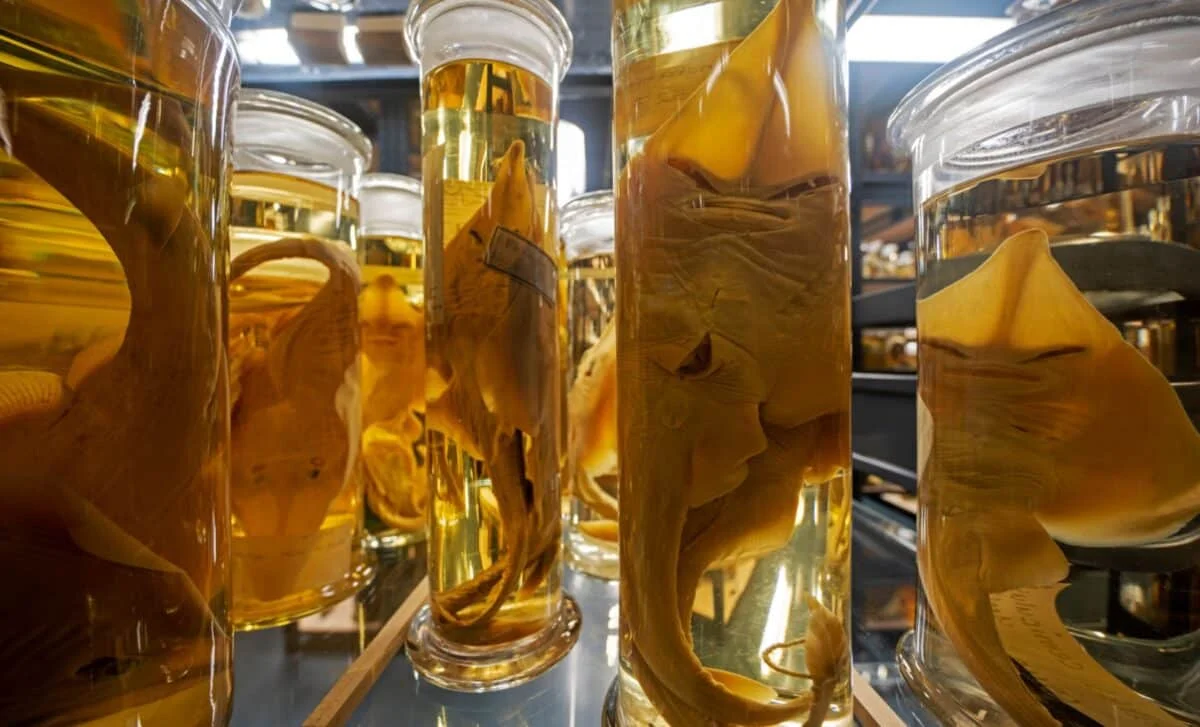
Scientists used portable spatially offset Raman spectroscopy (SORS) to peek inside Charles Darwin’s 200-year-old preserved specimen jars at the Natural History Museum without opening them. The technique identified preservation fluids in about 80% of jars (mammals/reptiles often in formalin then ethanol, invertebrates in formaldehyde-based mixtures), with 15% partially identifiable and 6.5% not confidently identified. The method helps conserve delicate collections while guiding storage practices across museums, and the study was published in ACS Omega (2026).

"Animal Mummies: A Pre-Darwinian Challenge to Evolutionary Theory"
science2 years ago

"Animal Mummies: A Pre-Darwinian Challenge to Evolutionary Theory"

In the early 1800s, the debate over whether animals could evolve into new species was fueled by the discovery of mummified animals from Egypt. Naturalists Georges Cuvier and Jean-Baptiste Lamarck represented opposing views, with Cuvier mocking Lamarck's theory of transformism in an obituary. The mummified animals, including ibises, cats, and crocodiles, were examined for evidence of species change, but their similarity to modern counterparts seemed to support Cuvier's belief in the unchanging nature of species. However, this debate was reignited with the publication of Charles Darwin's On the Origin of Species in 1859, acknowledging Lamarck as a predecessor in the study of species modification.