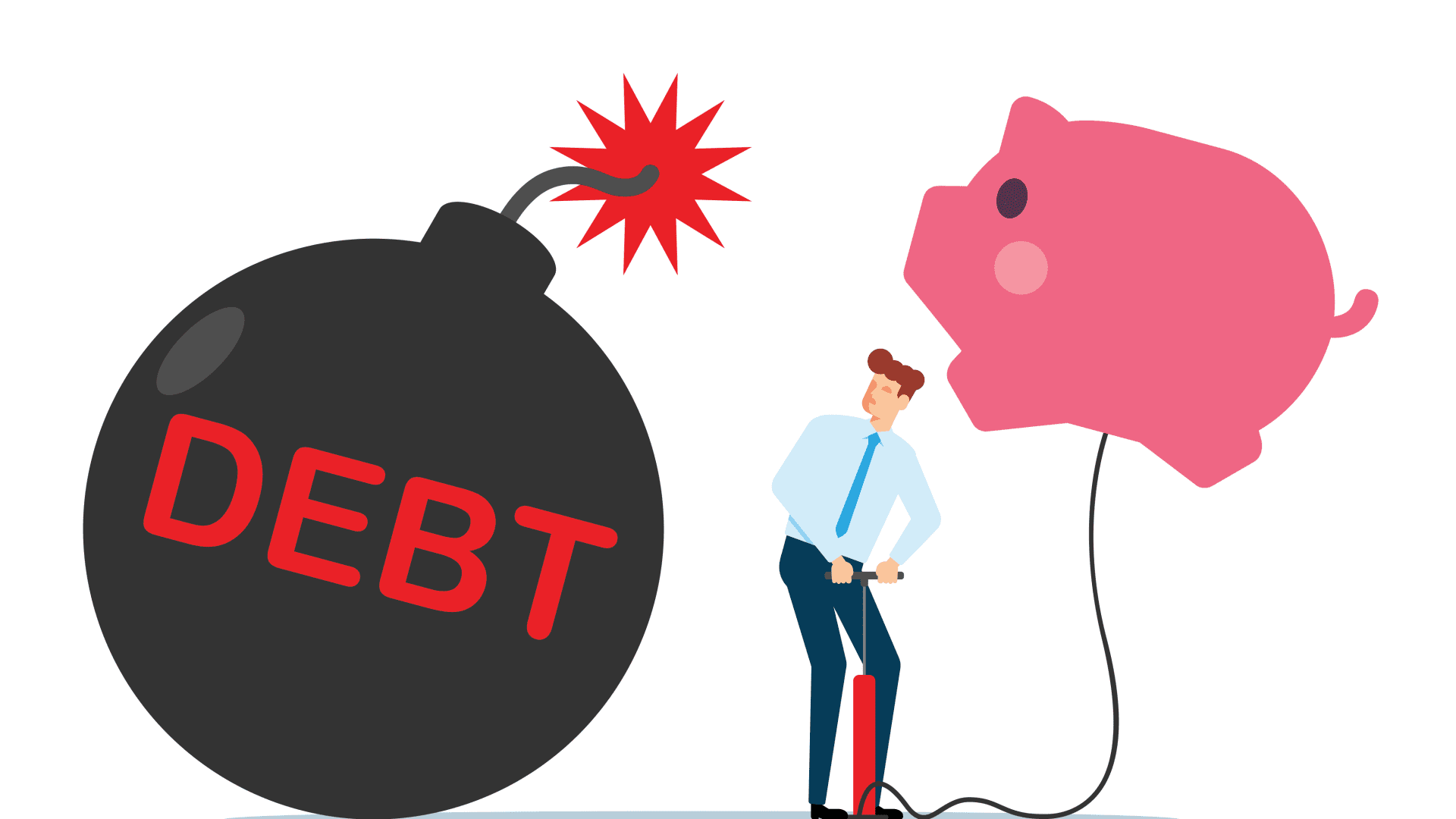
While one in four mortgage holders make extra payments, financial experts advise prioritizing high-interest debt over low-rate mortgages. Paying off a mortgage early can save interest but may yield lower returns than investing, especially for those with rates under 3%.
Financial advisors are increasingly rejecting the term 'good debt' for mortgages and student loans, arguing that the label obscures significant financial risks. Experts warn that such debt can become burdensome due to unexpected costs, interest rate changes, or over-optimistic income projections. They advise treating borrowing as a strict business decision, prioritizing long-term affordability and emotional stability over societal pressure to acquire assets like homes or degrees.
Nansi Lynch, a 60-year-old school bus driver and gym co-owner, faces a $156,000 student-loan balance from federal Parent PLUS loans taken out for her children. Despite earning approximately $45,000 annually, she cannot retire as planned because her monthly payments, currently $238 under an income-driven plan, will likely increase when forbearance ends. Lynch attributes the high balance to the 9.07% interest rate on Parent PLUS loans and the previous lack of borrowing caps. She was denied a Small Business Administration loan to relocate her gym due to her high debt-to-income ratio. While she does not regret funding her children's education, she criticizes the system for enabling unaffordable debt and notes that her children are struggling to find jobs in their fields. The Trump administration's new $65,000 lifetime borrowing cap for new Parent PLUS loans does not apply to her existing debt, leaving her trapped in a cycle of deferred retirement and accumulating interest.
The US Treasury announced it will purchase up to $6 billion in 10- and 20-year notes on Thursday, tripling the standard operation to support market liquidity. Despite the move, long-term yields rose, with the 10-year hitting 4.841% and the 30-year breaching 5.3%. Critics argue the intervention fails to address structural issues like rising debt and inflation, while analysts note the action signals a shift toward active debt management.
Nearly one in four U.S. homeowners is paying off their mortgage faster than required, but data shows those with the lowest interest rates are the most likely to do so. Financial experts argue this is often a mistake, as low-rate debt is cheaper than most other borrowing. While extra payments can save interest, experts advise prioritizing higher-interest debts or investing instead, especially when mortgage rates are below 4%.
While roughly 25% of mortgage holders make extra payments to save on interest, financial experts argue this strategy is often suboptimal for those with low-rate loans. Paying down a mortgage with a rate below 3% may be less efficient than paying off higher-interest debt or investing in the stock market. The decision depends heavily on individual interest rates, with extra payments being most beneficial for those paying over 6%.
The US government recently conducted its most expensive 30-year bond auction in a quarter of a century. This event signals significant pressure on Treasury Secretary Scott Bessent to manage rising borrowing costs amid persistent inflation and large deficits.
Treasury officials are maintaining a strategy focused on short-term debt issuance to manage long-term borrowing costs, despite rising yields and concerns from Wall Street about future funding gaps.
Treasury Secretary Scott Bessent has utilized financial engineering tactics to manage a $2 trillion deficit without direct reduction, resulting in a reported $1.45 trillion shortfall. This strategy prioritizes market stability over immediate fiscal balance, leveraging complex instruments to sustain debt levels while avoiding traditional deficit cuts.
Amid war headlines and economic jitters, many Americans feel money stress. The piece urges a “financial spring cleaning”: audit expenses and separate necessities from wants, use budgeting tools or simple spreadsheets, and make small but steady adjustments to cut discretionary spending. Prioritize debt payoff (especially unsecured debt), communicate with creditors if struggling, and consider credit counseling if needed. Reassess financial goals to stay motivated, save what you can—even small amounts—and stay vigilant by monitoring spending and occasionally stepping back from news to keep perspective.
The article offers practical advice for improving financial health at any age, emphasizing the importance of professional financial advice, reducing insurance and debt costs, smart investing, and protecting family with insurance, along with tips for saving on everyday expenses and diversifying investments to safeguard wealth.
The article offers six strategies for Americans to break free from credit card debt in 2026, including debt snowball and avalanche methods, balance transfer cards, debt consolidation loans, credit counseling, and debt relief companies, emphasizing discipline and careful planning to avoid falling back into debt.
The article reviews top personal finance tools to help achieve six financial goals by 2026, including building an emergency fund, managing spending, paying off high-interest debt, raising credit scores, contributing to retirement, and saving for big goals, highlighting apps, strategies, and investment options for each.
During a government shutdown, furloughed workers should urgently contact their unemployment office, communicate with lenders for relief options, reach out to their primary bank for short-term loans, and seek help from nonprofit credit counselors to manage financial hardship and avoid debt pitfalls.
The article discusses the rising credit card debt in the U.S. and introduces a newsletter series by Life Kit that offers tips and strategies to help individuals create effective debt repayment plans, save money, and improve their financial health.