Tag

Open Data

All articles tagged with #open data

Hubble's Blank-Sky Gamble Unveils a Cosmic Forest of Galaxies
space3 days ago

Hubble's Blank-Sky Gamble Unveils a Cosmic Forest of Galaxies

In 1995, the Hubble Space Telescope stared for ten days at a deliberately empty patch of sky in Ursa Major, assembling 342 exposures and over 100 hours of data to produce the Deep Field image. Despite initial resistance and Hubble’s repair history, the image revealed roughly 3,000 faint, distant galaxies, supporting a picture of galaxy formation through mergers and growth. The data were released openly, catalyzing a standard approach and leading to even deeper fields with Hubble and, later, the James Webb Space Telescope.

Ultra-Large FLAMINGO Simulations Build a Virtual Universe the Size of 500,000 HD Movies
space20 days ago

Ultra-Large FLAMINGO Simulations Build a Virtual Universe the Size of 500,000 HD Movies

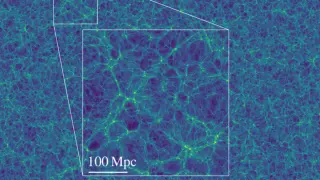
Astronomers released the FLAMINGO project, one of the largest cosmological simulation datasets ever created, totaling over 2.5 petabytes and designed to model dark matter, baryons, and dark energy across cosmic time. Publicly accessible, the virtual universes help researchers study large-scale structure and galaxy formation, test competing cosmological models, and explore rare objects like massive clusters—aimed at accelerating interpretation of upcoming observations. The data release was submitted to Astronomy & Computing and is available via arXiv.

AI maps brain-cell voices to reveal cellular roots of psychiatric disorders
technology1 month ago

AI maps brain-cell voices to reveal cellular roots of psychiatric disorders

PhysMAP is a machine-learning framework that identifies neuron cell types from their electrical signatures in vivo, enabling researchers to map cellular contributions to psychiatric disorders such as schizophrenia and major depressive disorder from seven open datasets without genetic manipulation, with potential to guide targeted therapies.

Ape Atlas Unifies 18 Years of Cognition Data to Trace Human Intelligence
science1 month ago

Ape Atlas Unifies 18 Years of Cognition Data to Trace Human Intelligence

Researchers released EVApeCognition, the largest open-access dataset of great-ape cognition, compiling 262 datasets from 150 publications over 18 years (2001–2020) to enable cross-study analyses, data standardization across nearly 100 institutions and 81 apes, and new insights into the evolution of human intelligence; published in Nature (April 2026) with a GitHub data repository to support education, meta-analyses, and AI research.

Antscan creates a global, open 3D atlas of ant diversity
science2 months ago

Antscan creates a global, open 3D atlas of ant diversity

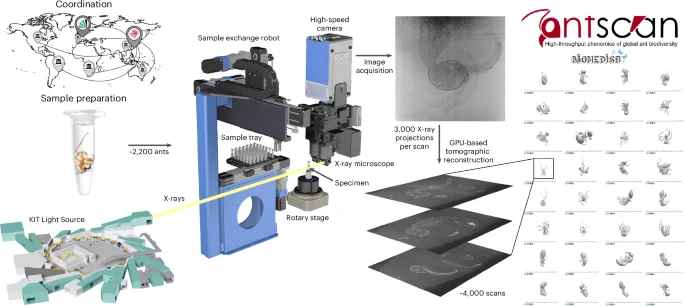
Antscan reports a global, open 3D morphomics effort using high-throughput synchrotron micro-CT to image 2,193 ants (212 genera, 792 species; plus 32 outgroups), with standardized scans and rich metadata linked to genomes. All tomograms, models and metadata are openly available via antscan.info and Biomedisa (CC BY 4.0), enabling automated segmentation and large-scale morphological and evolutionary analyses. Covering most ant subfamilies and numerous genera, the project demonstrates the potential of big-data morphology for biodiversity but also faces challenges in beamtime access and storage (exceeding 200 TB).

AI's Challenges in Scientific Publishing and Journalism
science-and-technology8 months ago

AI's Challenges in Scientific Publishing and Journalism

An analysis reveals that AI tools like ChatGPT and Gemini are being used to mass-produce low-quality, redundant scientific papers, particularly in biomedical research, which can evade traditional plagiarism checks and flood the literature with synthetic studies, raising concerns about research integrity and the exploitation of open data sets.

"Israel's Devastation: 56,000 Buildings in Gaza Reduced to Ruins, Satellite Imagery Reveals"
conflictinternational-relations2 years ago

"Israel's Devastation: 56,000 Buildings in Gaza Reduced to Ruins, Satellite Imagery Reveals"

Satellite imagery researchers from the Decentralized Damage Mapping Group have found that Israel's 47-day bombardment has left Gaza in ruins, with at least 56,000 buildings damaged or destroyed. The researchers use open data and satellite radar technology to track and map the damage, providing consistent and transparent assessments. The images show a rapid expansion of damage, particularly in northern Gaza, and the researchers expect the damage to increase as the conflict continues. The use of open access satellite images allows for a better understanding and comparison of conflicts, providing insights that may not be captured by commercial imagery.