Tag

Devonian

All articles tagged with #devonian

Devonian Giant Scorpion Rewrites Early Arthropod Size Story
science14 days ago

Devonian Giant Scorpion Rewrites Early Arthropod Size Story

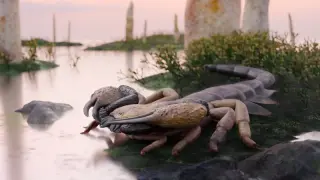
New imaging of 19th‑century fossils confirms Praearcturus gigas was about 1 meter long, making it the largest known scorpion and pushing the appearance of giant arthropods back by tens of millions of years. Lived around 415 million years ago in what is now Britain, before forests, suggesting size may have stemmed from ecological opportunity and limited competition rather than just high oxygen. Some fossils hint the animal spent time in water, highlighting a life at the land–sea boundary during early terrestrial ecosystems.

Britain’s 400-million-year giant reclassified as a Devonian scorpion apex predator
science27 days ago

Britain’s 400-million-year giant reclassified as a Devonian scorpion apex predator

A new study reclassifies the Early Devonian arthropod Praearcturus gigas from a crustacean to a giant scorpion, based on high‑resolution imaging, digital reconstructions and CT scans of British fossils. It reveals a very large predator with up to 16 cm pedipalp claws, suggests an aquatic or amphibious lifestyle, and notes Brontoscorpio anglicus and Bennettarthra annwnensis are synonyms of Praearcturus gigas, expanding the fossil record and implying early scorpions occupied freshwater niches and top‑predator roles far earlier than previously thought.

Devonian Britain Reveals Largest Scorpion Ever Discovered
science1 month ago

Devonian Britain Reveals Largest Scorpion Ever Discovered

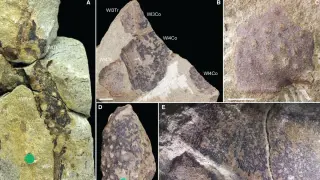
Researchers revisiting a century of fossils at London's Natural History Museum reidentified the early Devonian creature Praearcturus gigas as a 1-meter-long scorpion, overturning a crustacean misclassification and suggesting an amphibious lifestyle that hunted primitive fish; CT scans and comparisons with Eramoscorpius brucensis helped define its anatomy, including unusually large pincers and lateral epimera, and the finding prompts updates to paleobiology databases and a reevaluation of giant arthropod diversity in the Devonian.

Devonian giant Praearcturus redefines scorpion size record
science1 month ago

Devonian giant Praearcturus redefines scorpion size record

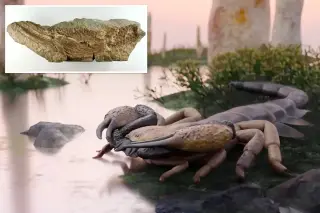
A Devonian-era scorpion named Praearcturus is estimated to have grown over three feet long with six-inch pincers, making it the largest scorpion known in the fossil record. Researchers used CT scans, 3D modeling and better-preserved fossils to confirm its identity after decades of uncertainty, and evidence suggests it may have lived partly in water, offering new insights into early arachnid evolution.

Ancient corals reveal Earth's day was about 22 hours 380 million years ago
science1 month ago

Ancient corals reveal Earth's day was about 22 hours 380 million years ago

Earth’s rotation has been slowing for billions of years due to tidal friction with the Moon, lengthening a day from roughly 22 hours in the Devonian (about 385–410 million years ago) to today’s 24 hours. Fossil corals show ~400 daily growth lines per year in the Middle Devonian, giving a day of ~21.9 hours, while Pennsylvanian corals imply ~22.4-hour days; the Moon’s recession (~3.8 cm/year) and internal mass redistribution also affect daily length in the short term. Proterozoic proxies suggest days as short as ~19 hours, highlighting how Earth’s spin has gradually slowed over deep time.

Gigantic Prototaxites Revealed as a Lost Eukaryotic Giant Preceding Earth's First Trees
science4 months ago

Gigantic Prototaxites Revealed as a Lost Eukaryotic Giant Preceding Earth's First Trees

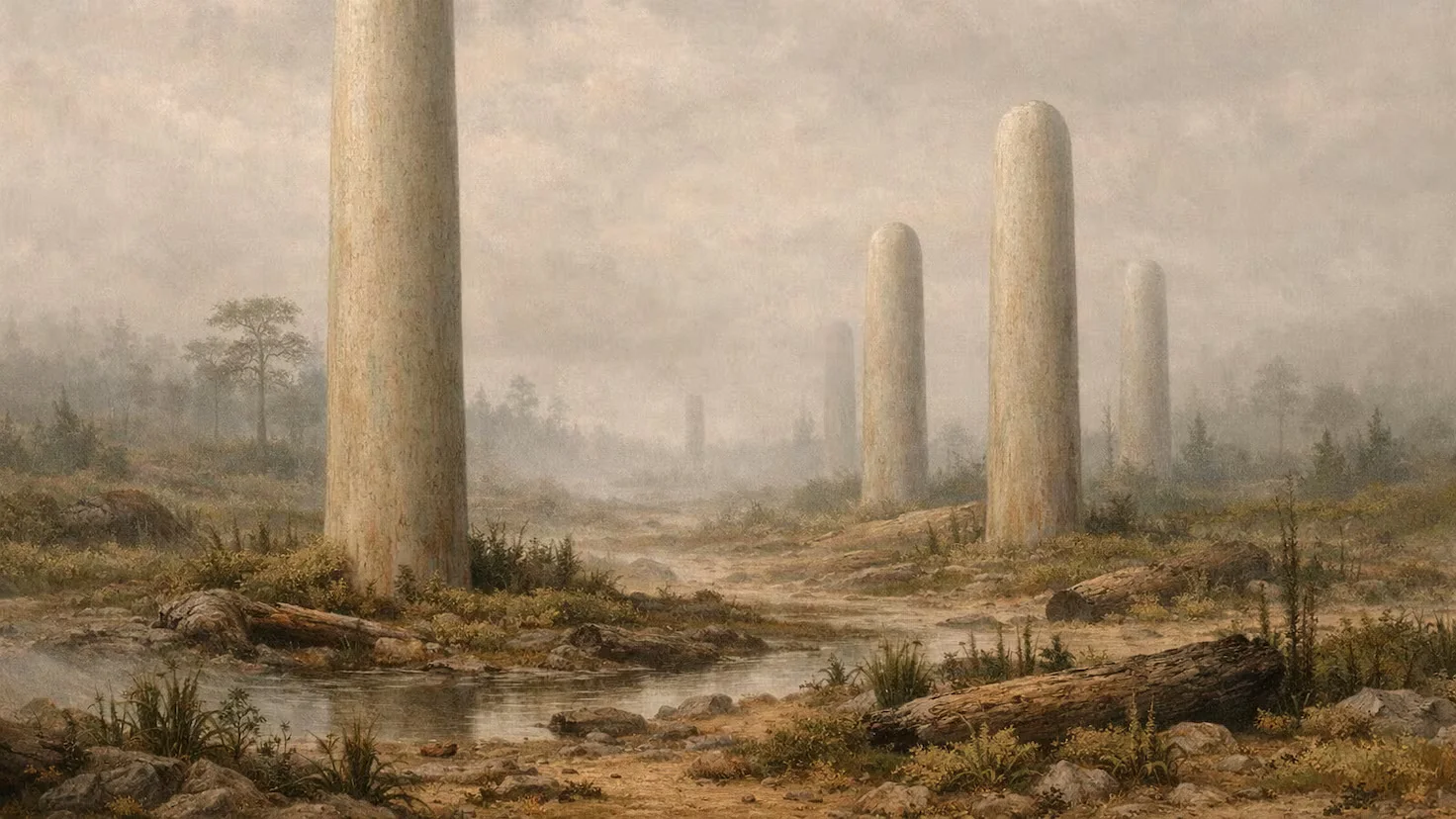
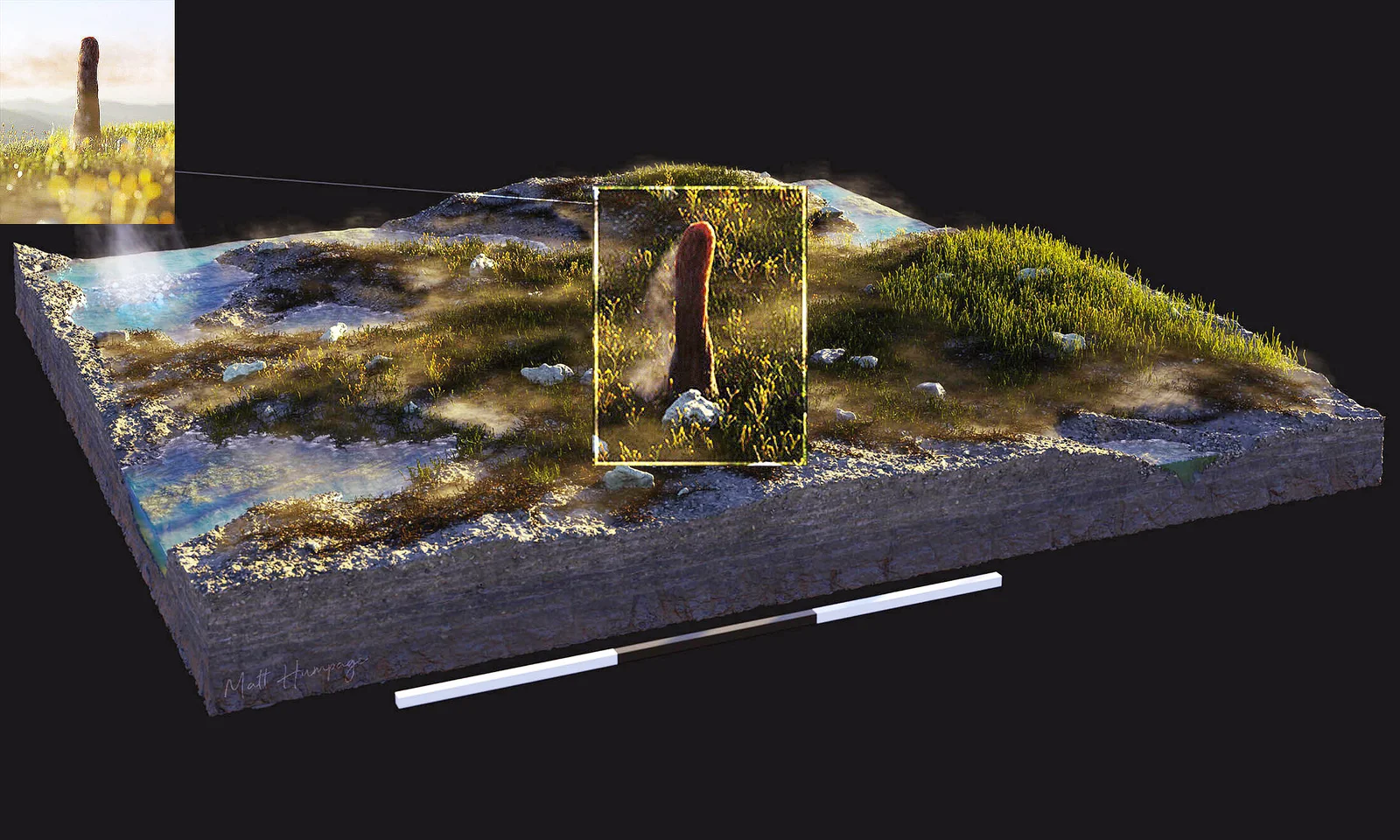
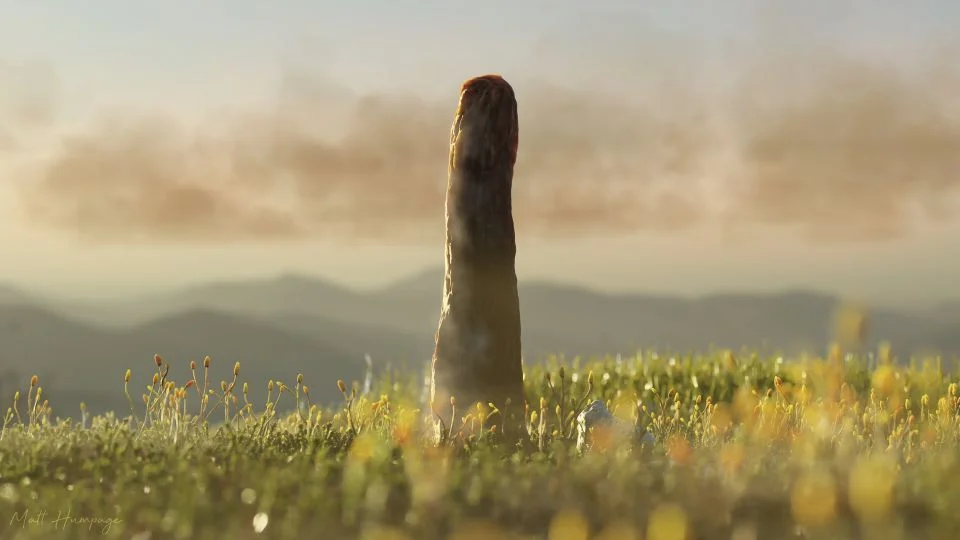
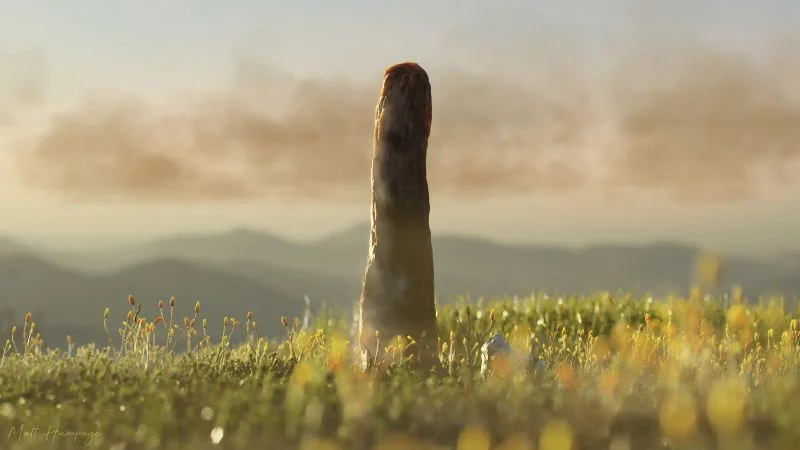
A Science Advances study shows Prototaxites—towering structures up to 26 feet long and about 8 meters tall around 400 million years ago—were not fungi, plants, or animals but belonged to a previously unknown extinct eukaryotic lineage. Fossils from Rhynie, Scotland reveal a unique internal architecture, suggesting these giants dominated early drylands and prompting a major rethink of Devonian ecosystems and the origins of terrestrial life.

Ancient fossil hints at a previously unknown life form
science5 months ago

Ancient fossil hints at a previously unknown life form

A new study of 400-million-year-old Prototaxites fossils from the Rhynie chert argues the giant organism was not a plant, animal, or known fungus, based on chemical biomarkers and its unusual internal structure. The researchers found biomarkers in Prototaxites that differ from those of fungi preserved in the same rock, and noted branching patterns that don’t match known fungal forms, suggesting it may represent a completely unknown multicellular lineage. The organism could reach up to about nine meters tall and likely did not rely on photosynthesis. While intriguing, scientists caution that only a subset of Prototaxites species was studied and follow-up work is planned to better understand how it lived and how it was anchored to the ground.

Ancient Land Giant Defies Plant, Fungi, and Animal Labels
science5 months ago

Ancient Land Giant Defies Plant, Fungi, and Animal Labels

New analyses of Prototaxites fossils from Scotland’s Rhynie chert show the 400-million-year-old giant—up to about 9 meters tall—likely wasn’t a plant, animal, or fungus, but an as-yet unknown form of multicellular life, with biomarkers unlike fungi and other features not matching any modern group, leaving its biology unresolved and warranting further study.

Ancient Devonian giant Prototaxites may be a previously unknown life form
science5 months ago

Ancient Devonian giant Prototaxites may be a previously unknown life form

A new study published in Science Advances argues that Prototaxites, a 400-million-year-old fossil that could reach about 9 meters tall, is not a plant, fungus, or algae but likely an unknown form of multicellular life. Researchers analyzed fossils from the Rhynie chert in Scotland and found biomarkers that differ from fungi and other structural features, suggesting Prototaxites may occupy an entirely different branch of the tree of life; the team cautions that only a few specimens have been examined and plans follow-up work on related tubular fossils to broaden understanding.

Devonian Giants Redefined: Prototaxites Reclassified as a Lost Eukaryotic Lineage
science5 months ago

Devonian Giants Redefined: Prototaxites Reclassified as a Lost Eukaryotic Lineage

A Science Advances study shows Prototaxites taiti were not fungi, plants, or animals but a completely unknown extinct eukaryotic lineage. Fossils from Rhynie, Scotland reveal towering, pillar-like structures up to about 8 meters tall and over 3 feet wide that dominated Devonian landscapes around 400 million years ago, reshaping our understanding of early land ecosystems and the evolutionary tree of life.

science5 months ago

Scottish Giant Fossil Rewrites Devonian Life on Land

A 410-million-year-old Prototaxites fossil from Aberdeenshire, Scotland, added to National Museums Scotland, suggests an extinct eukaryotic lineage distinct from plants and fungi; at up to eight meters tall, it was a trunk-like life form that dominated Devonian landscapes, and researchers say its morphology and molecular fingerprint set it apart from fungi and other known organisms, supporting the idea of an independent evolutionary experiment in early complex life.

Ancient Tree Roots Reveal Surprising Similarities to Human Stories
paleobotany2 years ago

Ancient Tree Roots Reveal Surprising Similarities to Human Stories

Fossilized tree roots from a 385 million-year-old forest in New York's Catskill mountain range provide insights into the origins and evolution of woody deciduous trees. Belonging to the genus Archaeopteris, these roots resemble modern-day forests and demonstrate that trees developed the strategy of roots early on and have maintained it until today. Unlike other plants at the time, Archaeopteris had sturdy and intricate root systems that allowed for efficient water and nutrient absorption. This ancient tree ancestor had a large trunk, broad leaves, and a serious metabolic engine. The discovery sheds light on the impact of trees on the Earth's environment and the reverse effect of deforestation.

Rare Devonian Carpoid Fossil Unearthed by Researchers
paleontology3 years ago

Rare Devonian Carpoid Fossil Unearthed by Researchers

Researchers have made a rare and unexpected discovery at Penn Dixie, unearthing the well-preserved remains of a carpoid fossil dating back approximately 382 million years to the Devonian Period. Carpoids are extinct echinoderms related to starfish and sea lilies, and their fossil record is spotty, making it difficult to track their evolutionary history. The newly discovered fossils belong to a branch of carpoids previously thought to have gone extinct 410 million years ago, extending their geological range by more than 25 million years. This discovery provides new insight into the evolutionary history of these enigmatic creatures.