Global team builds 6,986 digital brain twins to link environmental factors with dementia mechanisms
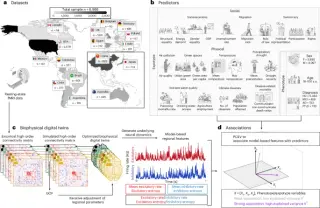
Researchers have developed individualized biophysical digital twins for 6,986 participants across 16 countries to map how aging, neurodegeneration, and environmental exposures shape brain dynamics. Published in Nature Biomedical Engineering, the study uses resting-state fMRI data to create personalized models that simulate neural activity, revealing distinct patterns for Alzheimer’s disease and frontotemporal dementia. The models demonstrate that social and physical environmental factors, such as air pollution and democratic governance, significantly correlate with brain function, offering a new framework for testing potential interventions.