Tag

Computational Modeling

All articles tagged with #computational modeling

Global team builds 6,986 digital brain twins to link environmental factors with dementia mechanisms
science1 day ago

Global team builds 6,986 digital brain twins to link environmental factors with dementia mechanisms

Researchers have developed individualized biophysical digital twins for 6,986 participants across 16 countries to map how aging, neurodegeneration, and environmental exposures shape brain dynamics. Published in Nature Biomedical Engineering, the study uses resting-state fMRI data to create personalized models that simulate neural activity, revealing distinct patterns for Alzheimer’s disease and frontotemporal dementia. The models demonstrate that social and physical environmental factors, such as air pollution and democratic governance, significantly correlate with brain function, offering a new framework for testing potential interventions.


Caltech and Yale Achieve First Precise Computational Prediction of the Kondo Effect
science1 month ago

Caltech and Yale Achieve First Precise Computational Prediction of the Kondo Effect

Researchers from Caltech and Yale have successfully quantified the Kondo effect, a decades-old quantum phenomenon, using first-principles calculations. Published in Science, this method allows for precise prediction of electrical resistance changes in magnetic metals without relying on experimental data. The approach is up to 100 times more accurate than previous simplified models, offering a new tool for designing complex materials like high-temperature superconductors.

Caltech and Yale Achieve First Precise Computational Prediction of the Kondo Effect
science1 month ago

Caltech and Yale Achieve First Precise Computational Prediction of the Kondo Effect

Researchers from Caltech and Yale have successfully quantified the Kondo effect in real materials using first-principles calculations, achieving up to 100 times greater accuracy than previous simplified models. This breakthrough allows scientists to predict material properties computationally without relying solely on experimental data, paving the way for better understanding of complex quantum materials like high-temperature superconductors.

New study suggests vast erasure of medieval writing—up to 60% of works and 95% of manuscripts lost
archaeology4 months ago

New study suggests vast erasure of medieval writing—up to 60% of works and 95% of manuscripts lost

A study in PNAS Nexus uses stemmata (family trees of manuscripts) and computer simulations to estimate losses in medieval writing, finding that up to 60% of medieval literary works and more than 95% of manuscripts have vanished over the centuries. By modeling copying, destruction, and random disasters (e.g., fires, wars, Black Death), researchers show that texts were most at risk early on and that surviving copies typically stem from later branches; the original forms of famous works like the Song of Roland may be gone. The approach could help quantify losses in other historical texts as well.

MIT's Physics-Based Virtual Violin Lets Designers Hear Changes Before Crafting
technology6 months ago

MIT's Physics-Based Virtual Violin Lets Designers Hear Changes Before Crafting

MIT researchers built a physics-based computational violin that simulates realistic violin sound by modeling how vibrating strings interact with air, enabling luthiers to audition design changes (wood type, back-plate thickness) virtually before building. The current model handles pizzicato; bowing is more complex and will come later, representing the first physics-based foundation for violin sound.

Scientists Achieve Breakthrough in Quantum Vacuum and Light Generation
science1 year ago

Scientists Achieve Breakthrough in Quantum Vacuum and Light Generation

Researchers from Oxford and Lisbon have used advanced simulations to recreate and study extreme quantum vacuum effects, specifically vacuum four-wave mixing, using intense laser beams. This work provides crucial insights for future experiments with ultra-powerful lasers, potentially confirming quantum effects like photon-photon scattering and aiding the search for dark matter candidates.

Single Cells Show Signs of Learning
science2 years ago

Single Cells Show Signs of Learning

A new study reveals that individual cells may exhibit learning-like behaviors, challenging the notion that learning is exclusive to organisms with nervous systems. Researchers used computational models to demonstrate how cells adapt to repeated stimuli through molecular circuits, mimicking habituation. This discovery could explain phenomena like cancer cell resistance to chemotherapy and suggests that single cells could serve as models for studying basic learning and memory processes. The findings bridge debates in neuroscience and cognitive science and lay the groundwork for future experimental validation.

"Adult Brain's Capacity for Compassion: Shaping Empathy"
neuroscience2 years ago

"Adult Brain's Capacity for Compassion: Shaping Empathy"

A study led by Prof. Dr. Grit Hein challenges the notion that empathy is a fixed trait, demonstrating that adults can learn to increase or decrease their empathetic responses by observing others. Using computational modeling and fMRI, the study found that changes in empathy were linked to altered brain activity in the anterior insula, a key region for empathy processing. The research underscores the importance of fostering empathetic environments, suggesting that empathy can be cultivated and is crucial for effective teamwork and client interactions.

"Advancements in Tokamak Plasma Rotation and Transport Code"
science-and-technology2 years ago

"Advancements in Tokamak Plasma Rotation and Transport Code"

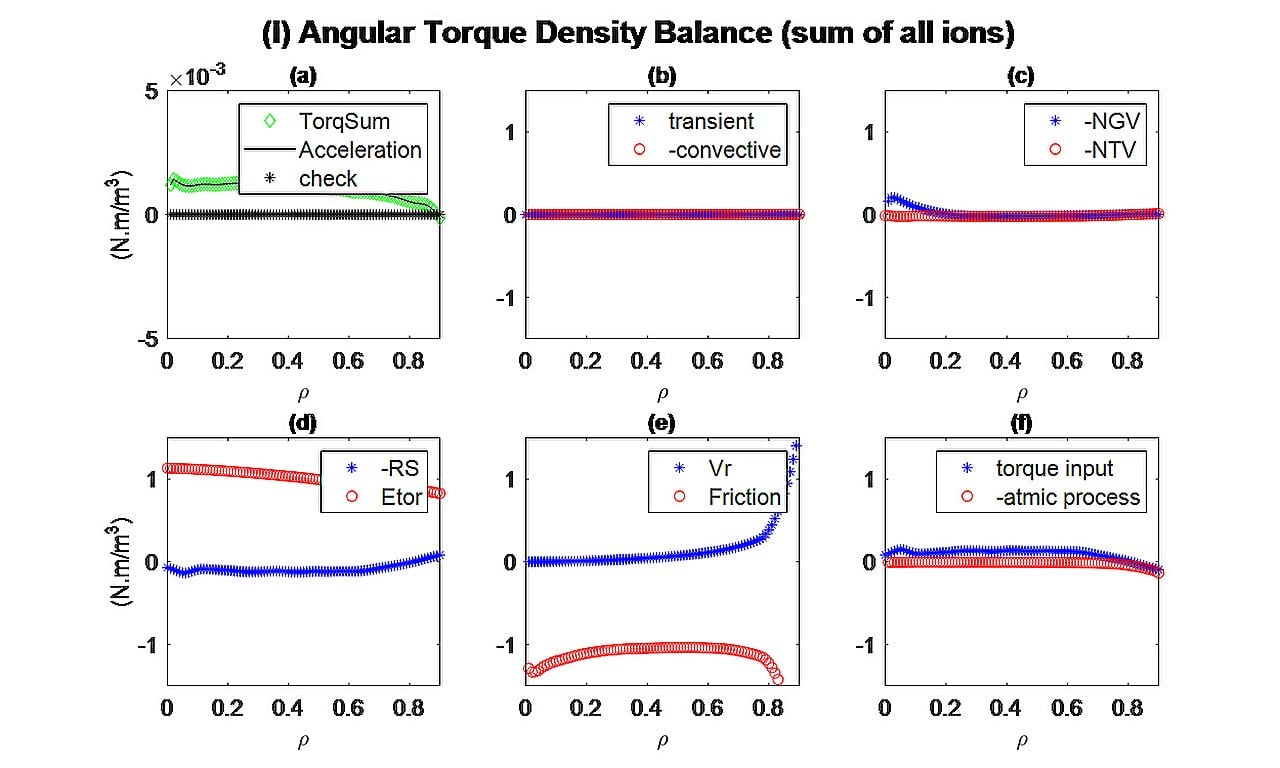
Researchers from the Chinese Academy of Sciences have developed a new computational code, named TransROTA, for analyzing plasma rotation and transport in tokamak devices like the Experimental Advanced Superconducting Tokamak (EAST). The code enhances the prediction of ion velocities and the understanding of angular momentum balance in toroidally rotating tokamak plasmas, which is crucial for controlling instabilities and improving the performance of fusion experiments. The improved code is more resistant to numerical instability and is user-friendly, offering a valuable tool for theoretical and simulation research in fusion energy.

Revolutionary AI Model Predicts Chemical Reactions with Unprecedented Accuracy and Speed
science-and-technology2 years ago

Revolutionary AI Model Predicts Chemical Reactions with Unprecedented Accuracy and Speed

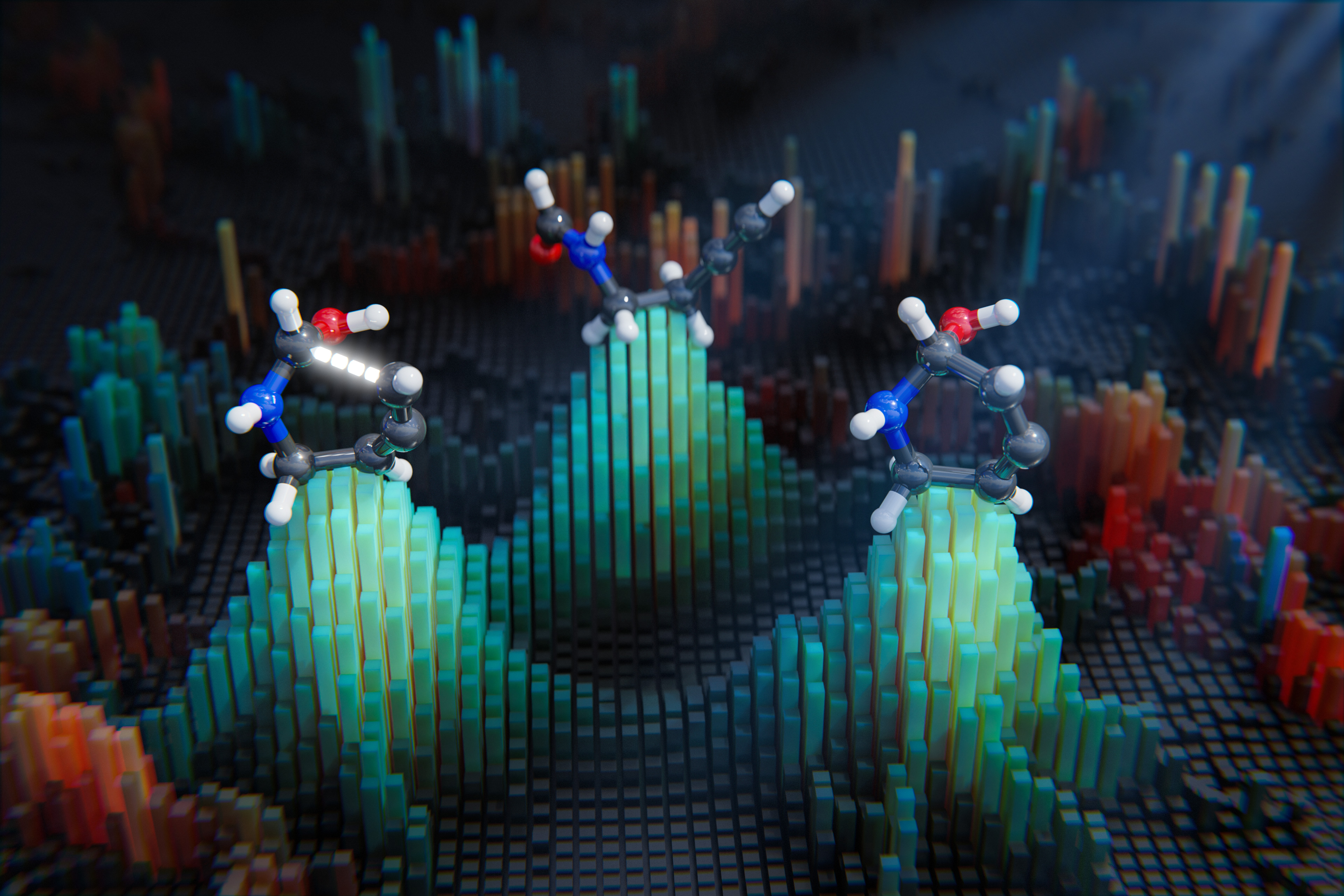
Researchers at MIT have developed a machine learning-based computational model that can quickly calculate the structures of transition states in chemical reactions. Transition states are fleeting and difficult to observe experimentally, but their structures are crucial for designing catalysts and understanding natural chemical reactions. The model, which uses a diffusion model approach, was trained on 9,000 different chemical reactions and accurately predicted transition state structures for 1,000 new reactions. The entire computational process takes just a few seconds per reaction, making it significantly faster than traditional quantum chemistry methods. The model could have applications in designing new reactions and catalysts for fuel and drug synthesis, as well as modeling chemical reactions on other planets or during the early evolution of life on Earth.

Unleashing the Potential: DNA Nano Engine Drives Nanomachines of the Future
science-and-technology3 years ago

Unleashing the Potential: DNA Nano Engine Drives Nanomachines of the Future

Scientists have developed a DNA-based nano engine that exhibits pulsing movements, similar to a hand grip trainer but on a much smaller scale. The engine is powered by RNA polymerases and nucleotide triphosphates, offering potential applications in advanced nanotechnology. The researchers plan to integrate the engine into complex nanomachines, and their findings have been published in the journal Nature Nanotechnology. The engine's design and operation were aided by computer modeling tools, and it represents a significant advancement in chemically powered DNA nanotechnology motors.

"Breakthrough: International Team Unveils Revolutionary DNA Nano Engine"
science-and-technology3 years ago

"Breakthrough: International Team Unveils Revolutionary DNA Nano Engine"

An international team of scientists has developed a novel DNA nano engine that can perform pulsing movements. The engine, made of DNA and driven by a clever mechanism, has the potential to be used as a drive in complex nano machines. The researchers repurposed a mechanism found in cells to power the engine, using RNA polymerases to drive the pulsing movements. The motor requires energy in the form of nucleotide triphosphates and can be combined with other structures. The team plans to further develop the motor and explore its potential applications in nanotechnology.

MIT Develops Groundbreaking Method for Streamlining Complex Material Construction
science-and-technology3 years ago

MIT Develops Groundbreaking Method for Streamlining Complex Material Construction

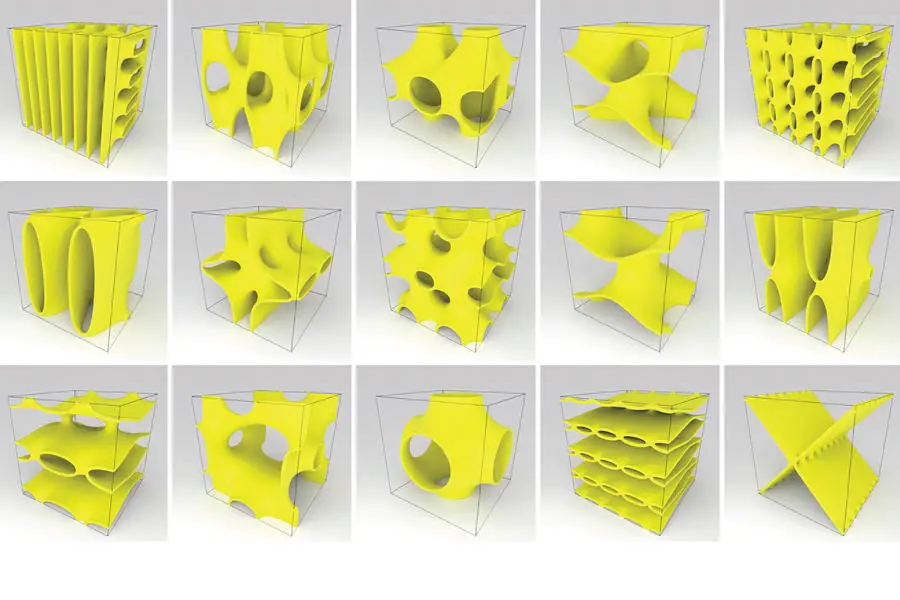
Researchers from MIT and the Institute of Science and Technology Austria have developed a user-friendly interface that allows engineers to quickly and easily design and model complex cellular metamaterials. The interface utilizes a graph-based representation that encompasses various building blocks, enabling engineers to explore the entire space of potential metamaterial shapes. The researchers also created automated exploration algorithms that generated numerous potential structures in a short amount of time. The system has been successfully tested and received positive feedback from users with little prior experience in modeling metamaterials. Future enhancements include incorporating more complex skeleton thickening procedures and exploring automatic generation algorithms.