Tag

Direct Collapse

All articles tagged with #direct collapse

Heavy seeds ignite rapid growth, linking JWST's little red dots to overmassive black holes
astronomy23 days ago

Heavy seeds ignite rapid growth, linking JWST's little red dots to overmassive black holes

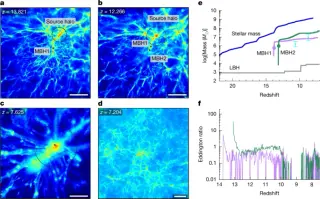
Cosmological radiation‑hydrodynamic simulations show that ~10^6 solar‑mass heavy seeds can form in overdense protocluster regions under intense FUV radiation, quickly growing via brief super‑Eddington accretion to ~3×10^7 M⊙ by z ≈ 8. This unifies the high‑redshift little red dots observed by JWST with the overmassive black holes, as dense circum‑BH disks produce Balmer features and Hα emission without a traditional broad‑line region, while light‑seed remnants fail to grow similarly. The study also predicts X‑ray obscuration during early growth and potential LISA detections from BH mergers. Results are robust to changes in LW flux and higher resolution tests, offering a cohesive pathway from heavy‑seed formation to overmassive high‑z quasars.
Infinity Galaxy study hints at a newborn black hole born from a galactic collision
science8 months ago

Infinity Galaxy study hints at a newborn black hole born from a galactic collision

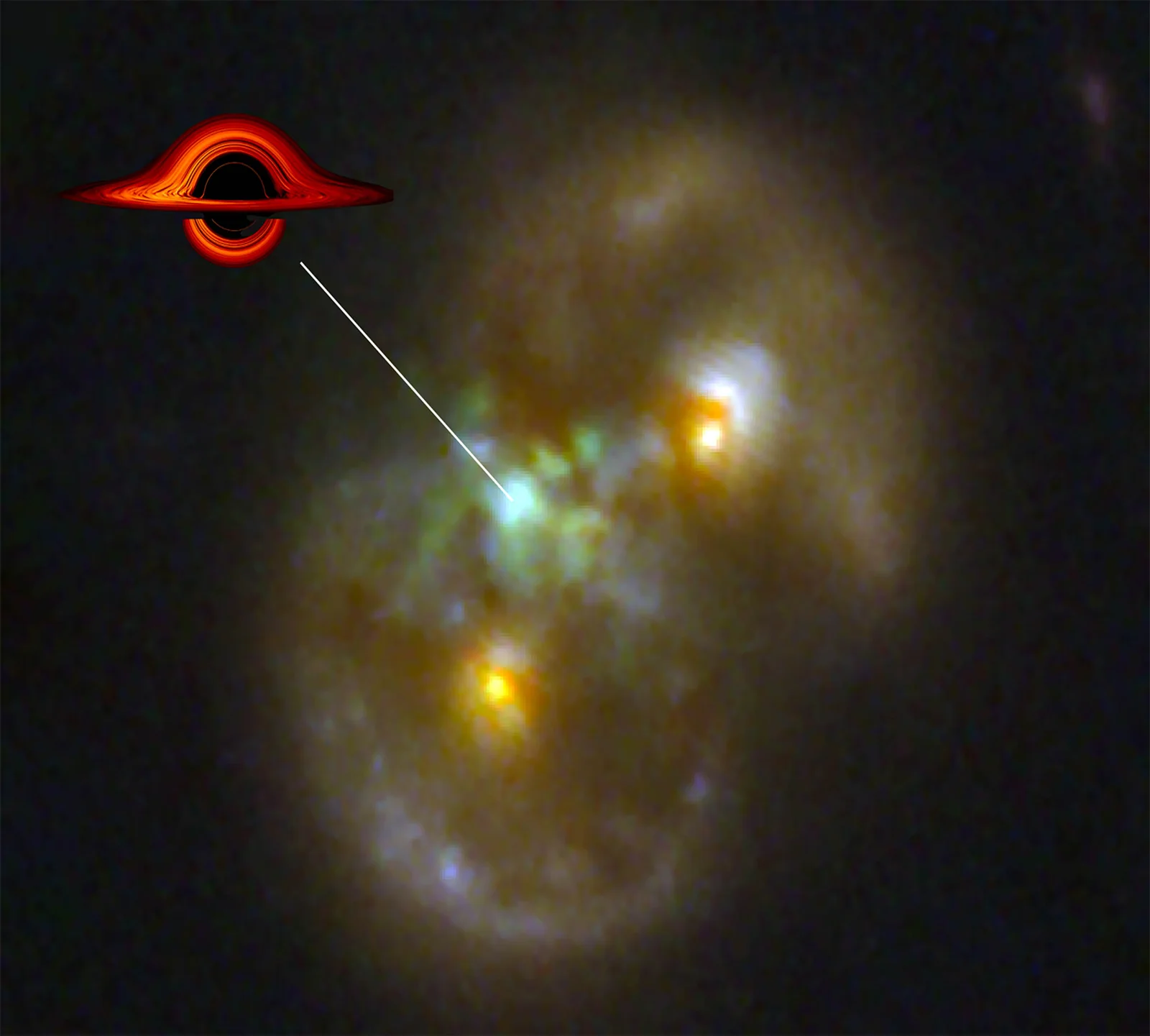
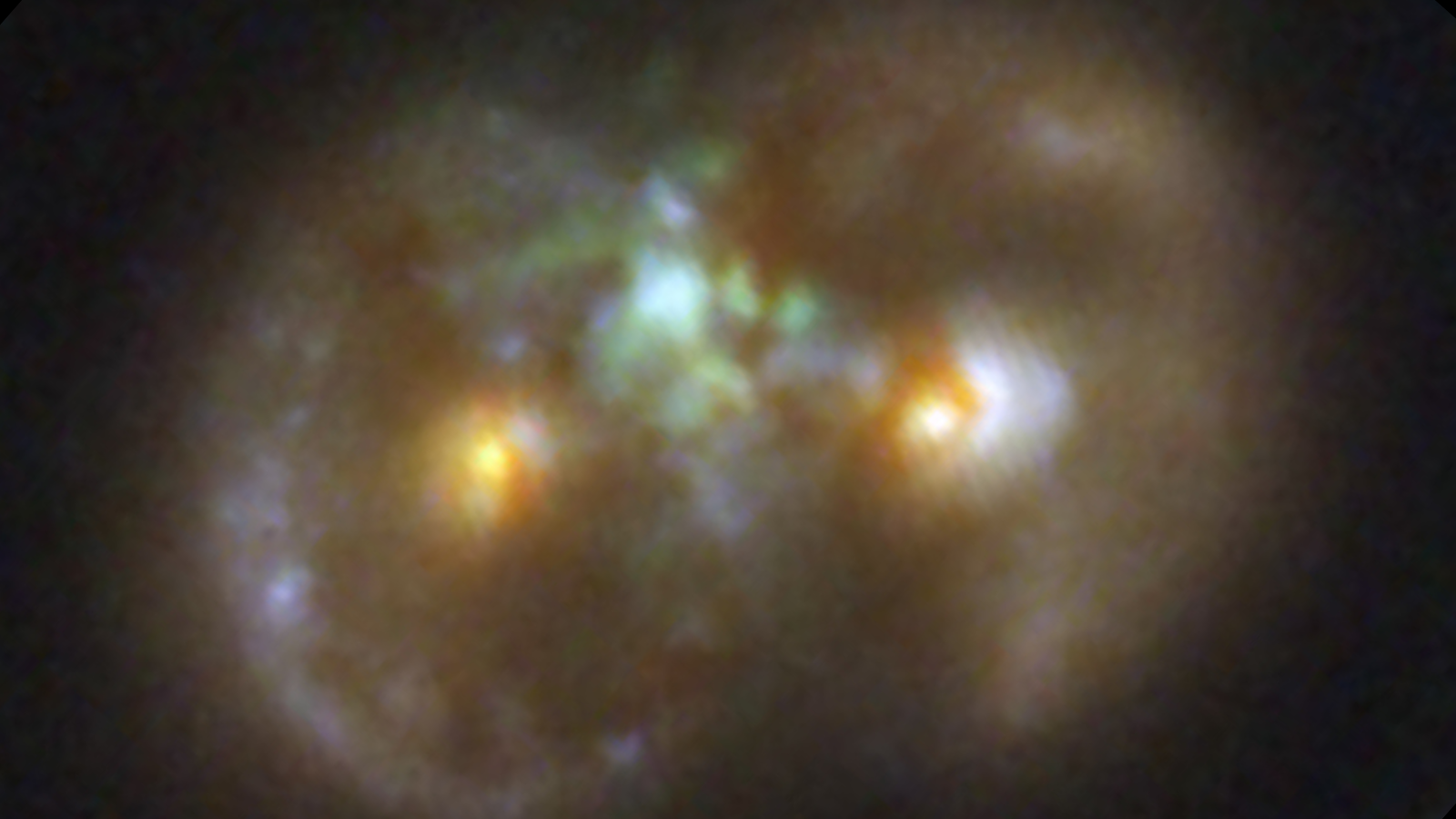
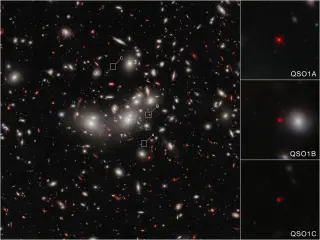
Astronomers using JWST, Keck, the Very Large Array and Chandra X-ray data spotlight the “Infinity Galaxy,” a collision between two galaxies where a central black hole sits between the two cores and shows signs of active feeding. The team argues this could be a direct-collapse black hole formed in situ during the merger about 50 million years ago, potentially growing from a seed of a few hundred thousand solar masses to around a million, offering a rare glimpse of black-hole birth in action.

"Webb Telescope Uncovers Earliest Black Hole Merger"
space-and-physics2 years ago

"Webb Telescope Uncovers Earliest Black Hole Merger"

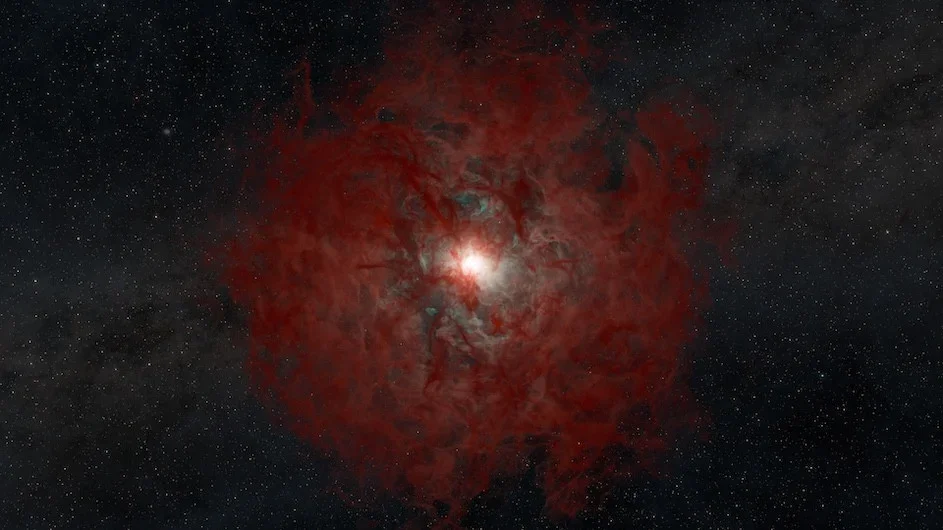
The James Webb Space Telescope (JWST) has discovered unexpectedly large black holes in the early universe, challenging existing theories of black hole formation. These black holes, observed in galaxies from just 330 million years after the Big Bang, are much larger than anticipated. One emerging theory suggests these supermassive black holes may have formed through "direct collapse" of massive gas clouds, bypassing the intermediate stellar phase. Further observations are needed to confirm this hypothesis and understand the origins of supermassive black holes.