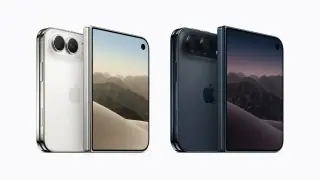
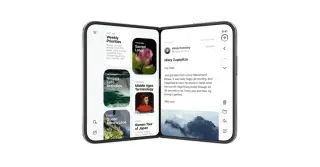
Apple has confirmed that the iPhone Duo features a replaceable cover layer on its inner foldable display, costing $19 with AppleCare+. This design aims to mitigate crease visibility and screen damage, a long-standing issue for foldable devices.
Apple has confirmed that the iPhone Duo includes a replaceable cover layer on its folding display to mitigate crease visibility over time. While the device launched with a matte nano-texture coating to hide the crease, critics argue this creates an inconsistent viewing experience compared to the glossy outer screen. Apple executives emphasize the device's design as a 'window' for continuity, but the replaceable layer and display quality remain points of debate.
Apple's first foldable, the iPhone Duo, has launched to mixed reviews regarding its display consistency. While Apple emphasizes a seamless 'window' experience and replaceable crease-mitigation layers, critics argue the matte inner screen creates a jarring contrast with the glossy outer display, potentially undermining the device's core value proposition.
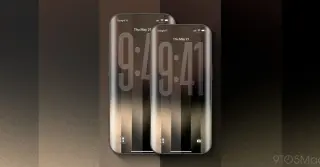
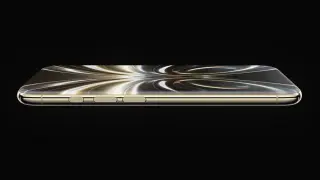
Apple’s 2027 iPhone 20 Pro models will feature a quad-curved, near-borderless design, but will skip advanced display technologies due to cost and efficiency concerns.
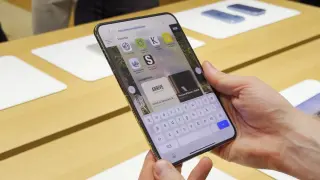
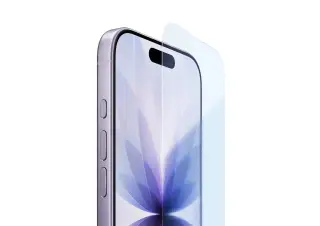
Apple’s new hardware chief Tom Marieb says Ceramic Shield 2 delivers three times better scratch resistance and aims to keep iPhone screens uncovered, while also detailing a refined hinge and matte inner display for the iPhone Duo’s durability. The move contrasts with many users’ continued use of screen protectors to avoid repairs or for privacy and glare reasons.
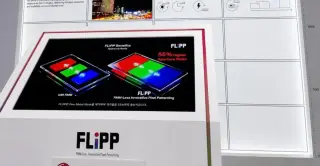
LG Display unveiled FLiPP, a FMM-Less OLED patterning method that sequences RGB pixels and uses photolithography and UV light to remove unnecessary areas, promising panels that are 1.6x brighter, 2.4x longer-lasting, and 13% more energy-efficient, with no size or resolution constraints. The tech is slated for IT products first (tablets/monitors) before expansion to ultra-large TVs and wearables, but production timing hasn’t been announced.
LG introduces FLiPP (FMM-less Innovative Pixel Patterning), a UV-inkjet-style process that patterns OLED pixels without a fine metal mask, potentially enabling larger, more versatile panels with 1.6x brightness, 13% lower power use, and lifespans more than twice as long. TCL CSOT is pursuing similar inkjet approaches, and we may see cheaper OLED monitors and laptops from brands like MSI and Lenovo after IMID 2026, though adoption won’t be universal.
Rumors for the 2028 iPhone describe a refined four-edge curved display with more transparent cathodes to reduce distortion, a possible under-display Face ID and front camera, narrower bezels, tandem OLED tech, a new A22 Pro chip on a 1.4‑nm process, and a 200‑megapixel periscope telephoto camera as the next evolution after the 2027 anniversary model.
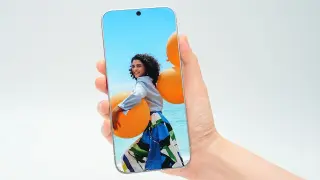
Tecno unveils a concept for a bezel-free smartphone at IFA 2026, claiming a 0-micron border achieved via advanced internal stacking and screen packing to deliver a more immersive, edge-free display.
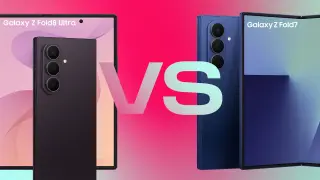
Samsung's Galaxy Z Fold 8 Ultra debuts as the successor to the Z Fold 7, offering a brighter 8-inch inner display with a 3,000-nit peak brightness and an anti-reflective coating, a slimmer folded profile thanks to a redesigned hinge, and a 5,000 mAh battery with 45W wired charging. It also gains a camera upgrade (50MP ultrawide) and keeps the 200MP main cam, runs Android 17 with One UI 9, and promises seven years of updates, with US prices starting around $2,100 for 256GB and up to $2,700 for 1TB. The Fold 7 remains strong, especially if discounted, but the Ultra is the clearer upgrade on design, endurance, and features.
In 2026 OLED TVs deliver superior contrast, color accuracy, and fast response, keeping them worth the premium for cinephiles and gamers, while advances in LCDs—especially mini-LED backlights and improved local dimming—close the gap with higher brightness and lower burn-in risk at lower prices; the best choice depends on budget and priorities, with flagship OLEDs offering the best picture and well-equipped LCDs offering strong value.
Verge's review praises the Bravia 9 II for its exceptional color accuracy, very high brightness (HDR highlights up to 3,800 nits) and the best anti-reflective screen among LED TVs, plus improved dimming and a stylish lenticular stand; however, it’s expensive (65-inch model is $3,600), exhibits off-axis blooming, offers only two HDMI 2.1 ports, and OLED remains the stronger overall choice for contrast.
Rumors suggest the Galaxy Watch Ultra 2 will gain a dramatically brighter OLED display (potentially up to 5,000 nits), improved durability with an IP69K rating, a Snapdragon Wear Elite chip, and an 800mAh battery, while keeping the 1.5-inch, 480×480 display as before and running Wear OS 7–based One UI 9 Watch; On-Cell Film (OCF) technology may be used.
Leaks suggest Samsung’s Galaxy S27 Pro will be a smaller, S27 Ultra-like flagship without an S Pen, potentially adopting the S26 Ultra’s Privacy Display to obscure the screen from side views. Expected specs include a 6.5-inch Dynamic AMOLED 2X with QHD+ resolution and 1Hz–120Hz VRR, a 200MP main camera plus 50MP ultrawide and 50MP telephoto (3.5x), Snapdragon 8 Elite Gen 6 Pro, 12GB+ RAM, 256GB storage, IP68, stereo speakers, and a 5,000mAh battery with 45W wired and 20W wireless charging, plus One UI 9.5 and seven years of updates. The Privacy Display feature may reach the S27 Pro early next year, with the S Pen omitted to free space for a larger battery.
Rumors suggest the iPhone 20 Pro will be bezel-free with no Dynamic Island, possibly featuring a new Liquid Glass display and an upgraded battery, while removing most physical controls for a distraction-free screen. Yet under-display Face ID and edge distortion concerns could affect timing, with a 2027 release tied to Apple’s 20th-anniversary iPhone as part of a rumored three-year redesign cycle.