Tag

Magnetism

All articles tagged with #magnetism

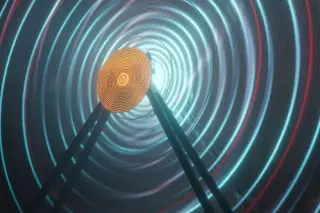
MeerKAT Telescope Captures First Direct Radio Signal from Exoplanet Beta Pictoris b
astronomy11 days ago

MeerKAT Telescope Captures First Direct Radio Signal from Exoplanet Beta Pictoris b

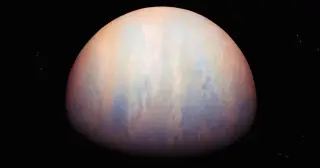
Astronomers from Harvard and the University of Oregon have detected the first unambiguous radio signal originating from an exoplanet, Beta Pictoris b. Using South Africa's MeerKAT telescope, the team identified auroral bursts that allow for the first direct measurement of an exoplanet's magnetic field strength, confirming theoretical models for young, massive gas giants.

MeerKAT Telescope Captures First Direct Radio Signal from Exoplanet Beta Pictoris b
science13 days ago

MeerKAT Telescope Captures First Direct Radio Signal from Exoplanet Beta Pictoris b

Astronomers have detected the first direct radio signal from an exoplanet, Beta Pictoris b, using the MeerKAT telescope in South Africa. The signal, attributed to natural auroral activity rather than extraterrestrial life, reveals a magnetic field over 300 times stronger than Jupiter’s. This breakthrough allows for the first direct measurement of an exoplanet’s magnetic field, confirming theoretical predictions for young, massive gas giants.

MeerKAT Telescope Captures First Direct Radio Signal from Exoplanet Beta Pictoris b
science15 days ago

MeerKAT Telescope Captures First Direct Radio Signal from Exoplanet Beta Pictoris b

Astronomers have detected the first unambiguous radio signals originating from an exoplanet, Beta Pictoris b, located 63 light-years away. Using South Africa’s MeerKAT radio telescope, researchers identified short, circularly polarized bursts caused by auroral activity. This discovery confirms the planet possesses a magnetic field thousands of times stronger than Earth’s, marking a milestone in characterizing distant worlds without relying on starlight.

Gravitational Torque from Earth's Inner Core Drives Multidecadal Shifts in Day Length
science15 days ago

Gravitational Torque from Earth's Inner Core Drives Multidecadal Shifts in Day Length

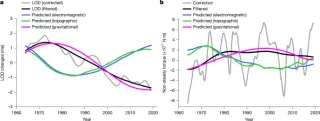
A new study in Nature identifies gravitational torque between Earth's inner core and mantle as the primary driver of multidecadal changes in the length of day (LOD). While electromagnetic and topographic forces at the core-mantle boundary act as resisting mechanisms, the gravitational influence dominates. This finding provides new constraints on the physical properties of Earth's deep interior, including the viscosity of the inner core and the conductivity of the lowermost mantle.

First Direct Radio Signal Detected From an Exoplanet Reveals Its Strong Magnetic Field
space17 days ago

First Direct Radio Signal Detected From an Exoplanet Reveals Its Strong Magnetic Field

Using the MeerKAT radio telescope, researchers detected a seven-hour radio burst that originates from the exoplanet Beta Pictoris b, marking the first direct radio signal from a single planet. The signal indicates a powerful magnetic field and aurora-like activity, offering a new way to study exoplanetary magnetism, atmospheres, and habitability, and paving the way for targeted observations with future radio observatories.

science21 days ago

Hear the Ancient Flip: Earth's Magnetic Reversal Revealed

Scientists recreated the sound of Earth's 41,000-year-old magnetic reversal (the Laschamps excursion) using ESA Swarm data and ancient records, showing the field weakened to about 5% of its normal strength for centuries before flipping orientation for around 440 years and then staying far weaker than today. The event aligns with climate signals and megafauna extinctions and even ancient cave art, while today the field is weakening again with the North Pole drifting and the South Atlantic Anomaly expanding. Researchers caution that another reversal is not imminent, but ongoing monitoring of geomagnetic changes and space weather is essential.

Magnetized Liquids Refuse to Mix, Defying Thermodynamics
science1 month ago

Magnetized Liquids Refuse to Mix, Defying Thermodynamics

A graduate student at the University of Massachusetts Amherst mixed immiscible liquids (oil and water) with magnetized nickel particles and observed that the liquid boundary bent into a Grecian urn shape, disrupting emulsification and effectively bending the laws of thermodynamics. Simulations and collaboration with other universities showed strong magnetism can alter liquid interfaces, revealing a never‑before‑seen state in soft‑matter physics with no immediate practical use but expanding fundamental understanding.

Crystal Lattice Spins Backward: Quantum Angular Momentum Reversal Revealed
science4 months ago

Crystal Lattice Spins Backward: Quantum Angular Momentum Reversal Revealed

Researchers used terahertz laser pulses to drive circular lattice vibrations in a crystal and tracked how angular momentum transfers between vibrational modes; during the transfer the rotation can flip direction due to the lattice’s rotational symmetry, offering a direct quantum signature of angular momentum conservation with potential implications for magnetism and ultrafast control of quantum materials.

Invisible magnet cancels its own field, paving the way for denser spintronic devices
science5 months ago

Invisible magnet cancels its own field, paving the way for denser spintronic devices

DTU researchers engineered a compensated ferrimagnet built from chromium and pyrazine in a metal‑organic network that remains internally magnetized while almost entirely canceling its external magnetic field, even above room temperature. This could reduce stray fields that hinder dense electronics and enable closer integration of spin‑based devices, but the technology is still fundamental research and will require studies of electrical properties and thin‑film integration before real‑world use.

Fossil magnetic fields could map the Sun’s distant, magnetized future
astronomy5 months ago

Fossil magnetic fields could map the Sun’s distant, magnetized future

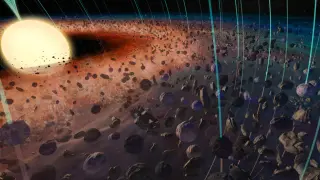
Astronomers propose that magnetic fields formed early in a star’s life can survive its evolution, linking magnetic activity observed in red giants to the magnetism seen on white dwarfs via the fossil field theory. Using starquakes (asteroseismology) to probe stellar interiors, they suggest these fossil fields could explain magnetism across evolutionary stages and imply that our Sun’s distant future—swelling into a red giant and eventually becoming a white dwarf—might be influenced by magnetic fields extending into its core. This work could reshape understanding of stellar magnetism and lifespan across the cosmos.

Magnetic friction peaks without contact, defying Amontons' law
science6 months ago

Magnetic friction peaks without contact, defying Amontons' law

Researchers at the University of Konstanz demonstrate a completely contactless form of friction arising from the collective dynamics of magnetic moments between two layered magnets. By adjusting the gap between layers, they induce competing magnetic orders that cause repeated reorientation during motion, yielding a non-monotonic friction peak at intermediate distances. This dissipation occurs without wear or surface contact, challenging Amontons' law and suggesting tunable, wear-free friction for micro- and nano-scale devices and magnetic bearings.