Tag

Electrocatalysis

All articles tagged with #electrocatalysis

ETH Zurich Team Develops Wireless Implant to Electrically Remove Blood Sugar
health-and-science25 days ago

ETH Zurich Team Develops Wireless Implant to Electrically Remove Blood Sugar

Researchers at ETH Zurich have developed an experimental, wireless implant that removes excess glucose from the blood using a controlled electrochemical reaction. Published in Science on October 22, the device converts sugar into a harmless byproduct called gluconate. In mouse trials, the implant, paired with a continuous glucose monitor, stabilized blood sugar levels and resulted in a 10% average weight loss over six weeks. The system is controlled via smartphone, which adjusts power input based on real-time glucose data to prevent hypoglycemia. While promising for treating type 2 diabetes and obesity, the technology remains in the proof-of-concept stage and requires further testing in larger animals and humans to ensure safety and efficacy at human scales.
Subzero electrolytes resolve the activity-stability trade-off in manganese dioxide water oxidation
science1 month ago

Subzero electrolytes resolve the activity-stability trade-off in manganese dioxide water oxidation

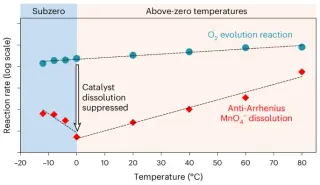
Researchers at RIKEN have demonstrated that cooling water to near freezing points can overcome the traditional trade-off between activity and stability in the oxygen evolution reaction (OER) using gamma-manganese dioxide catalysts. While lower temperatures typically slow reaction rates, they also significantly suppress catalyst degradation caused by permanganate formation. The study reveals an optimal temperature near 0 degrees Celsius where catalyst lifetime is maximized, offering a new strategy for enhancing electrochemical system durability in cold environments.

Three-Layer Electrode Bridges CO2 Capture and Conversion to Formic Acid
science10 months ago

Three-Layer Electrode Bridges CO2 Capture and Conversion to Formic Acid

A three-layer gas-diffusion electrode can simultaneously capture CO2 from real-world gas streams (including dilute ambient air and simulated flue gas) and convert it directly into formic acid, outperforming existing electrodes under realistic conditions. The device combines a CO2-selective capture layer, a gas-permeable carbon paper, and a tin(IV) oxide catalyst, offering a simpler, on-site route to carbon utilization with potential adaptation to other greenhouse gases in the future.

"Breakthrough Material MOF-525 Converts CO2 into Useful Chemicals"
science-and-technology2 years ago

"Breakthrough Material MOF-525 Converts CO2 into Useful Chemicals"

Researchers at the University of Virginia have developed a scalable method for fabricating MOF-525, a metal-organic framework material that can capture and convert carbon dioxide into useful chemicals. This breakthrough, achieved through solution shearing techniques, allows for large-scale applications, offering significant environmental and energy benefits by transforming CO2 into commercially valuable products.

"Revolutionary Technology Converts Greenhouse Emissions into Valuable Industrial Materials"
science-and-technology2 years ago

"Revolutionary Technology Converts Greenhouse Emissions into Valuable Industrial Materials"

Researchers at Ruhr-University Bochum have developed a novel catalyst system that can efficiently convert CO2 into carbon monoxide (CO), a valuable industrial resource, using homogeneous electrocatalysis. This system, which operates without the need to chemically bond the catalysts to the electrode surface, has shown the potential to work under industrial conditions with high efficiency and stability over 100 hours. This breakthrough could pave the way for practical applications in recycling CO2 and reducing greenhouse gas emissions.

"Electrifying Breakthrough: Scientists Speed Up Chemical Reactions"
science-and-technology2 years ago

"Electrifying Breakthrough: Scientists Speed Up Chemical Reactions"

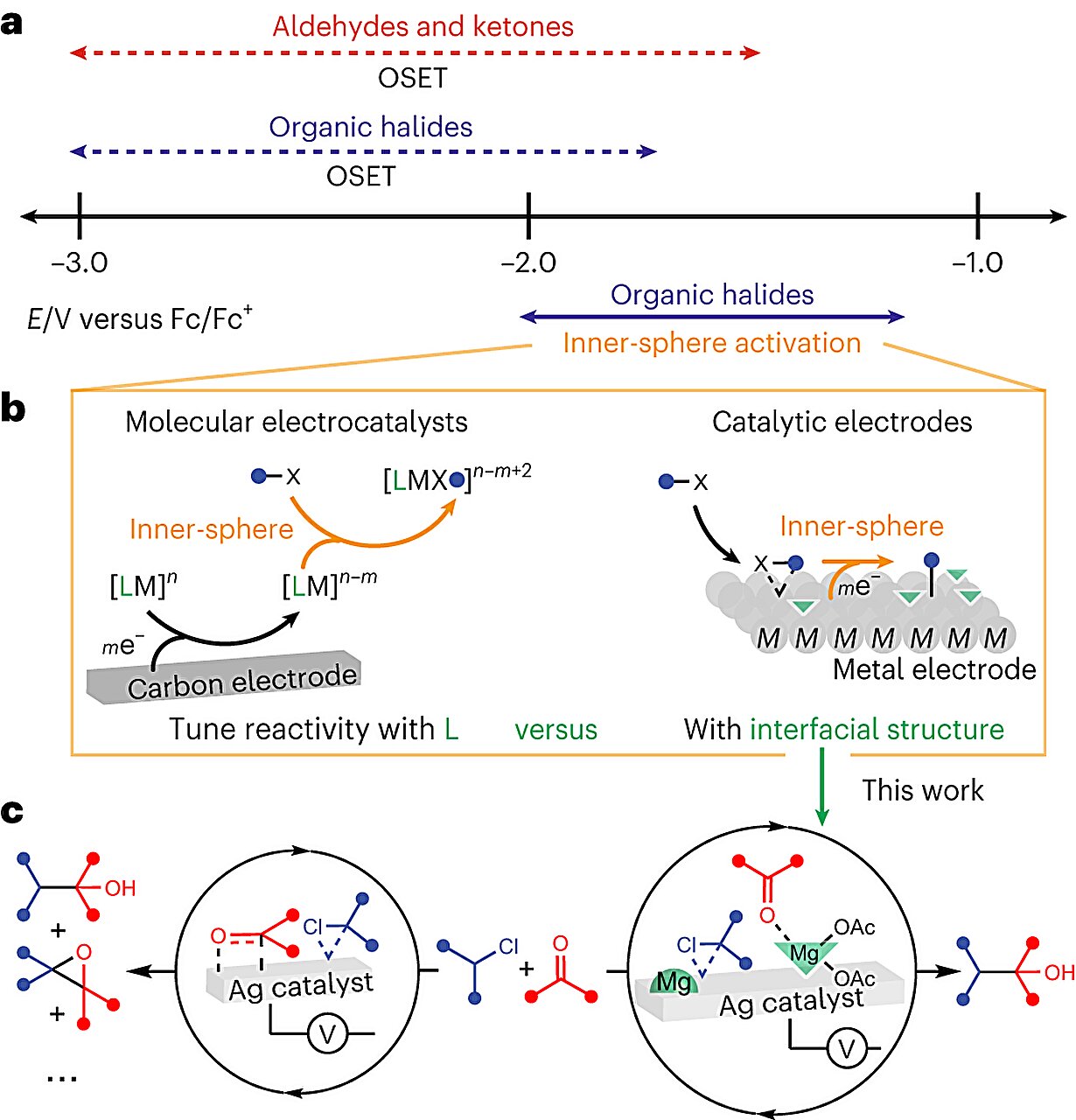
University of Chicago chemists have discovered a new method to enhance chemical reactions using electricity, a process known as electrocatalysis. This advancement, published in Nature Catalysis, could lead to more sustainable and efficient chemical manufacturing, particularly in synthesizing pharmaceuticals. By adding a Lewis acid to the reaction and using special imaging techniques, the researchers were able to control the reaction at the molecular level, achieving near-complete yields and demonstrating the potential for reusing the electrode, thus moving towards more sustainable synthesis methods.

"Exploring High-Entropy Alloys: Revolutionizing Electrocatalysis Research"
science-and-technology3 years ago

"Exploring High-Entropy Alloys: Revolutionizing Electrocatalysis Research"

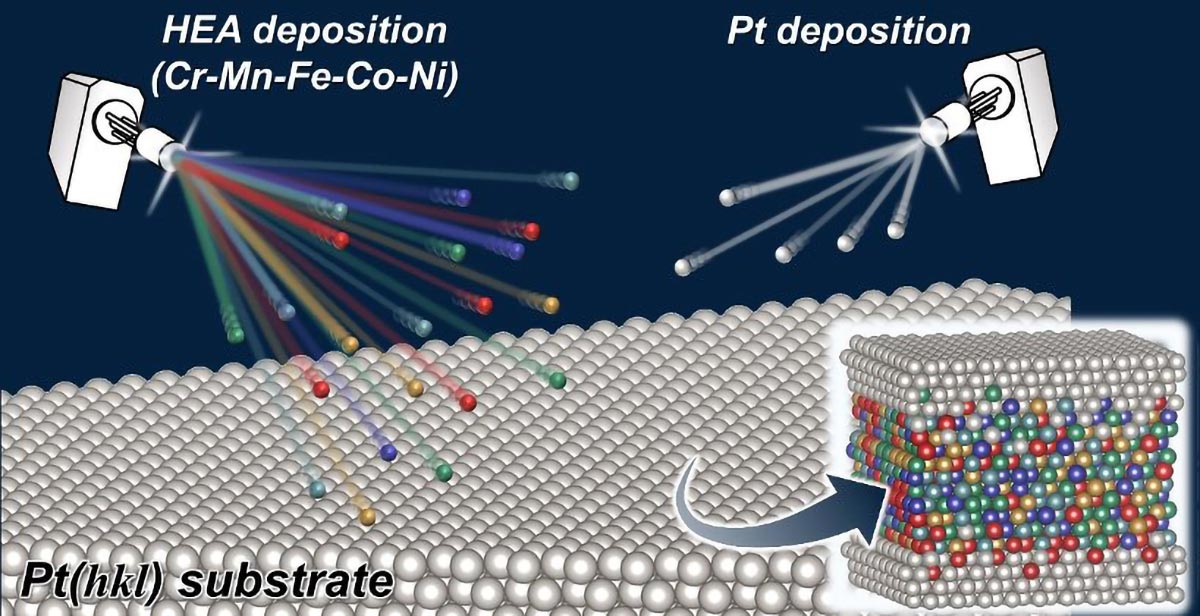
A research team has developed a new platform to study and control the atomic-level structure of high-entropy alloys' surfaces, specifically focusing on platinum high-entropy alloys (Pt-HEAs). They found that Pt-HEAs outperformed platinum-cobalt alloys in the oxygen reduction reaction (ORR), indicating that the atomic arrangement and distribution of elements near the surface contribute to their excellent catalytic properties. The team believes that their findings have broad applicability and can be used to advance electrocatalysis and functional nanomaterials.