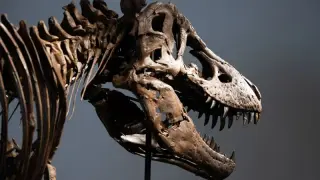
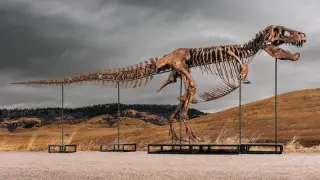
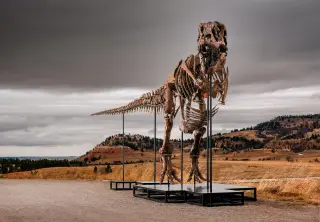
A 67-million-year-old Tyrannosaurus rex skeleton nicknamed Gus sold for a world-record $50.13 million at Sotheby’s in New York, making Gus one of the most complete T. rex fossils and underscoring the ongoing debate over private ownership versus scientific study.
A privately unearthed 38-foot Tyrannosaurus rex skeleton nicknamed Gus from South Dakota’s Hell Creek Formation is heading to Sotheby’s in New York for auction, with estimates around $30 million and a potential to become the world’s most expensive fossil. Gus is about 61% complete by bone count (roughly 75–80% by mass) and shows bite marks and fractures. The sale reignites a debate over fossil ownership and science, since many researchers argue fossils should be in public collections to allow study and verification, while opponents say private owners can still enable research or loans. Excavated by Theropoda Expeditions from 2021–2023 on Gary Licking’s land after his death, Gus may disappear from public view if sold to private parties, unlike publicly loaned specimens in museums.
A newly unearthed, 38-foot-long T. rex skeleton nicknamed Gus from the Hell Creek Formation is set to be auctioned at Sotheby’s in New York, potentially becoming the most expensive fossil sale; while it’s among the largest and most complete finds, experts warn that private ownership risks removing critical specimens from public, verifiable scientific study and museum access, fueling a broader debate about fossil stewardship and open science.
Gus, one of the most complete T. rex fossils ever found in South Dakota, goes to Sotheby’s with a $30 million pre-sale value and a $19 million starting bid, potentially becoming the most expensive dinosaur ever sold. The auction reignites a debate over whether scientifically important fossils should stay in museums or be privately owned, since private specimens are harder for researchers to access and many journals won’t publish work on them. Excavation and recovery spanned years, and while collectors help fund finds, scientists stress public accessibility and rigorous study as essential for understanding dinosaur biology and our past.
A South Dakota rancher’s gut feeling led paleontologists to a 67-million-year-old T. rex skeleton unearthed on his land; now nicknamed Gus, the 38-foot fossil is headed to Sotheby’s with estimates up to $30 million, potentially delivering a multi-million windfall to the landowner’s widow under private-land fossil ownership laws.
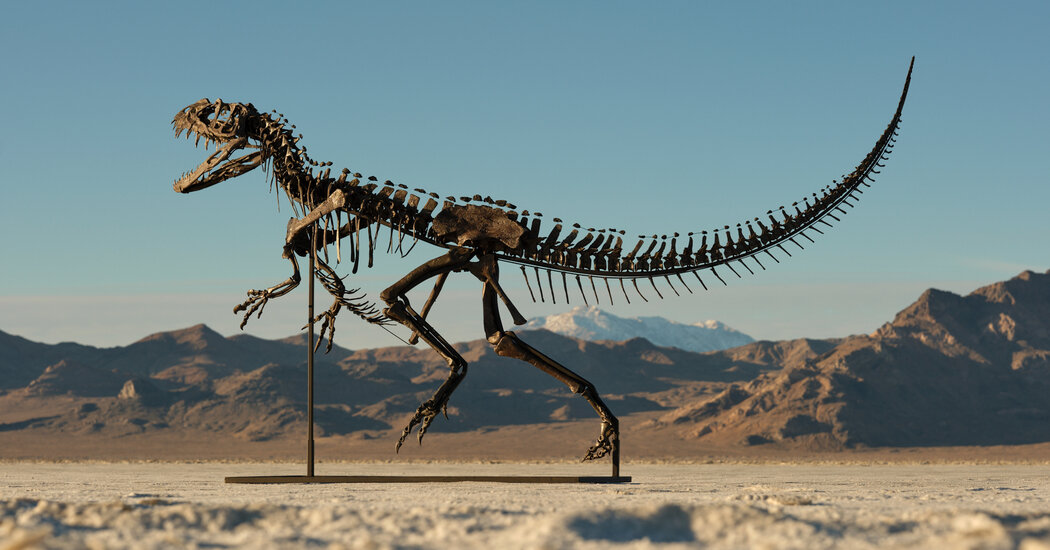
Sotheby’s is set to auction a 150-million-year-old Ceratosaurus specimen valued at up to $6 million, raising concerns among paleontologists about the impact of high-stakes fossil auctions on the fossil market and potential market distortion.
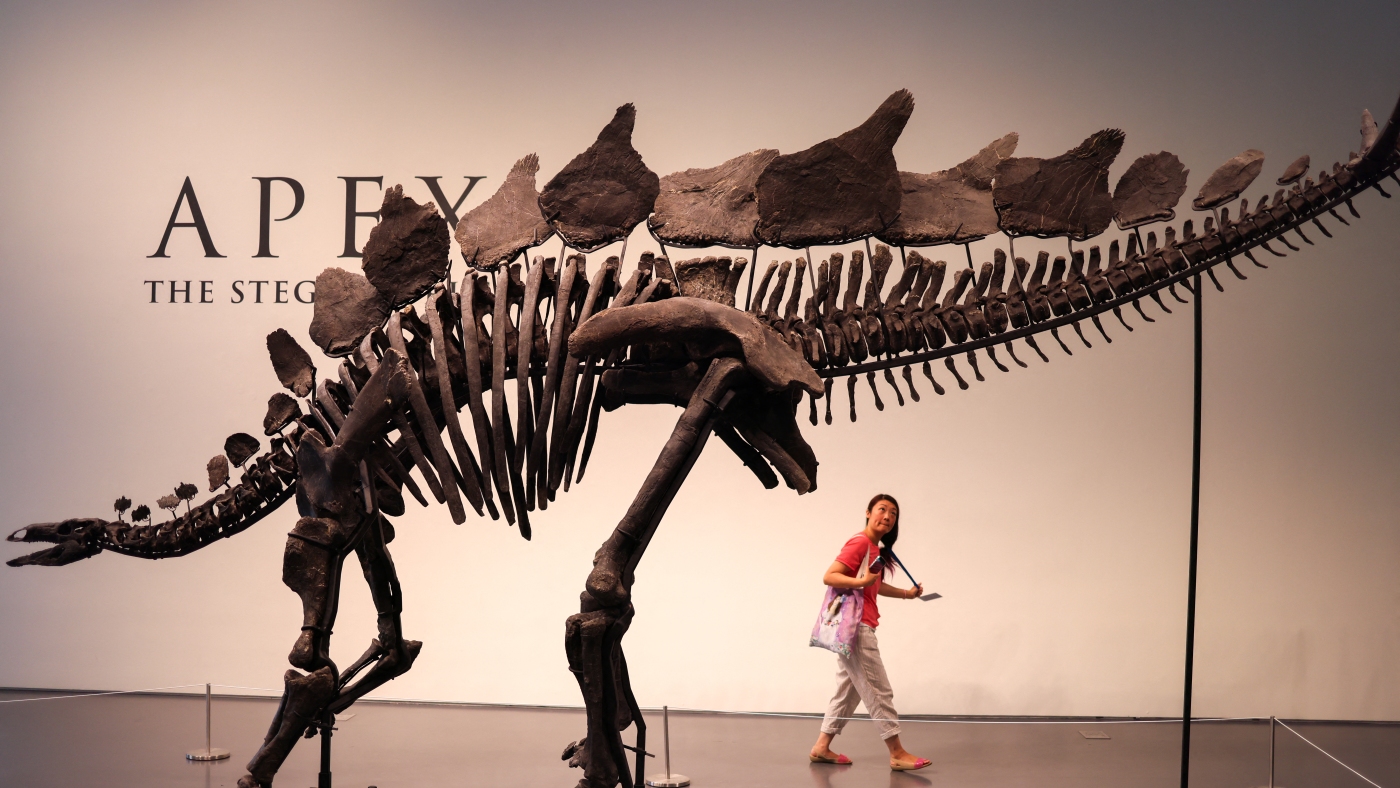
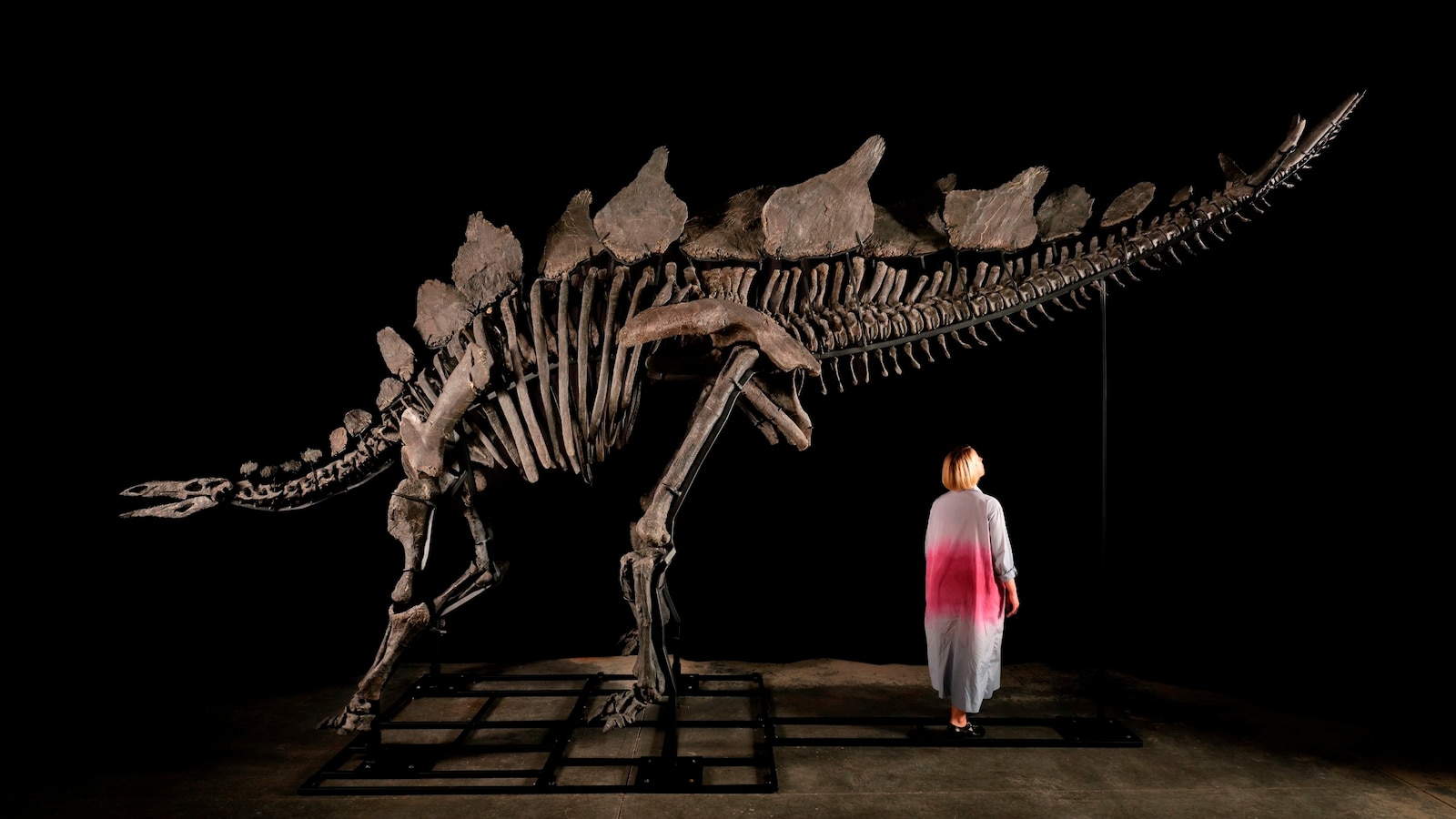
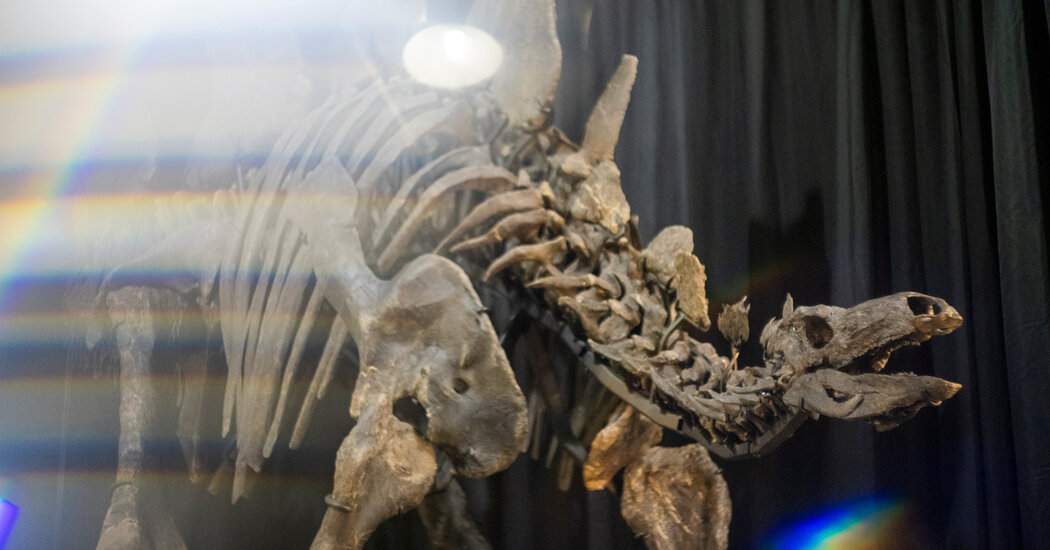
A 150 million-year-old stegosaurus fossil named "Apex" is expected to fetch $4 million to $6 million at a Sotheby's auction, raising concerns among scientists about the commercialization of fossils and the potential loss of scientifically important specimens to private collections. Paleontologist Cary Woodruff advocates for replicas and museum donations as alternatives. Sotheby's claims that most buyers donate fossils to museums.
The largest and most complete stegosaurus fossil ever found, named "Apex," will be auctioned by Sotheby's in New York on July 17, with an estimated value of up to $6 million. Discovered near Colorado's Morrison Formation, the 11-foot-tall, 20-foot-long specimen includes 247 fossil bones and is believed to be between 146 million and 161 million years old. The auction has sparked debate over the sale of fossils to private collectors, potentially limiting scientific study and public access.
Apex, the largest and most complete Stegosaurus fossil ever found, discovered by paleontologist Jason Cooper in Dinosaur, Colorado, is set to be auctioned by Sotheby's for an estimated $4 million to $6 million, sparking debate over the private fossil trade and its impact on scientific research.