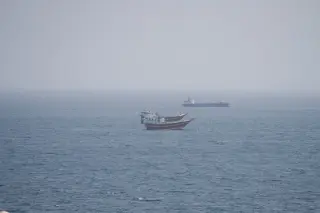
Bahrain is leading a draft UN Security Council resolution, now with 112 co-sponsors, urging freedom of navigation in the Strait of Hormuz and calling on Iran to end attacks on Gulf countries.
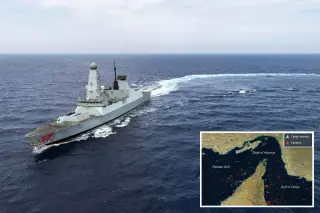
A British Royal Navy destroyer, HMS Dragon, will join a multinational freedom-of-navigation patrol in the Strait of Hormuz to help restore open commercial shipping through the strategic waterway, which Iran had effectively closed during conflict and where the US blockade remains in place; France and the UK promoted the move as multilateral cooperation, with Macron citing confidence-building for shipowners and insurers, while Trump has urged allies to share the burden of protecting energy routes.
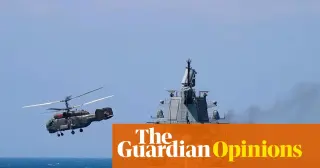
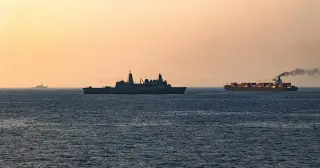
Two months into the Iran crisis, the Strait of Hormuz remains perilous as Tehran blocks passage and seeks tolls, prompting a US-led maritime response and fueling warnings that the post‑WWII international order is fraying. The piece links today’s maneuvering to a centuries‑long history of transit rights—from Denmark’s Sound Dues to the Law of the Sea—arguing that open sea lanes are a core principle of international law, now tested by power politics as other chokepoints (Taiwan Strait, Malacca) consider leveraging leverage too.
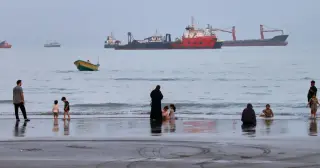
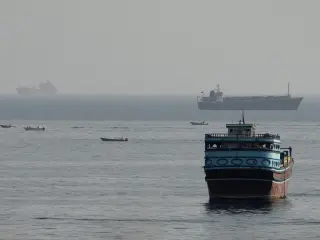
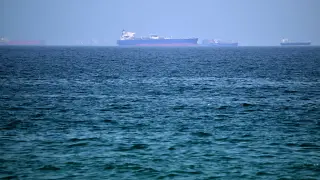
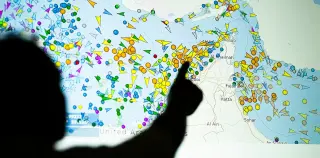
The Strait of Hormuz remains a global chokepoint as the US-Israel–Iran conflict disrupts traffic, with about 2,000 ships stranded. Even if reopened, mine clearance could take six months and war-risk premiums could jump from roughly 0.25% to as high as 1–5% of hull value. Insurers say Hormuz can only be deemed safe after an explicit, durable commitment to freedom of navigation, a lasting ceasefire or political resolution, credible mine clearing and surveillance, and clear rules of engagement, plus sustained normal vessel movement. Until such conditions exist, traffic will face elevated risk and likely remain limited to constrained routes, with pricing not returning quickly to pre-war levels.
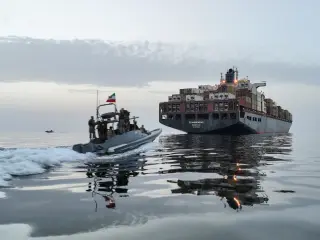
British divers are training in case mine-clearing is needed in the Strait of Hormuz, and the U.K. will offer autonomous mine-hunters as part of a proposed multinational mission to safeguard navigation, announced during London-hosted talks on reopening the strait. The move signals UK willingness to contribute amid tensions with the U.S. over involvement in the Iran-related conflict, as Washington extends the ceasefire and Iran indicates it will not negotiate until the blockade ends; Iran has also seized two ships traveling through the strait.
Britain will host a two‑day conference with more than 30 countries as the UK and France press to reopen the Strait of Hormuz, translating diplomatic consensus into a joint plan to safeguard freedom of navigation and global energy security amid stalled U.S.–Iran negotiations and an extended ceasefire, with the U.S. blockade remaining in place and no clear sign of talks resuming soon.
European leaders vow to rapidly plan a multinational, defensive mission to secure the Strait of Hormuz and guarantee freedom of navigation after Iran reopens the waterway, even as Trump rejects allied help; France and the U.K. lead the effort with Italy and Germany contributing assets, while questions linger over U.S. inclusion and mission details.
The United States says six ships reversed course on the first day of a blockade in the Strait of Hormuz, signaling pushback and heightening concerns about potential disruption to global shipping amid rising regional tensions.
Britain’s foreign secretary rejected Iran’s bid to charge ships tolls through the Strait of Hormuz, calling the waterway an international transit route governed by freedom of navigation and UN law. She warned tolls would set a dangerous unilateral precedent, as the U.K. pushes for reopening the strait amid broader Middle East diplomacy; Washington’s discussions around tolls were noted, but London remains committed to open sea lanes.
Iran's U.N. ambassador said Tehran will not close the Strait of Hormuz and remains committed to freedom of navigation under international law, while arguing the current tensions stem from U.S. actions and stating Iran's right to security in the waterway; he also cited the supreme leader's comments about continuing to use the 'lever' to block Hormuz, though Iran emphasized it will not close the strait.
China's military claimed to have driven away a US destroyer near Scarborough Shoal, while the US Navy asserted its operation was lawful and aimed at maintaining freedom of navigation. The incident follows recent Chinese vessel activities and a collision involving Chinese ships, amid ongoing territorial disputes in the South China Sea.
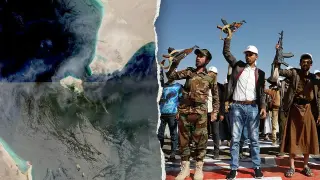
Secretary of Defense Lloyd J. Austin III has announced the establishment of Operation Prosperity Guardian, a multinational security initiative aimed at addressing the recent escalation of Houthi attacks in the Red Sea. The operation brings together countries such as the United Kingdom, Bahrain, Canada, France, Italy, Netherlands, Norway, Seychelles, and Spain to ensure freedom of navigation, bolster regional security, and protect international trade in the southern Red Sea and the Gulf of Aden.
The first cargo ship has successfully departed Ukraine using a new Black Sea corridor for civilian vessels, despite warnings from Russia that its navy could target such vessels. The Hong Kong-flagged vessel, Joseph Schulte, had been trapped at Odesa's port since Russia's invasion of Ukraine in February 2022. It is carrying over 2,100 containers with about 30,000 metric tons of cargo and is initially heading for Istanbul. Russia had warned of sinking civilian vessels traveling to and from Ukraine after withdrawing from a grain export deal via the Black Sea.
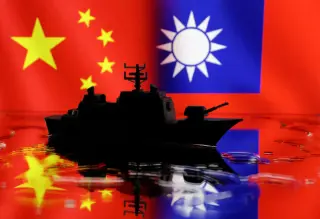
The US Navy has released a video showing a Chinese navy ship conducting an "unsafe" maneuver in the Taiwan Strait, forcing the American destroyer USS Chung-Hoon to slow down to avoid a collision. The incident occurred during a "freedom of navigation" transit of the strait between Taiwan and mainland China. China claims Taiwan as part of its own territory and maintains the strait is part of its exclusive economic zone, while the US and its allies regularly sail through and fly over the passage to emphasize their contention that the waters are international.
The US Navy has released a video of a Chinese warship crossing in front of a US destroyer in the Taiwan Strait, calling it an "unsafe interaction" and raising concerns of future face-offs. The incident comes amid deteriorating Sino-US ties and disagreements over trade, Taiwan, and Russia's invasion of Ukraine. China's military rebuked the US and Canada for "deliberately provoking risk" with the rare joint sailing. Taiwan's defence ministry called China's actions "provocation" and called on China to respect the right to freedom of navigation.