Tag

Hd 189733b

All articles tagged with #hd 189733b

Blue Sky, Fire Winds: Glass Rain on the Exoplanet HD 189733b
space1 hour ago

Blue Sky, Fire Winds: Glass Rain on the Exoplanet HD 189733b

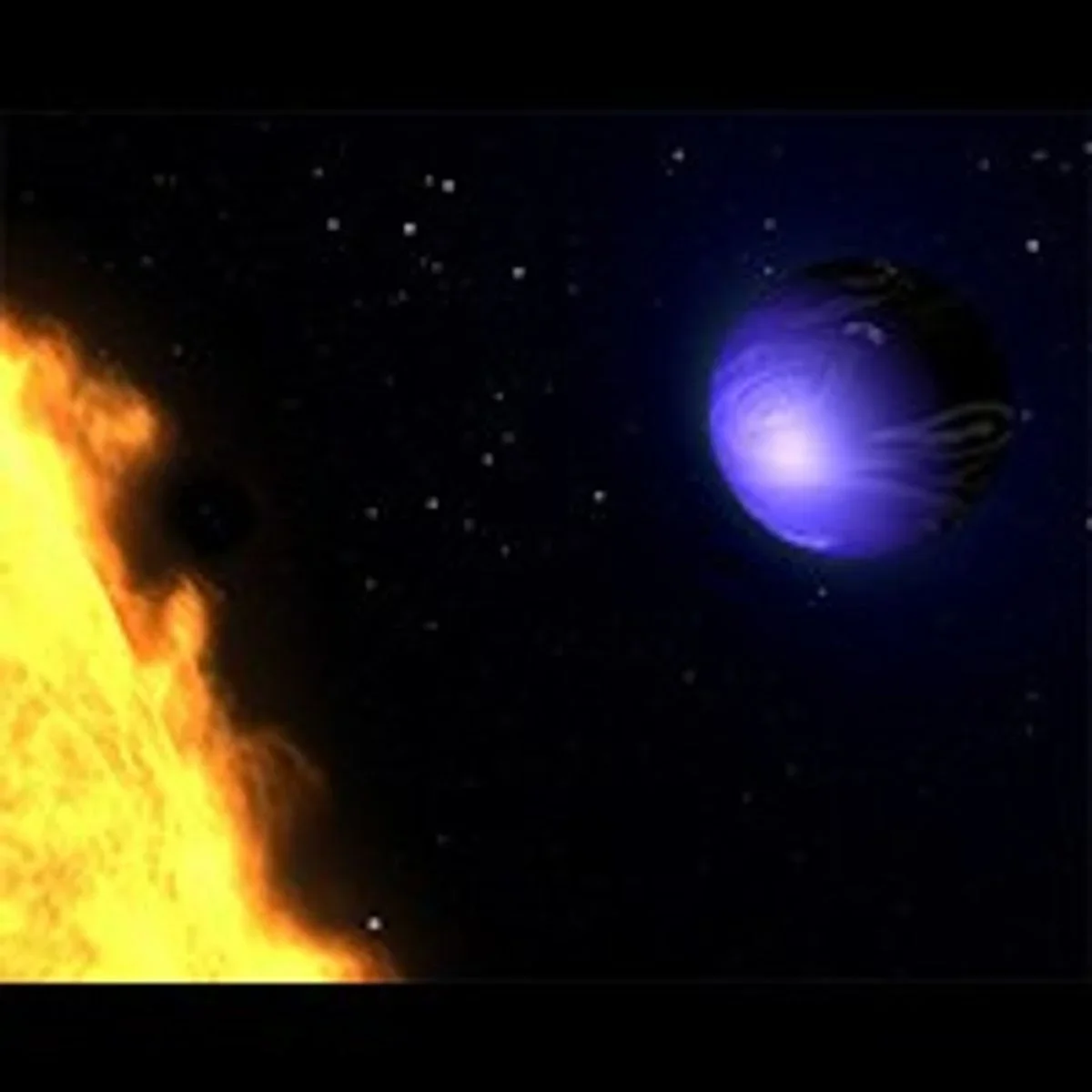
HD 189733b is a nearby hot Jupiter about 63 light-years away that appears deep blue from space not because of oceans but due to a scorching dayside atmosphere where silicate particles melt into glassy droplets that scatter blue light. It orbits extremely close to its star (about 2.9 million miles) in 2.2 days and is tidally locked, with dayside temperatures around 2000°F and winds that have been measured up to 4,500 mph (with later data suggesting even faster speeds). The blue color serves as a warning sign of extreme atmospheric chemistry and dynamics, making this planet a valuable observable laboratory rather than a habitable world.
Cobalt-blue world with molten glass rain 63 light-years away
space1 month ago

Cobalt-blue world with molten glass rain 63 light-years away

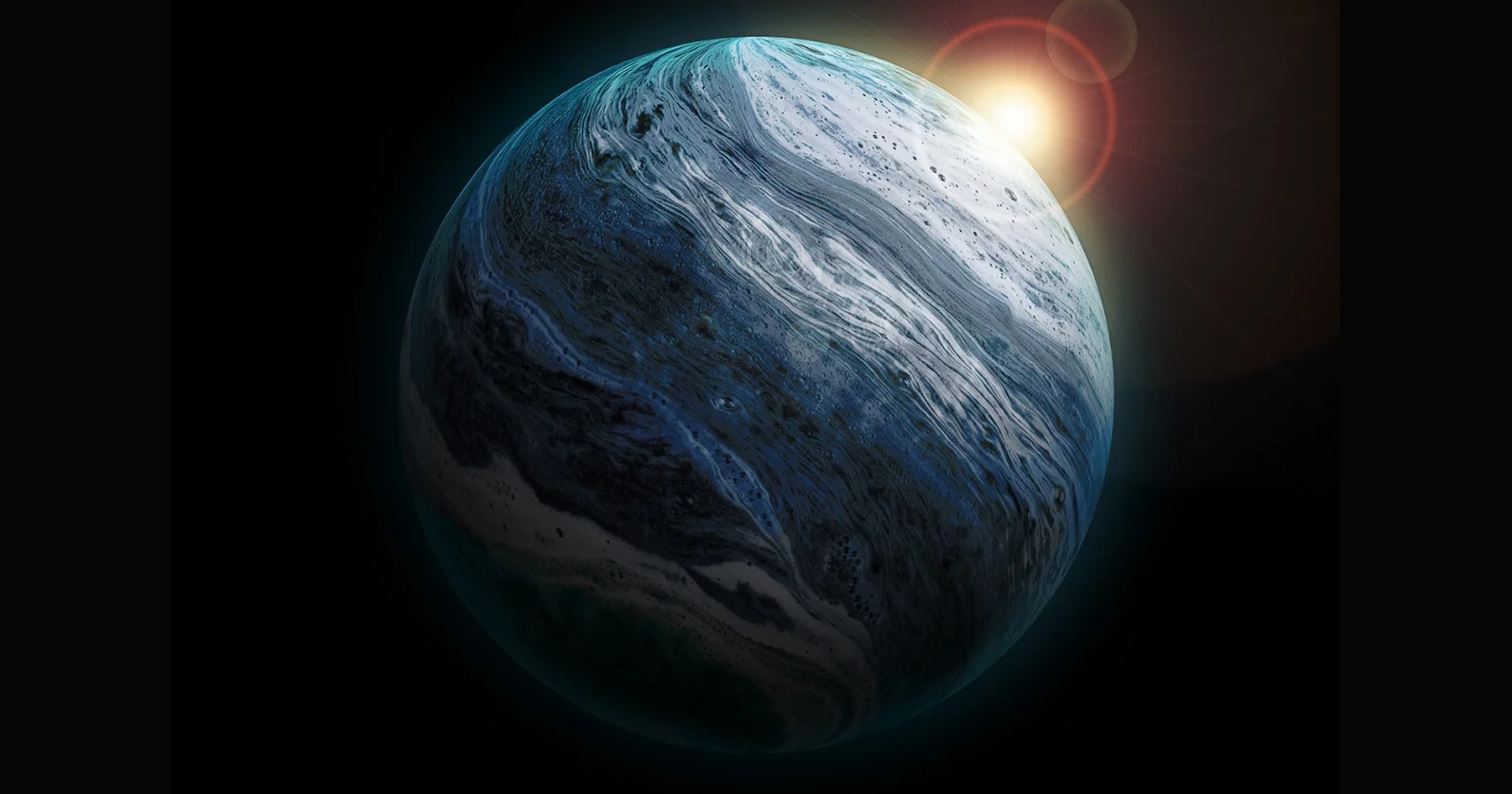
HD 189733b, a tidally locked hot Jupiter about 63 light-years away, appears cobalt blue because its atmosphere scatters blue light from molten silicate droplets; daytime temperatures exceed 1,000°C and winds reach around 7,000 km/h, driving continuous horizontal rain of glass droplets. The planet has no oceans, and its color was inferred from secondary eclipse spectroscopy rather than direct imaging.

"Exoplanet with Rotten Egg Odor and Glass Rain Discovered"
science-and-technology2 years ago

"Exoplanet with Rotten Egg Odor and Glass Rain Discovered"

Scientists using the James Webb Space Telescope have detected hydrogen sulfide, a molecule that smells like rotten eggs, in the atmosphere of the exoplanet HD 189733b. This discovery marks the first time hydrogen sulfide has been found outside our solar system and provides new insights into the atmospheric composition of exoplanets. HD 189733b, a "hot Jupiter" known for its extreme weather, including glass rain and high temperatures, also contains water, carbon dioxide, and carbon monoxide. The findings, published in Nature, enhance our understanding of exoplanet formation and atmospheric chemistry.

Scientists Discover Exoplanet with Rotten Egg Stench
science2 years ago

Scientists Discover Exoplanet with Rotten Egg Stench

Scientists using the James Webb Space Telescope have detected hydrogen sulfide, a molecule that smells like rotten eggs, in the atmosphere of the exoplanet HD 189733b, marking the first time this molecule has been found outside our solar system. This discovery, along with the presence of water, carbon dioxide, and carbon monoxide, provides new insights into the atmospheric composition and formation of gas giant exoplanets. HD 189733b, known for its extreme weather and high temperatures, continues to be a key subject in the study of exoplanetary science.

"Unveiling the Fiery Atmosphere of HD 189733b: A Planet Hotter than the Sun"
astronomy2 years ago

"Unveiling the Fiery Atmosphere of HD 189733b: A Planet Hotter than the Sun"

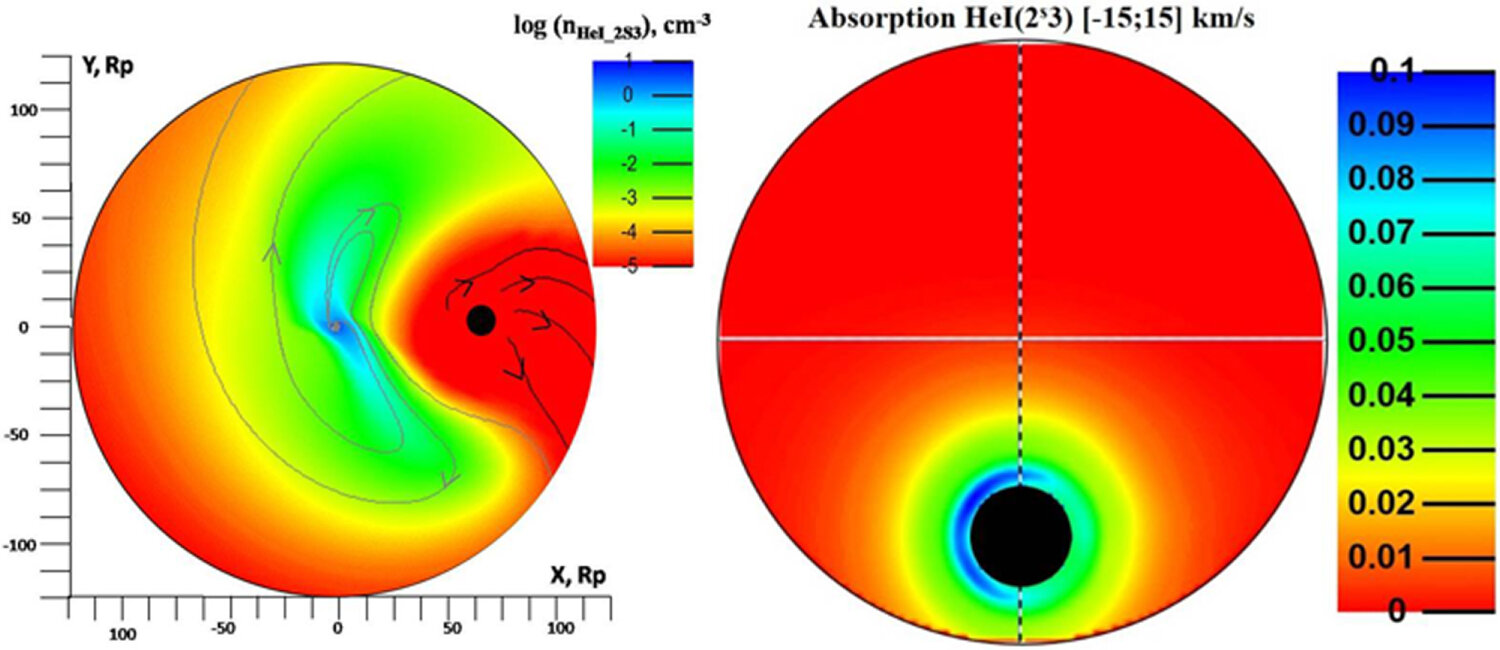
Scientists have modeled the atmosphere of the hot Jupiter exoplanet HD 189733b and discovered that the unstable absorptions in the hydrogen line Lyα are likely caused by the high activity of the host star, resulting in increased radiation flux in the ultraviolet region and a faster loss of stellar material. The researchers used transit spectroscopy to study the movement and composition of the planet's atmosphere, revealing the presence of different elements. This study provides insights into the physico-chemical properties of the HD 189733b planetary system.