
Tag

Hotjupiter

All articles tagged with #hotjupiter

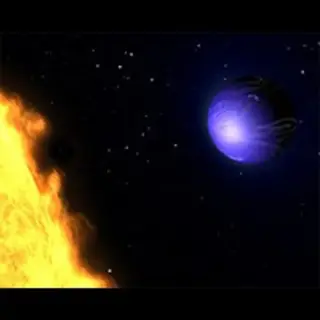
Blue Sky, Fire Winds: Glass Rain on the Exoplanet HD 189733b
space1 month ago

Blue Sky, Fire Winds: Glass Rain on the Exoplanet HD 189733b

HD 189733b is a nearby hot Jupiter about 63 light-years away that appears deep blue from space not because of oceans but due to a scorching dayside atmosphere where silicate particles melt into glassy droplets that scatter blue light. It orbits extremely close to its star (about 2.9 million miles) in 2.2 days and is tidally locked, with dayside temperatures around 2000°F and winds that have been measured up to 4,500 mph (with later data suggesting even faster speeds). The blue color serves as a warning sign of extreme atmospheric chemistry and dynamics, making this planet a valuable observable laboratory rather than a habitable world.
Twin Exoplanets Ride Inward Together, Rewriting Hot-Jupiter Origins
astronomy4 months ago

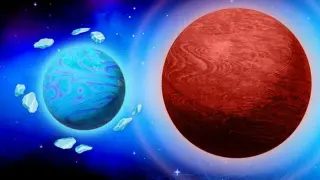
Twin Exoplanets Ride Inward Together, Rewriting Hot-Jupiter Origins

Astronomers using the James Webb Space Telescope studied TOI-1130, a system where a hot Jupiter (TOI-1130c) hosts a close companion mini-Neptune (TOI-1130b). The pair likely formed beyond the frost line and migrated inward together into a 2:1 resonance, with TOI-1130b showing a heavy atmosphere rich in water vapor, CO2, SO2 and methane. This rare architecture suggests hot Jupiters can form with companions and migrate as a pair, challenging prior ideas about planetary formation.

"Hubble Captures Extreme Weather on Remote Gas Giant"
science-and-technology2 years ago

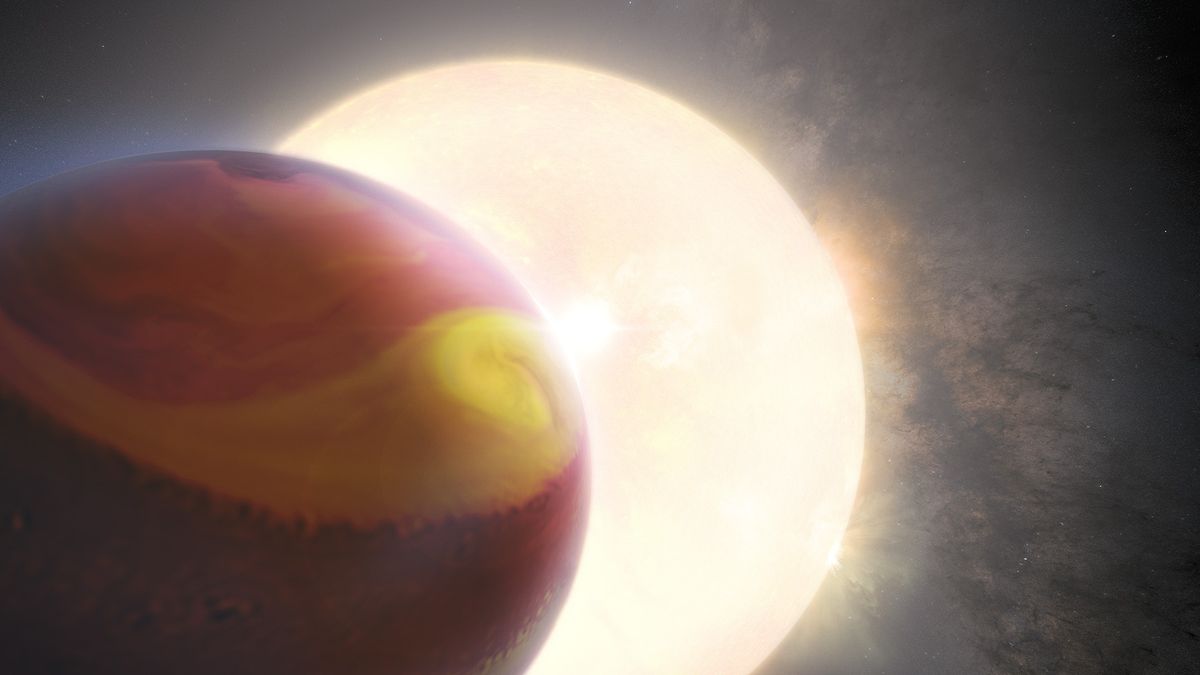
"Hubble Captures Extreme Weather on Remote Gas Giant"

The Hubble Space Telescope has observed extreme weather conditions on the hot Jupiter exoplanet WASP-121b, located 880 light-years away. The planet experiences intense cyclones and storms due to the significant temperature difference between its permanent day and night sides, with its atmosphere containing evaporated metals like iron and vanadium. These observations, combined with computer modeling, provide insights into the atmospheric dynamics of such exoplanets and could inform future studies of weather on smaller, potentially habitable worlds.