Tag

Industrial Policy

All articles tagged with #industrial policy

Democrats Weigh Adopting Trump’s Corporate Equity Model Amid Pardon Risks
politics14 days ago

Democrats Weigh Adopting Trump’s Corporate Equity Model Amid Pardon Risks

Following the 2026 midterms, Democrats are debating whether to adopt the Trump administration’s strategy of taking equity stakes in private companies. While some lawmakers support government ownership for national security, others warn of market distortions. The debate is complicated by the risk that public investigations could trigger preemptive presidential pardons, potentially shielding allies from criminal liability.

China warns EU against 'kill-switch' trade tool amid record deficit
international22 days ago

China warns EU against 'kill-switch' trade tool amid record deficit

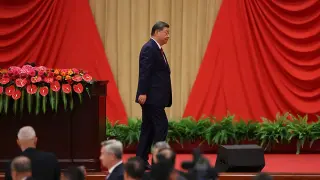
China’s ambassador to the EU, Cai Run, warned Beijing will retaliate if the European Union adopts unilateral trade restrictions. This follows the European Commission’s development of a rapid-response 'kill-switch' tool to protect EU markets from Chinese imports, which have surged 25% in the past year. The move aims to address a record daily trade deficit of €1 billion, though Brussels continues parallel negotiations with Beijing.

Europe’s Response to China: Prioritizing Adaptation Over Protectionism
global-economy1 month ago

Europe’s Response to China: Prioritizing Adaptation Over Protectionism

The EU faces a daily trade deficit with China of €1 billion, but the impact is concentrated in specific sectors. While protectionist measures are being debated, data suggests Europe remains competitive in high-value industries. Experts argue that focusing on structural reforms and adaptation, rather than just defensive tariffs, is crucial for long-term resilience against Chinese competition.

Global Battery Race Intensifies as China Sets 2030 Solid-State Goals and Korea Struggles with Subsidy Gaps
technology-and-policy2 months ago

Global Battery Race Intensifies as China Sets 2030 Solid-State Goals and Korea Struggles with Subsidy Gaps

China’s new five-year plan targets large-scale all-solid-state battery use by 2030, while South Korea unveils a massive R&D roadmap to counter Chinese dominance. However, critics argue Korea’s current tax credits fail to support loss-making firms, risking a widening technological gap.

EU seeks bilateral caps on Chinese goods to offset record trade deficit
global-economy2 months ago

EU seeks bilateral caps on Chinese goods to offset record trade deficit

The European Commission is negotiating with Beijing to voluntarily curb Chinese exports to the bloc, aiming to reduce a massive trade imbalance. EU trade chief Maroš Šefčovič stated that the deficit must be addressed from both sides, proposing pilot schemes and potential safeguards if talks fail. While Brussels focuses on goods, Chinese analysts argue that expanding services trade could offer a more balanced solution, noting that Europe already holds a significant surplus in services.

energy-and-policy3 months ago

Trump’s $3B Mineral Push Revives EV Supply Chains Despite Policy Contradictions

The Trump administration has announced $3 billion in funding for critical mineral projects, a move that inadvertently strengthens the electric vehicle (EV) sector despite the president’s previous dismantling of consumer subsidies and emissions standards. While the initiative is framed around national security and defense needs, it provides essential upstream support for battery production, including graphite, silicon anodes, and rare-earth-free magnets. This strategy aims to reduce reliance on China and bolster domestic manufacturing, creating a 'serendipitous benefit' for EV makers even as demand-side incentives remain absent.

Time running out to counter China’s rising grip on global supply chains
world6 months ago

Time running out to counter China’s rising grip on global supply chains

The US Chamber of Commerce warns governments have a finite window to push back against China’s state-led industrial policies, which deepen dependence on Chinese supply chains and boost Beijing’s global influence. A Rhodium Group report for the chamber highlights China’s shift from low-cost manufacturing to high-tech production (including robotics) and a broader industrial-policy push, signaling a potential reordering of global trade that policymakers must address soon to protect advanced economies’ competitive edge.

FCC Foreign-Made Router Ban Could Signal Broader Industrial Policy Push
technology7 months ago

FCC Foreign-Made Router Ban Could Signal Broader Industrial Policy Push

With the FCC excluding foreign-made routers and drones from new equipment authorizations, experts say the policy could extend to more consumer electronics (phones, laptops) and amount to a broader industrial policy to reshape US manufacturing. Critics warn it may raise prices, chill innovation, and take years to rebuild domestic production, even as the White House cites national security concerns. The FCC has granted limited exemptions (Netgear, Adtran) and set an 18-month timeline for new router models, plus a 2027 deadline to allow updates on currently approved foreign-made devices.

Germany's Industrial Ramstein: a bold reboot for Ukraine's factories
world7 months ago

Germany's Industrial Ramstein: a bold reboot for Ukraine's factories

Germany launches a new Industrial Ramstein framework to reboot Ukraine’s war-damaged industry, pledging €233 million (including an initial €30 million from KfW) to finance modernization and integration into European value chains through grants, loans, and guarantees, extending support beyond rebuilding to creating new production and upgrading facilities in collaboration with European partners.

Europe’s Buy European plan hits complexity and political fault lines
business9 months ago

Europe’s Buy European plan hits complexity and political fault lines

Europe's upcoming Buy European policy aims to steer public funding and procurement toward EU-made goods in strategic sectors as part of the Commission's One Europe, One Market plan for 2027. While defence is broadly supported to boost strategic autonomy, experts warn the policy risks becoming protectionist, raising costs and dampening innovation if not carefully designed. Deep divisions among 27 member states over strict local-content rules versus flexible, Europe-wide rules underscore potential costs for downstream industries and fragile supply chains. A mid-March proposal is expected with sector-specific thresholds and trusted-partner carve-outs, but many technical details remain unresolved and the policy could invite retaliation from trading partners if not carefully calibrated.

China’s involution could reshape its AI and robotics ambitions
economy9 months ago

China’s involution could reshape its AI and robotics ambitions

FT Alphaville explains China’s “involution”—fierce domestic price competition backed by local subsidies and procurement rules—that drives prices lower and keeps unprofitable firms afloat, with political incentives to preserve jobs and GDP. The pattern has already hit sectors like chips, EVs, and batteries, and now AI startups are flooding the scene to access government funding. Looking ahead, there are warnings of overcapacity in strategic areas such as humanoid robotics and satellites. The piece questions whether the Chinese state can unwind involution and what the West should do as China continues to export cheap goods and potentially shape the future of AI and robotics.

The Manufacturing Myth: Why 'Make It Great Again' Falls Short
economy9 months ago

The Manufacturing Myth: Why 'Make It Great Again' Falls Short

The piece argues that the nostalgia for reviving U.S. manufacturing through “Make America Great Again” is politically appealing but economically ineffective: manufacturing employs less than 8% of jobs and has not rebounded to pre-COVID output despite large policy spending; tariffs raise input costs since most imports are components used by domestic firms, diminishing competitiveness; the economy has shifted toward services, with manufacturing productivity growth slowing, and only a few strategic sectors merit targeted support rather than broad protectionist policies that harm consumers and fail to deliver durable jobs.