Scientists mapped non-canonical non-B DNA motifs across the human genome and six ape reference genomes (via the Telomere-to-Telomere project) using long-read sequencing, uncovering enriched motifs in satellite DNA and suggesting these alternative DNA shapes influence replication, transcription, genome stability, and potentially disease.
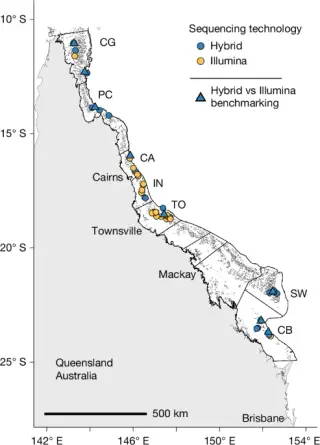
A Nature study introduces the Great Barrier Reef Microbial Genomes Database (GBR-MGD), compiling 5,283 prokaryotic genomes plus 20 picoeukaryote and 808,585 viral genomes from GBR seawater using hybrid Nanopore and Illumina sequencing; it shows Illumina-only short reads miss low-GC, highly diverse taxa like Pelagibacter and Prochlorococcus, which Nanopore long reads capture, enabling chromosome-level eukaryotic MAGs and expanded Crassvirales; the GBR-MGD links microbial community shifts to reef zoning, identifying indicator taxa that predict reef protection status and demonstrating a large-scale ecosystem-level impact of fisheries management on microbial communities; the work advocates routine long-read metagenomics to improve marine microbiome inventories and support predictive reef monitoring.
The 2003 Human Genome Project declared the genome essentially finished, but about 8% remained unread, concentrated in centromeres, telomeres, and segmental duplications. In 2022 the Telomere-to-Telomere (T2T-CHM13) assembly delivered a gapless genome (except Y) using long-read sequencing, revealing complete centromeres and new sequence, including immune-related gene families. But it's a single reference genome, not the full human variation; the next milestone is a population-scale pangenome.
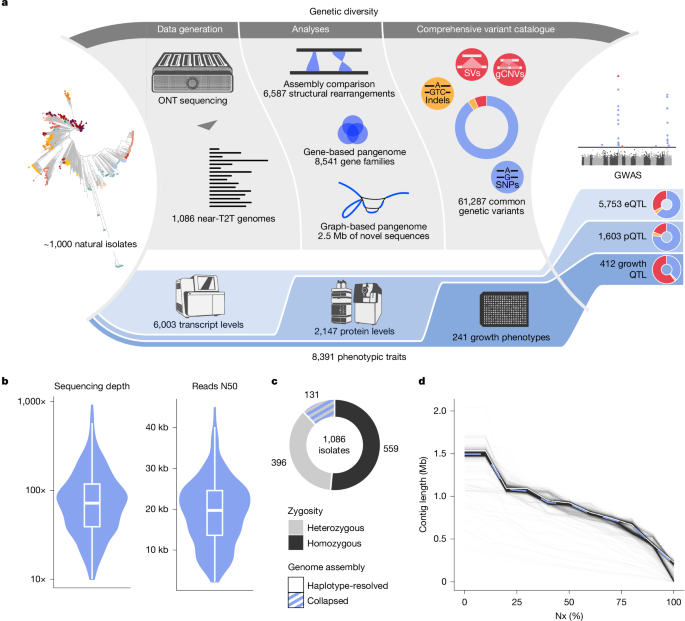
This study assembled near telomere-to-telomere genomes for 1,086 yeast isolates, revealing extensive structural variation and gene content diversity, and demonstrated that structural variants are more frequently associated with phenotypic traits and exhibit greater pleiotropy than SNPs, significantly advancing our understanding of the genetic basis of phenotypic diversity in yeast.
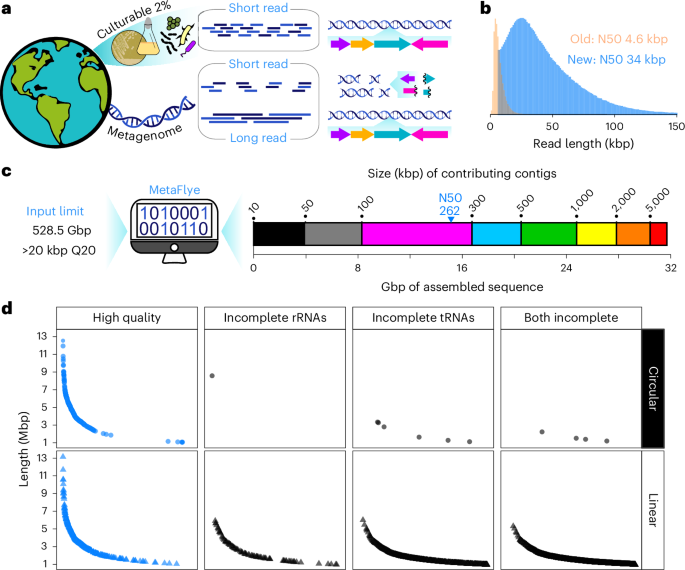
A soil metagenome was sequenced using terabase-scale long-read nanopore technology, leading to the assembly of hundreds of complete bacterial genomes and the discovery of novel biosynthetic gene clusters, including new antibiotics, demonstrating the power of long-read sequencing for exploring microbial dark matter and natural product potential.
Scientists have achieved the most complete decoding of the human genome to date by filling in 92% of previously unresolved DNA gaps using advanced long-read sequencing techniques, revealing important genetic variations linked to health conditions and improving the accuracy of genetic testing across diverse populations.