Sascha Doering, Bugatti’s new CEO for the Americas, asserts that the brand will prioritize emotional, analog driving experiences over full electrification, despite merging with Rimac. The Tourbillon hybrid will begin deliveries in 2027, while the company navigates rising U.S. tariffs without raising base prices.
Mercedes-Benz is developing a holographic heads-up display that projects images onto a special film in the windshield, aiming to replace traditional passenger screens. The technology uses 'super-small mirrors' to ensure visibility in sunlight while hiding the image from the driver. Although current prototypes are loud and have limited resolution, the system could eventually offer entertainment and augmented reality features without compromising the luxury aesthetic of physical materials.
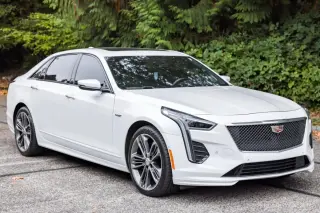
A rare 2019-2020 Cadillac CT6-V, featuring the discontinued Blackwing V8 engine, is currently up for auction with a high bid near $25,000. This model represents the final chapter of GM's ambitious luxury sedan strategy, which was canceled to prioritize SUVs and electrification. While the CT6-V is now a collector's item, its successor, the CT5-V Blackwing, continues to challenge German rivals like the BMW M5 in the performance sedan segment.
Mercedes-Benz is recalling over 30,000 vehicles from model years 2022 to 2025 due to a front brake hose defect that could leak or rupture, potentially increasing stopping distances. The affected models include the S-Class, Maybach, and AMG S 63 E. Dealers will replace the hoses free of charge, with owner notifications expected in late November. This action follows a previous recall last year and is based on continued monitoring of the issue in the U.S. and international markets.
Jaguar Land Rover has officially launched the first battery-electric Range Rover, priced from $138,000 in the US. The vehicle retains the classic Range Rover exterior but features a new 118.5 kWh battery, 542 horsepower, and 333 miles of EPA range. It is built at the Solihull plant alongside combustion models, with orders now open.
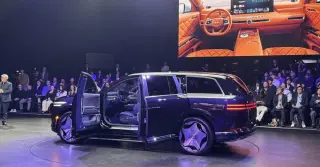
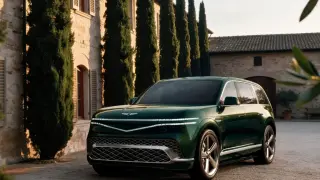
Genesis has officially unveiled the GV90, its first full-size electric luxury SUV, featuring a 123.5 kWh battery, 657 horsepower, and a unique 'Neolun' variant with hidden B-pillar coach doors. The vehicle, which debuts in the U.S. early next year, includes a pop-up OLED display, a roof airbag, and a Bang & Olufsen sound system, positioning it against rivals like the Cadillac Vistiq and Rivian R1S.
Genesis has unveiled the GV90, its first full-size electric SUV, featuring a retractable OLED display, a 123.5 kWh battery, and a unique 'Neolun' variant with pillarless coach doors. The vehicle offers up to 657 horsepower and 310 miles of range, with U.S. sales expected to begin early next year.
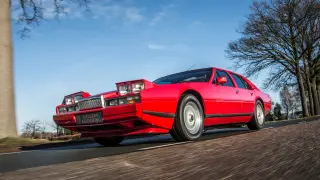
While many 1970s vehicles have become collector’s items, seven specific models remain significantly cheaper today than their inflation-adjusted original prices. These include the Chrysler New Yorker Brougham, Mercedes-Benz 450 SEL 6.9, Bentley T2, Maserati Merak SS, Aston Martin Lagonda S2, Stutz Blackhawk, and Rolls-Royce Camargue. Despite their high launch costs, which ranged from $7,831 to $68,445, current market values for these cars in good condition are far lower. For instance, the 1978 Chrysler New Yorker Brougham, which cost the equivalent of $40,100 today, now averages $9,230. Similarly, the Rolls-Royce Camargue, the world’s most expensive new car in 1975 at $68,445, is now valued at approximately $33,500. Factors contributing to this steep depreciation include high maintenance costs, divisive styling, and a lack of collector appeal compared to other contemporaries.
McLaren has unveiled the McL 6GT, a carbon-bodied concept that previews a production supercar arriving in 2028. The vehicle marks the brand's return to manual transmissions after a 34-year hiatus, featuring a V8 engine, rear-wheel drive, and hydraulic steering. Priced at approximately $1.5 million, the car is designed for immersive, tactile driving rather than record-breaking performance, with a limited production run of around 500 units.
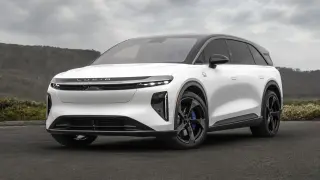
Lucid Motors has introduced the 2027 Gravity GT-S, a high-performance electric SUV unveiled at Monterey Car Week. The vehicle features a dual-motor setup producing 1,070 horsepower and a claimed 0-60 mph time of 3.1 seconds. Priced at $127,750, it serves as the new flagship for Lucid’s crossover lineup, featuring exclusive blue interior accents and standard dynamic handling upgrades.
AutoNotion’s Dave McQuilling reviewed the 2027 Mercedes G580 EQ Technology, a $160,000 electric G-Wagen. The vehicle successfully mimics internal combustion engine (ICE) vibrations and sounds without fake audio gimmicks, offering a convincing hybrid-like experience. However, the boxy design severely impacts aerodynamics, resulting in a 121.97 kWh battery delivering only 120 miles of actual range from a 180-mile estimate. While the interior is luxurious and off-road capabilities are strong, the range deficit remains a significant drawback for long-distance travel.
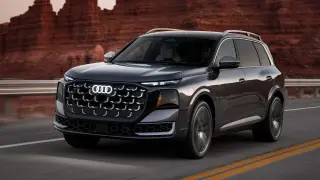
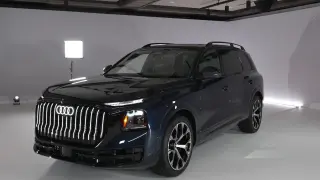
Audi has introduced the 2027 Q9 and SQ9, its first full-size, three-row SUVs, designed specifically for the North American market. The Q9 starts at $89,095, while the SQ9 begins at $119,395. Both models feature a 123.5-inch wheelbase, adaptive lighting technology, and a choice of six- or seven-seat configurations. The Q9 uses a 2.9-liter V6 engine, while the SQ9 utilizes a 4.0-liter V8. Deliveries are scheduled to begin in the fourth quarter of 2026.
Audi has unveiled the 2027 Q9 and SQ9, its first full-size, three-row SUVs, designed specifically for the U.S. market. Priced from $87,700 to $118,000, these models aim to reverse a 17% sales drop in 2026 by competing with the BMW X7 and Mercedes GLS. The launch addresses Audi's lack of U.S. manufacturing and weak EV performance, though tariffs remain a significant hurdle.
BMW Group has officially launched BMW ALPINA as a standalone, exclusive brand, emphasizing a unique blend of high performance and superior ride comfort, with a focus on bespoke options and maintaining its rich heritage while embracing a modern, confident identity.
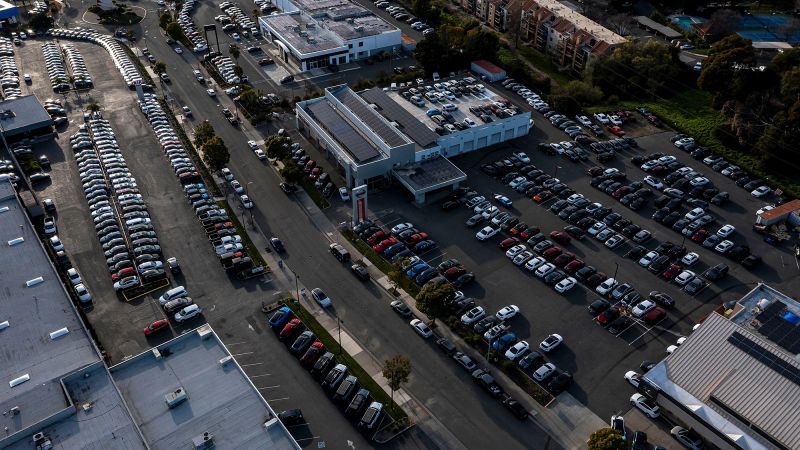
The average cost of a new car in the US has surpassed $50,000 for the first time, driven by luxury and electric vehicles, despite tariffs and market shifts, reflecting a trend towards wealthier buyers and higher-end models.